Tag Archive : Best marriage Counsellor in Delhi

best marriage counselor in india_shivani sadhoo

Can You Be Married but Still Be Single at Heart?

Marriage is a commitment between two individuals to share their lives, support each other through thick and thin, and build a future together. Have you ever heard of someone saying they feel single at heart despite being married? It sounds like an oxymoron, doesn’t it? However, it’s actually quite common for someone to feel single at heart even while being married. You might be wondering why! Leading marriage counselor in Delhi, Shivani Misri Sadhoo sheds light on the intricacies of the human psyche that contribute to this seemingly contradictory experience.

India's leading marriage counselor Shivani Sadhoo

Can one still be single at heart despite being married?

Relationship expert and couples therapist Shivan Sadhoo shares insights on the same. Here they are?

1. Sense of Individuality remains untouched

 Marriage represents a legal and social agreement that unites two individuals, yet their inner sense of self remains distinct. Being single at heart within a marriage doesn’t signify dissatisfaction or a lack of commitment; instead, it’s about honoring one’s uniqueness within the marital bond. The journey of marriage brings together two individuals, each with their own personality, dreams, and aspirations. Despite the unity in marriage, one’s individual essence remains intact. People may feel “single at heart” when they desire moments of personal space and self-discovery.

2. The Feeling of Autonomy

Some people feel happiest when they have their own space and freedom, even if they’re married. They value doing things on their own and growing as individuals. It’s not that they don’t love their partners or avoid commitment in their relationship; it’s just part of who they are. They find joy in being alone sometimes and pursuing their own interests. Feeling “single at heart” means they can maintain their independence and take care of themselves emotionally, even while being married.

3. Living Apart Together

Living apart together is a trend where married couples choose to have their own homes instead of living together. It’s not because they have to, but because they want to. Some couples even live in the same house but have separate spaces. Research shows that even when couples live together, they may spend less time doing things together compared to the past. This doesn’t mean people want to be alone all the time.

What they’re really looking for is finding the right balance between being alone and being together. This search for balance is something that goes beyond marriage, age, or any other differences. It’s like having the freedom to be yourself without feeling like you always have to be with your partner. This independence can actually strengthen your relationship because it gives each person space to grow and pursue their interests.

4. When Reality Bites

When we think about marriage, we often have certain ideas about what it should be like. But sometimes, what we expect doesn’t match up with what actually happens. This difference between expectations and reality can make us feel disconnected like we’re missing out on the freedom we associate with being single. Society often tells us that when we get married, we’re supposed to become one with our partner, like we’re no longer individuals.

But that’s not always how it works. Each person still has their own dreams, desires, and way of looking at things. Feeling like you’re more single at heart when you’re married isn’t necessarily a bad thing. It means you value your independence and want to stay true to who you are, even in a relationship. It’s important for society to understand that marriage can mean different things to different people. We need to change the way we think about marriage so that everyone’s unique way of loving and finding fulfillment is respected and celebrated.

5. Communication Gap

When communication falters in marriage, partners may feel emotionally distant. This gives a feeling of being ‘single at heart’. This sensation suggests a need for nurturing the marital bond. By openly discussing personal desires and goals, couples can bridge this gap, promoting deeper understanding and connection.

Thus, we know that feeling “single at heart” within a marriage doesn’t imply dissatisfaction; it’s about preserving individuality, embracing autonomy, seeking balance, confronting reality, and addressing communication gaps.

signs of triving relationship couples therapy tips

Love That Stands the Test of Time: Traits of Thriving Relationships

In the tapestry of human existence, few threads are as enduring and cherished as the bonds we form in love. Relationships that withstand the trials of time possess certain timeless traits that contribute to their longevity and resilience. Let us know about the key elements that characterize thriving relationships, making them stand the test of time as shared by Delhi’s eminent marriage counselor and relationship expert Shivani Misri Sadhoo in this article.

Love That Stands the Test of Time: Traits of Thriving Relationships

What are the signs of a thriving relationship?

  • Communication is Key: Effective communication is the cornerstone of any enduring relationship. Couples who openly express their thoughts, feelings, and concerns create a foundation of understanding and trust. Sharing both joys and challenges fosters a deeper connection and allows partners to grow together. In thriving relationships, communication is not just about talking but also about active listening, empathy, and a willingness to understand each other’s perspectives.
  • Mutual Respect: Respect is the bedrock upon which enduring love is built. Thriving relationships are characterized by a deep and abiding respect for each other’s individuality, values, and aspirations. Partners who value and honor each other’s autonomy are more likely to weather the storms of life together. Respect forms the basis for compromise, collaboration, and the ability to navigate differences with grace and understanding.
  • Trust and Transparency: Trust is the lifeblood of lasting relationships. Partners who trust each other implicitly create an environment of emotional safety. Thriving relationships are marked by transparency and honesty, as secrets and deception erode the foundation of trust. Building trust takes time, but the dividends it pays in the form of a solid, enduring connection are immeasurable.
  • Shared Values and Goals: Couples who share common values and long-term goals tend to have relationships that stand the test of time. While individual interests and pursuits are important, a shared vision for the future provides a sense of unity and purpose. Whether it’s building a family, pursuing career aspirations together, or sharing common hobbies, having shared goals creates a sense of partnership that strengthens the bond over the years.
  • Adaptability and Flexibility: Life is a dynamic journey, filled with unexpected twists and turns. Thriving relationships exhibit adaptability and flexibility in the face of change. Partners who can navigate challenges together, adjusting their course as needed, are better equipped to sustain their connection over time. The ability to grow individually and as a couple, while embracing change with resilience, is a hallmark of relationships that endure.
  • Emotional Support and Vulnerability: In thriving relationships, partners are each other’s pillars of strength. Emotional support and vulnerability are interwoven threads that create a tapestry of intimacy. Being able to lean on each other during difficult times and share vulnerabilities fosters a deep emotional connection. It is through these shared experiences that bonds are strengthened, creating a love that can withstand the trials of life.

    Relationships that stand the test of time are characterized by a combination of effective communication, mutual respect, trust, shared values, adaptability, and emotional support. Cultivating these traits requires effort, commitment, and a genuine investment in the well-being of the relationship. As the journey of love unfolds, couples who embody these enduring qualities are better equipped to build a legacy of lasting, thriving love.

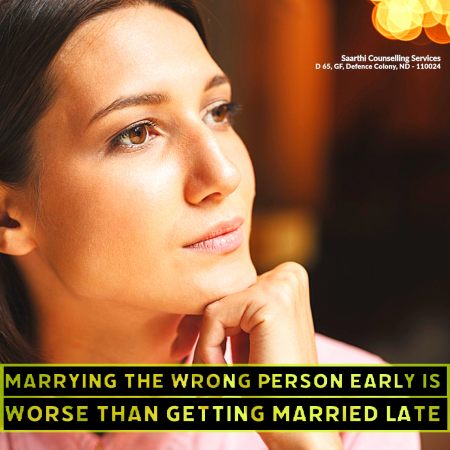
    Marrying the Wrong Person Early is Worse than Getting Married Late

    Marrying the Wrong Person Early is Worse than Getting Married Late

    Marriage, a sacred union between two individuals, is a profound life decision that significantly influences the course of one’s existence. The timing of such a commitment plays a crucial role in its success. While societal norms often emphasize the importance of marrying early, there exists a compelling argument that marrying the wrong person prematurely can be far more detrimental than waiting until later in life.

    Marrying the Wrong Person Early is Worse than Getting Married Late

    Why is getting married late better than marrying the wrong person early?

    Leading couples therapist and marriage counsellor Shivani Misri Sadhoo shares her views on this question in this blog.

    The Rush to Commitment:

    Society’s expectations and cultural norms often pressure individuals to tie the knot at a relatively young age. The fear of being labelled “too old” or the societal perception that marriage is a milestone that must be achieved by a certain age can lead many to make hasty decisions in choosing a life partner. However, the consequences of rushing into a commitment of such magnitude without proper self-discovery and understanding of one’s needs can be profound.

    The Importance of Self-Discovery:

    Marrying the wrong person early in life often stems from a lack of self-awareness and understanding. In the rush to meet societal expectations, individuals may neglect their personal growth and development. The early twenties, a period often associated with self-discovery and career building, may not be the optimal time for everyone to make a lifelong commitment. People evolve and change over time, and marrying too early may limit the opportunities for personal growth and self-discovery.

    Changing Priorities and Values:

    In the early stages of adulthood, individuals are still in the process of shaping their identities, career paths, and personal values. Rushing into marriage without fully understanding these aspects can lead to a misalignment of priorities between partners. As individuals mature, their values and life goals may evolve, potentially causing strain on the relationship if the couple has not grown together or if they have grown in different directions.

    The Toll on Mental and Emotional Well-being:

    Marrying the wrong person can take a significant toll on one’s mental and emotional well-being. Early divorces, which often result from hastily made decisions, can be emotionally devastating. The process of untangling lives, shared assets, and emotional bonds can be far more complex and emotionally draining than waiting until later in life when individuals have a clearer sense of self and a more stable foundation.

    Marrying the Wrong Person Early is Worse than Getting Married Late

    The Benefits of Waiting:

    On the other hand, waiting to get married allows individuals the time and space to explore their own identities fully. It provides the opportunity to establish a stable career, build a solid support network, and gain a deeper understanding of personal values and priorities. Waiting until later in life to commit to marriage often results in more mature, well-rounded individuals who are better equipped to navigate the complexities of a lifelong partnership.

    Whereas, societal expectations may emphasize the importance of marrying early, the potential consequences of marrying the wrong person prematurely cannot be ignored. Taking the time to embark on a journey of self-discovery, career development, and personal growth can significantly enhance the chances of entering into a successful and fulfilling marriage later in life. Individuals must prioritize their well-being and growth before succumbing to societal pressures, recognizing that marrying late, with the right person, is a far wiser choice than rushing into a commitment that may not withstand the test of time.

    staying in marriage for kids article

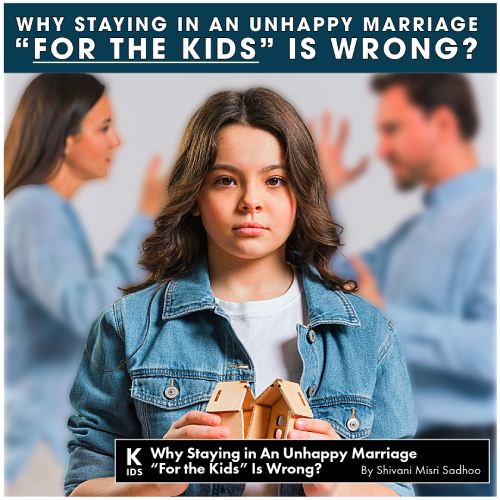
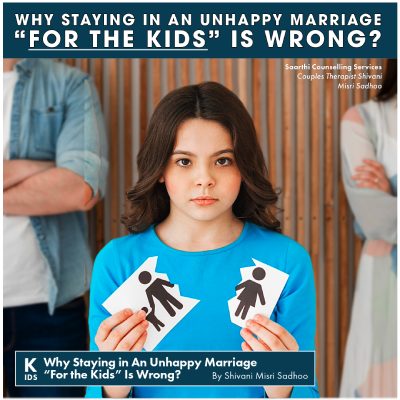
    Why Staying in An Unhappy Marriage “For the Kids” Is Wrong?

    Marriages are often celebrated as the union of two souls destined for eternal happiness. However, the reality is that not all marriages are made in heaven. The question of whether to endure an unhappy marriage “for the kids” is a complex dilemma.

    When faced with the prospect of divorce, the decision becomes particularly challenging when children are involved. Should one persist in a toxic and joyless marriage for the sake of the children, or should they contemplate ending it?

    Why continuing with an unhappy marriage is harmful for your children?

    Leading marriage counsellor Shivani Misri Sadhoo explains the following factors in the article further. These are:

    1. Psychological Stress

    An unhappy marriage is often fraught with tension, resentment, and conflict. Children are highly perceptive and can sense this negative atmosphere. Constant exposure to such stress can lead to emotional and psychological distress in children, affecting their overall well-being and development.

    Kids are sensitive to their parents’ feelings, and when parents are unhappy, children may feel it’s their fault or experience anxiety, depression, or low self-esteem. These emotional scars can last a long time.

    2. Builds Negative Perception

    Children learn about relationships primarily through observing their parents’ interactions. In the context of an unhappy marriage, prolonged exposure can normalize dysfunctional dynamics for them. Consequently, their understanding of a healthy partnership becomes skewed, potentially leading to troubled future relationships.

    An environment marked by emotional distance and hostility between parents hampers the development of vital emotional skills and communication patterns in children. Such situations breed unresolved conflicts and negatively impact a child’s perception of acceptable relationship norms, perpetuating cycles of unhappiness in their own future partnerships.

    3. Delayed Divorce Does More Harm than Good

    Remaining in an unhappy marriage until your children become independent may seem like a way to shield them from the upheaval of divorce or separation. However, this approach doesn’t always reduce their stress.

    If your children have never experienced extended periods away from you, leaving home, particularly when they move to a new city for further education, can be highly distressing. The added burden of a divorce, coupled with new responsibilities, could potentially disrupt their studies and transition into adulthood.

    4. Self-Sacrifice Can Be Dissatisfying

    Sacrificing your own happiness for the sake of your kids may seem noble, but it can have negative consequences. Unhappy parents may struggle to provide a stable and nurturing environment. True parental sacrifice means making choices that benefit both parents and children.

    You don’t have to be a martyr; divorce can be a self-improvement decision if you still attend to your children’s needs. Happier people are better at everything, including being better parents, which is a great gift for your kids and yourself.

    5. Causes Relationship Breakdowns

    Prolonged unhappiness within a marriage can gradually foster resentment and bitterness, which may ultimately seep into various aspects of one’s life, affecting relationships with friends and family. Children raised in such an environment may lack positive examples of loving relationships.

    Stress and tension can inadvertently strain the parent-child relationship, causing resentment and strained connections, leaving children questioning the authenticity of their upbringing.

    6. Disrupts Communication

    An unsatisfactory marriage can lead to a communication breakdown between parents, complicating the establishment of fair child arrangements. Resolving issues as they arise is crucial for facilitating decisions in the children’s best interests. Redirecting efforts from a troubled marriage toward fostering a positive co-parenting relationship is essential.

    In unhappy marriages, couples often struggle with effective communication, which can negatively influence their children’s ability to express feelings and thoughts, potentially impacting their future relationships and friendships. Teaching kids healthy communication and conflict resolution within a family setting is vital for enhancing their future relationships.

    What did we learn?

    Staying in an unhappy marriage can harm children by subjecting them to psychological stress, distorting their perception of healthy relationships, and potentially causing long-term emotional scars. Delaying divorce may not always protect them, and self-sacrifice may lead to an unsatisfactory family environment. Effective communication and prioritizing well-being can be key to mitigating these negative effects on children.

    best marriage relationship counselor Shivani Misri Sadhoo

    Clear Signs There Is Serious Chemistry Between You and Your Partner

    Not every relationship is destined to be a perfect match. People are unique, with diverse needs and personalities. While some couples effortlessly complement each other, others may face challenges. However, one of the most beautiful and exhilarating aspects of a romantic relationship is the presence of genuine chemistry between partners. While it may not be the sole determinant of a successful relationship, recognizing serious chemistry is essential for building a strong and lasting connection.

    Relationship chemistry is not akin to a scientific formula but a unique blend of emotions, connection, and compatibility that can’t be easily quantified, making each connection special and unpredictable.

    What are those clear signs that suggest there is serious chemistry between two individuals?

    India’s leading marriage counsellor and relationship expert Shivani Misri Sadhoo shares a few signs to find out the genuine chemistry between couples:

    1. Magnetic Attraction

    Instant fascination is a powerful indicator of strong chemistry between partners. While appearance may be the initial attraction, it goes beyond mere looks. It’s the magnetic pull, the unspoken connection, and the exchange of infatuating glances that reveal a deeper, irresistible bond, making it clear that chemistry plays a pivotal role in relationships.

    2. Eyes can talk

    Eye contact is like a secret language between two people in love. When you’re into someone, your eyes can’t help but lock onto theirs. It’s like a magnetic pull that screams, “I’m into you!” You hold that gaze longer, steal glances, and there’s this electric intensity that says, “We’ve got some serious chemistry going on here!” It’s a wordless confirmation of the sparks flying between you two.

    3. Body Language

    Body language reveals chemistry between couples through subtle cues like mirroring each other’s movements, leaning in closer, touching, and blushing. Women may fidget with their hair or lips, while men might get sweaty palms. These nonverbal signals indicate a strong connection and attraction, regardless of gender.

    4. Similar Interests

    Partners with strong chemistry often discover that they share common interests and values. Whether it’s a love for hiking, a passion for art, or a commitment to similar ethical principles, shared aspects of life can significantly enhance your connection.

    5. No need for words

    When two people share a strong bond, they can read each other’s thoughts and emotions without uttering a word. This unspoken bond brings them closer, forging a unique intimacy that words simply can’t capture.

    6. No Compulsion

    When you genuinely enjoy each other’s company without feeling the need to constantly entertain or impress one another, it’s a clear sign that you two are ‘made for each other’. Being comfortable in silence or simply being together speaks volumes about your connection. You will feel relaxed and energized at the same time. You can be yourself without fear of judgment. The relationship will feel effortless and safe.

    7. It’s Only Us

    One of the most awe-inspiring aspects of finding ‘The One’ is the unique ability to feel completely alone together, even in the midst of a crowded room. It’s as if the world around us fades into the background, and the only thing that matters is the connection we share with that special person. Time seems to stand still, conversations become whispers, and the energy between the two individuals becomes palpable. In those moments, the rest of the world becomes irrelevant, and it’s just the two of them in their own little universe.

    Cherish these signs and nurture the chemistry that makes your relationship special, and remember, a match made in heaven isn’t always about perfection; it’s about creating your own unique paradise together.

    best marriage counseling in delhi Shivani misri sadhoo

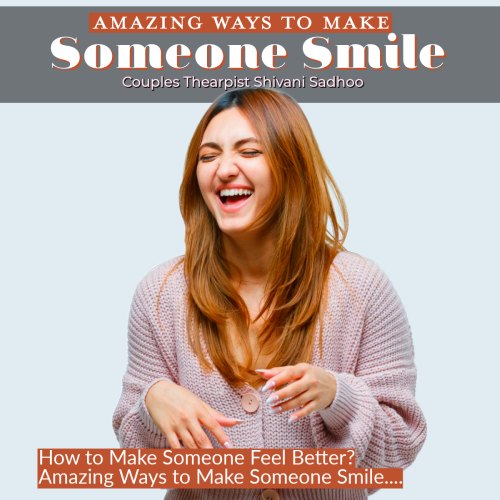
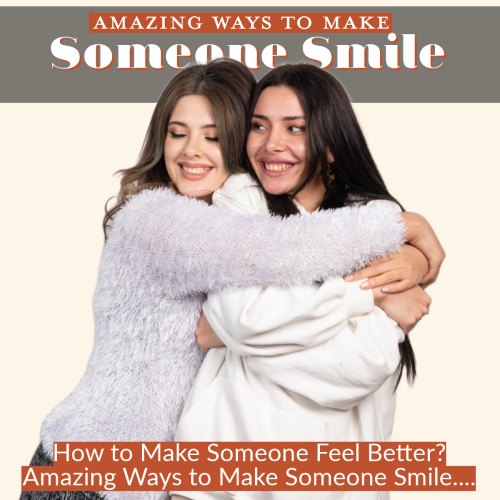
    How to Make Someone Feel Better? Amazing Ways to Make Someone Smile

    Learn with India’s Top Marriage Counselor Shivani Misri Sadhoo

    Life is not always about a singular pursuit or outcome, it’s the culmination of various experiences, emotions, and journeys that make it truly meaningful. In the hustle and bustle of today’s fast-paced world, where stress and challenges seem to be the order of the day, a simple smile can work wonders. A genuine smile has the power to transcend barriers, brighten up a gloomy day, and create connections that uplift both the giver and the recipient.

    So, let’s find out the tips and tricks to add smiles and cheer to people’s lives from India’s eminent couples therapist Shivani Misri Sadhoo.

    What are the ways to bring a smile to someone’s face?

    Shivani Sadhoo says, being able to bring a smile or someone’s face is often the way to make someone feel better who is probably feeling down due to certain issues. Some of the ways to make a person smile are, you need to give them:

    Compliments: 

    Genuine compliments hold the power to uplift and touch hearts. Instead of a plain old “good job,” make it special. Notice the sweat they put into a project, the cool ideas in their art, or the delicious twist in their cooking. Your attention and appreciation mean a lot!

    Show Affection: 

    A simple hug conveys warmth and care, releasing “feel-good” chemicals in the brain. It makes us feel loved and understood. When someone hugs us, it’s like a cozy gesture that brings joy. The connection and comfort from a hug can easily bring a smile to our faces.

    Share Humour: 

    Laughter truly is the best medicine, and sharing a good laugh can instantly lighten the mood. Share a funny meme, a light-hearted joke, or a witty anecdote. In a world bombarded with stressors, a dose of humor can be a welcomed respite.

    Listen to others: 

    Sometimes, all someone needs is a listening ear. Truly engage in conversations, show empathy, and be present in the moment. By letting others express themselves without judgment, you create a space where they can freely share their thoughts and concerns, often leading to a genuine smile of relief.

    The Power of Nature: 

    A simple walk in nature can make someone smile. It can reduce stress and anxiety, and increase feelings of happiness and well-being. Studies have shown that spending time in nature can lead to improved mental health and physical health.

    how to make someone smile

    A Gift of Love: 

    Handmade gifts or personalized tokens of appreciation carry a unique charm. Create a scrapbook, a custom playlist, or a piece of art that reflects your connection and shared memories. These thoughtful gifts demonstrate your effort and consideration, bringing genuine smiles to those who receive them.

    Be Kind: 

    In a world that sometimes feels impersonal, a random act of kindness can be a breath of fresh air. Whether it’s paying for someone’s coffee in line behind you or leaving an uplifting note for a coworker, these gestures create a ripple effect of positivity. Remember, kindness doesn’t need a reason; it’s a gift in itself.

    A Helping Hand: 

    Helping the needy brings joy by making a positive impact. Knowing you’ve made a difference, even small, can create a sense of fulfillment. Seeing others happier due to your kindness can lead to smiles, as it shows the power of compassion and generosity.

    Personal Touch: 

    Calling your parents instead of texting adds a personal touch. Hearing their voices and having a real conversation shows care and interest. It creates a warmer connection, reminding them of the old ways and making them smile by feeling valued and cherished.

    Celebrate Together: 

    Celebrating wins, big or small, spreads happiness by acknowledging achievements. Whether it’s a minor accomplishment or a major milestone, recognition shows you care and share in their joy. This simple act of support boosts their spirits, leading to smiles and a stronger sense of togetherness.

    Smiling is a powerful way to spread positivity and make others feel happy and appreciated. It can be contagious and help to lift the spirits of those around us. Making others smile helps to create a sense of connection, belonging, and joy, which are essential for our mental and emotional well-being.

    marriage counselling blog shivani misri sadhoo

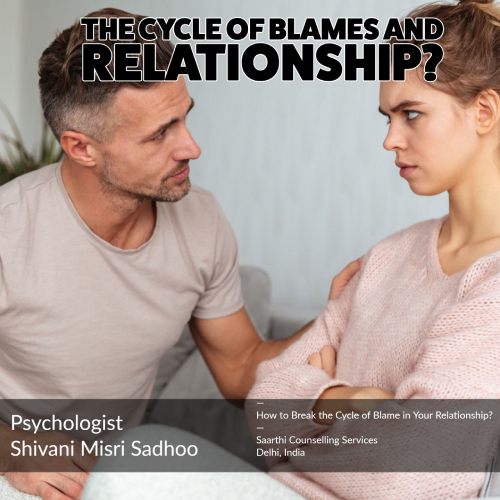
    How to Break the Cycle of Blame in Your Relationship?

    Finger-pointing can quickly turn a loving connection into a battleground of accusations and hurt feelings. Blaming is a natural human response to avoid responsibility, but it’s not constructive. It’s tough when the blame game becomes a regular part of a relationship.

    Let’s find out why partners blame each other in a relationship and what are the ways to break this vicious cycle from India’s top relationship expert and marriage counsellor Shivani Misri Sadhoo.

    Why does the blame game begin?

    Childhood experiences – These shape our coping and communication strategies. If individuals face blame or criticism, they may unconsciously blame others in relationships.

    Protect Self-esteem – Blaming others helps preserve a positive self-image and shields self-esteem, as admitting fault might be perceived as a weakness.

    Lack of Empathy – It hinders understanding others’ perspectives, leading to a tendency to blame instead of considering their viewpoint.

    Ways to Deal with the Blame Game?

    Ways to Deal with the Blame Game?

    Shivani says, every problem has a solution, you simply need to find it. Some of the ways to deal with the blame games are:

    1. Use “I” Statements – Instead of pointing fingers and using accusatory language, express your feelings and concerns using “I” statements. For example, say, “I feel hurt when you blame me for everything” rather than “You always make me feel bad for …”

    2. Accept your fault – Acknowledge your own mistakes and be willing to apologize when necessary. This sets a positive example and encourages your partner to do the same.

    3. Forgive and Forget – Learning to forgive and forget involves letting go of past grievances and not holding on to grudges. It means releasing the need to continuously blame each other for past mistakes and choosing to move forward with a fresh outlook, fostering understanding and healing in the relationship.

    4. Identify the root cause – Identify the root problems causing conflicts. Focus on understanding each other’s perspectives without immediately assigning blame. By pinpointing the real issues, you can work together to find constructive solutions and improve your relationship.

    5. Be Patient – Practice patience by actively listening without interrupting or becoming defensive. Empathize with your partner’s feelings, communicate calmly, and avoid retaliating. This fosters understanding, promotes healthier discussions, and strengthens the bond between you both.

    6. Nobody is Perfect – Of course, no relationship is without its hiccups. We’re only human, after all. So, let’s set realistic expectations and understand that perfection is not the goal here. It’s about progress. Celebrate the small wins along the way and acknowledge that change takes time.

    7. Talk to each other – Healthy communication is the foundation of any successful relationship. Both partners must be willing to express their thoughts and emotions openly without fear of judgment or criticism. Encourage each other to share feelings and listen actively without interrupting or becoming defensive. This way, both partners can understand each other’s perspectives and work together to find constructive solutions.

    8. Listen to each other – Actively listen to each other’s perspectives without interruption or defensiveness. Mutual respect and validation of each other’s feelings are essential. Together, find solutions to address the issue constructively, focusing on changing behavior rather than assigning blame.

    9. Seek Professional Advice – Overcoming the blame cycle can be tough, especially if it’s ingrained. Seeking professional help from a therapist or counselor can be highly beneficial. A neutral third party can identify toxic patterns, offer insights, and guide partners toward healthier communication and conflict resolution.

    10. Be Compassionate – show understanding and empathy toward your partner’s feelings and perspectives. This approach encourages open communication, fosters connection, and paves the way for resolving conflicts constructively.

    It is never too late to break free from the blame cycle and embrace a healthier, happier future together. Relationships are a journey of growth, and learning from challenges and mistakes can lead to stronger connections and personal development.

    marriage counseling shivani misri sadhoo

    Why Does Your Cheating Partner Continue to Lie?

    Every relationship is unique and built on trust, love, and commitment. Cheating disrupts this foundation, causing emotional distress and eroding the bond between partners, jeopardizing the integrity of the relationship. Understanding why a cheating partner continues to deceive is a complex endeavor, involving a blend of psychology, emotions, and personal motivations. In this article, India’s leading marriage counselor Shivani Sadhoo explains the reasons and ways to deal with it.

    marriage counseling blog

    What are the types of cheating?

    Types of Cheating could include anything from the points given below as shared by Shivani Sadhoo.

    • Emotional Cheating: Harbouring romantic feelings for someone outside the committed relationship, often sharing personal thoughts and emotions with that person rather than with the partner.
    • Physical Cheating: Engaging in intimate physical acts with someone other than the partner.
    • Cyber Cheating: Pursuing romantic or intimate (physical) interactions online, including online affairs.
    • Financial Cheating: Concealing financial actions or spending without the partner’s knowledge or consent.

    Reasons why partners cheat on each other and what are the solutions?

    There are several factors that may compel partners to cheat on each other but they also have solutions to come out of that trap:

    1. To Protect their ego – Cheating can inflict guilt and shame on the unfaithful partner, making it hard for them to confront their actions. Lying becomes a defence mechanism to protect their ego from further damage. They may rationalize their behaviour, believing that the truth would expose them to judgment and rejection.

    Solution: Seek non-judgmental support from friends, family, or counsellors to gain perspective and build resilience.

    2. Fear of confrontation drives the cheating partner to fabricate lies, evading the emotional turmoil they caused. Fear pushes them deeper into deceit, avoiding inevitable pain and confrontation.

    Solution: Encourage open dialogue to confront the truth and rebuild trust.

    3. Relationship preservation – Paradoxically, dishonesty is used to salvage a deteriorating relationship. They fear the truth will end it.

    Solution: The solution lies in fostering a safe space for communication, encouraging honesty, and addressing the root issues to rebuild trust and improve the relationship’s prospects.

    marriage counseling bog

    4. Escape from Emotional Responsibility – Infidelity often stems from unresolved emotional issues within the relationship. By lying about their indiscretions, the cheating partner avoids taking responsibility for their emotions and the underlying problems.

    Solution: Encouraging couples counseling can provide a safe environment to address these issues and foster understanding and empathy.

    5. Denial and Rationalization – Human minds are adept at rationalizing behavior, and a cheating partner may have convinced themselves that their actions were justifiable due to their partner’s perceived shortcomings. In such cases, lies become a tool to maintain the illusion that their choices were warranted.

    Solution: Encourage open communication to challenge rationalizations and address underlying issues, fostering mutual understanding and accountability.

    6. Fear of Abandonment – A cheating partner may harbor an irrational fear of abandonment, believing that the truth would push their partner away forever. The lies become a desperate attempt to cling to the relationship, even if built on shaky foundations.

    Solution: Reassure your partner of your commitment to working through issues together, creating a safe space for honesty and understanding.

    7. Lack of Empathy – Empathy plays a crucial role in human relationships, allowing us to understand the emotional impact of our actions on others. Unfortunately, some cheating partners may lack empathy, making it easier for them to lie without remorse.

    Solution: Encourage empathy through open communication and perspective sharing, emphasizing the importance of considering each other’s feelings to rebuild trust.

    8. Double benefit – In a relationship, some individuals lie to experience the benefits of both stability and excitement. The thrill of deception empowers them, leading to a double life with a wife/husband at home and a girlfriend/boyfriend outside the home. Solution: Address root motivations and consequences of lying to establish trust.

    Remember that no relationship can thrive that is based on lies and specifically, constant lies. Honesty and communication are the foundation of any healthy relationship.

    couples therapy for conflict shivani misri sadhoo

    Self-Soothing Tips for High-Conflict Couples

    Shares Delhi’s Top Marriage Counselor Shivani Misri Sadhoo

    In any relationship, conflict is a natural occurrence, and it is not uncommon for things to escalate, even in healthy partnerships. Navigating through an environment that often feels chaotic and confusing can be challenging.

    It is important to understand what high conflict looks like and to develop specific strategies for self-soothing during and after such intense situations. Read this blog by India’s top marriage counselor Shivani Misri Sadhoo on how to self-soothe if as a couple there is a high conflict.

    marriage counseling for conflict shivani misri sadhoo

    What Does High Conflict in Couples Feel Like?

    High conflict can be overwhelming for your nervous system, as it triggers a strong response in your body. The stimuli become loud and intrusive, leading to a flood of emotions and physical reactions. You may notice sensations such as increased body heat, muscle tension, a clenched jaw, and a racing heart rate.

    In these moments, accessing the rational part of your brain becomes challenging. This is because when you feel emotionally or physically unsafe, your brain tends to operate from the instinctual part, activating the fight, flight, freeze, or fawn response.

    Although it may seem like conflict arises out of nowhere, there is often a buildup that leads to those intense moments. Tensions may have been simmering for a day or even longer, without finding a resolution.

    To avoid reaching this point, it is crucial to address smaller issues as they arise and create dedicated time to tackle larger ones instead of avoiding or ignoring them. By consistently addressing and resolving conflicts as they come up, you can prevent them from accumulating and escalating into high-conflict situations.

    You Find Yourself In A High Conflict, Now What?

    Even with the best intentions, finding yourself in a high-conflict situation can happen. In such moments, it is important to take immediate action. Begin by identifying the shift in the conversation. Often, these discussions start off on a reasonable level and gradually escalate, making it challenging to recognize the shift right away.

    To help identify where you are in the conflict, consider asking yourself the following questions:

    • Are you having difficulty processing what is being said?
    • Are you merely listening to respond rather than listening to understand?
    • Are you and your partner engaging in name-calling or displaying aggressive behaviors, such as invading personal space, yelling, throwing items, or engaging in unwelcome physical contact?

    If you answer yes to one or more of these questions, you are indeed in a high-conflict situation.

    Once you’ve recognized the situation, take a moment to acknowledge this realization and promptly change your environment. Let your partner know that you feel the conversation has become unproductive and that you need a break. Find a different room or step outside to get some fresh air.

    In your new environment, begin practicing deep breathing. Take slow, intentional breaths by inhaling through your nose for a count of 4, fully extending your torso, including your back. Hold your breath for a count of 2, and then exhale slowly through your nostrils for a count of 6. Repeat this process as many times as necessary.

    Next, reinforce your inner strength and grounding by reminding yourself of your truths through affirmations. Here’s an example to get you started: “I am present in my body, I am deserving of love and respect, and I am supported and grounded.”

    These three steps—changing the environment, practicing deep breathing, and engaging in self-affirmation—can effectively break the cycle of the instinctual brain response. By consciously implementing these techniques, you can regain control over your emotions, promote a sense of calm, and create space for productive and respectful communication to resume.

    marriage counseling for conflict shivani misri sadhoo

    How to Self-Soothe?

    Once you have regained access to your “smart” brain, you can choose from various self-soothing techniques to further calm yourself:

    • Self-soothing touch: One effective method is to give yourself a comforting hug. Sit upright, stretch your arms wide as you inhale, and then cross your arms around yourself with your right arm underneath on the exhale. Take three deep breaths in this position before releasing your arms and repeating the process, this time with your left arm underneath.
    • Listen to calming music: Select soothing music that helps calm your nervous system and bring your heartbeat back to a normal rhythm. Opt for tunes with a slower beat to promote relaxation.
    • Go for a mindful walk: Engage in a mindful walk by immersing yourself in the present moment. Observe your surroundings with all your senses, taking in the sights, sounds, and smells without passing judgment or getting lost in thought.
    • Engage in your favorite self-care activity: Dedicate time to indulge in activities that bring you comfort and relaxation. This could include taking a warm shower or bath, practicing your favorite stretches for relaxation, engaging in guided meditation, or surrounding yourself with pleasant scents like lavender.

    By incorporating these self-soothing techniques into your routine, you can further enhance your ability to calm your nervous system and regain a sense of control and stability during high-conflict situations. Remember, self-soothing is a personal process, so feel free to explore and experiment with different techniques to find what works best for you.

    In high-conflict situations, recognizing the problem, practicing self-soothing, and creating a conducive mindset for nonjudgmental conversation are crucial for finding lasting resolutions. Seeking assistance from a couples therapist specialized in conflict resolution can be beneficial. The Gottman Relationship Coach program, “Making Up After an Argument,” provides guidance for managing overwhelming conflicts.

    The Gottman Relationship Adviser offers a comprehensive tool for improving relationship health through personalized plans. The Gottman Assessment provides in-depth insights into relationship dynamics. Seeking external support and utilizing these resources can nurture a healthier and more resilient partnership.

    Gottman reference has been mentioned as Couples Therapist Shivani Misri Sadhoo is one of few Gottman Certified Marriage Counselors in India

    marriage counseling by shivani misri sadhoo

    Do You Know the Communication Styles That Poison Relationships?

    Effective communication is the foundation of healthy relationships, be it romantic, familial, or professional. The way we express ourselves and listen to others greatly impacts the dynamics and overall satisfaction within these relationships.

    Unfortunately, certain communication styles can act as a poison, gradually eroding trust, understanding, and harmony. In this article, Delhi’s top marriage counsellor Shivani Misri Sadhoo shares some toxic communication styles and provides guidance on how to avoid them, fostering healthier and more fulfilling connections.

    marriage counseling in Delhi by shivani misri sadhoo

    Passive Aggression

    Passive-aggressive communication is characterized by indirect expressions of hostility, disguised as passivity or sarcasm. This style often involves subtle jabs, backhanded compliments, or withholding information to create tension and manipulate others.

    It can leave the recipient feeling confused, hurt, and frustrated, ultimately leading to deteriorating relationships. Instead, strive for open and honest dialogue, addressing concerns directly without resorting to hidden agendas or covert hostility.

    Defensiveness

    Defensive communication is a self-protective response that arises from feeling attacked or criticized. It involves denying responsibility, making excuses, or deflecting blame onto others. When both parties engage in defensiveness, it creates a cycle of negativity, hindering effective problem-solving and resolution. To break this pattern, practice active listening and empathy, focusing on understanding the other person’s perspective without immediately jumping to self-defence.

    Stonewalling

    Stonewalling occurs when an individual withdraws from a conversation or relationship, shutting down emotionally and refusing to engage. It can manifest as silent treatment, avoidance, or dismissing the other person’s concerns.

    Stonewalling prevents open communication and leaves the other person feeling unheard and invalidated. Instead, strive for open dialogue, even if it feels uncomfortable, and make a conscious effort to actively participate in resolving conflicts.

    Blaming and Criticizing

    Blaming and criticizing communication styles involve focusing on faults and mistakes rather than seeking constructive solutions. This approach creates a hostile and judgmental environment, where individuals feel attacked and defensive.

    Instead of blaming and criticizing, practice constructive feedback by expressing your concerns using “I” statements, focusing on specific behaviours, and offering suggestions for improvement. This allows for a more collaborative and growth-oriented approach.

    Gaslighting

    Gaslighting is an insidious form of manipulation that aims to make the other person doubt their own perceptions, memories, and sanity. This toxic communication style involves distorting the truth, denying events, or trivializing the other person’s feelings and experiences. Gaslighting erodes trust, undermines self-esteem, and can lead to psychological harm. It is crucial to recognize gaslighting behaviours and establish boundaries to protect your emotional well-being and maintain healthy relationships.

    Marriage counsellor Shivani says effective communication is the lifeblood of any successful relationship, and toxic communication styles can poison even the strongest bonds. By being aware of these destructive patterns and actively working to avoid them, we can foster healthier connections built on trust, empathy, and understanding. Remember to practice open dialogue, active listening, and respect for each other’s feelings and perspectives. By doing so, we can cultivate relationships that thrive and bring joy and fulfillment to our lives.