Category Archive : best marriage counsellor for Indian couples

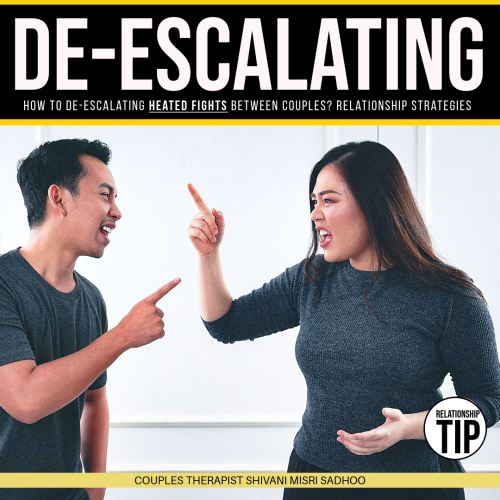
De-Escalate Heated Fights Between Couples by Couples therapist Shivani Misri Sadhoo

How to De-Escalate Heated Fights Between Couples? Relationship Strategies

Yes, a movie ends on a happy note — the hero and heroine walking into their “happily ever after.” But real life actually begins from there. When two people meet and fall in love, they make promises — some spoken, many unspoken.

As days turn into months and years, conflicts slip in naturally. Misunderstandings arise, expectations grow heavier, and the magic of the beginning can start to dim under the weight of everyday reality. But not all conflicts are bad. In fact, some are necessary. They peel away the illusions of perfection and invite both partners to grow. Yet when arguments begin to cross a line — when every disagreement feels like a battlefield — that’s when it’s time to pause.

How to de-escalate heated fights amongst couples?

How to de-escalate heated fights amongst couples?

Arguments shouldn’t spoil the bond; instead, learning to de-escalate them can strengthen it. And to help couples handle these stormy moments, says Shivani Misri Sadhoo, a leading relationship expert and one of the highly experienced marriage counsellors in Delhi, India.

Press the Pause Button

When an argument starts to intensify, it helps if one person presses pause right away. A relationship grows stronger when both people choose connection over winning, because it’s not about who’s right—it’s about how you treat each other while you work through things together.

Taking a short break lets emotions cool, prevents regretful words, and gives each person space to reflect on what they’re really feeling.

Research even shows that about twenty minutes is often enough to bring your heart rate down and regain a sense of calm. In moments like these, the healthiest thing you can do is step back and say, “Let’s stop here for a moment. We need to hear each other out.”

How to De-Escalate Heated Fights Between Couples? Relationship advice

Reflect

Once you hit the pause button, the next step is to reflect on your own feelings, on what the situation is really asking of you, and on how things might look from your partner’s side. This small moment of self-check creates space for calm and clarity, making it easier to speak with empathy rather than react out of frustration.

It’s natural to feel convinced that we’re right and the other person is wrong, but pausing helps us soften that instinct and look at the situation with a bit more honesty. In that brief break, you can sort through what you actually need, what may have triggered you, and how to express yourself without blame.

Often, just taking those few intentional seconds is enough to shift the entire tone of the conversation and prevent it from spiraling.

Find out the Real Why

When couples argue, the real issue often slips beneath the surface, buried under reactions, tone, or the heat of the moment‌. That’s why it helps to pause and look for the⁠ true trigger—sometimes it’s something as small as feeling unheard, overwhelmed⁠, or unappreciated, rather than whatever started the argument on the surface.

If you peel back the layers a bit, you might find that one person was already carrying stress‍ from elsewhere, or that an old, unresolved concern got brushed up‍ again without anyone realising it. Getting to that “why” isn’t about assigning blame; it’s about understanding the emotional undercurrent‌ so both people can respond with empathy instead of frustration.

How to De-Escalate Heated Fights Between Couples? Relationship tips

Listen to Your Partner

Sometimes the simplest advice is the hardest to follow — just listen. In the middle of a heated argument, couples often talk over each other, raising their voices without actually hearing a word being said. But listening is one of the most powerful tools for de-escalation.

When you slow down and genuinely pay attention, you’re not just absorbing words — you’re acknowledging your partner’s feelings, showing that their emotions matter, and creating space for understanding instead of defensiveness.

Real listening means trying to grasp what they’re really upset about, what they need, and why it matters to them. It’s a sign of respect, care, and willingness to fix the issue rather than fuel it further.

And often, once someone feels heard, the tension softens naturally; solutions appear more easily, and the conversation becomes less about winning and more about reconnecting. Listening doesn’t magically solve everything, but it opens the door to resolution — and that’s usually all a relationship needs to start moving forward again.

Choose Your Words

It’s surprising how quickly a‍ few careless words can‍ turn a small disagreement into something painful. In the heat of an argument—especially between couples—words can come out harsh, thoughtless, or completely misunderstood, and once they’re said, you can’t take them back.

That’s‌ why choosing your words‍ with intention matters so much, instead of slipping into blame,⁠ personal attacks, or sweeping statements like “you always” or “you never,” try grounding the conversation in your own feelings with gentle “I”‌ statements.

Slow down, listen without interrupting, and make space for your partner to feel heard. Not every disagreement needs a winner; sometimes the real victory is understanding each other better. A little patience, clarity, and‍ kindness can keep a difficult⁠ moment from becoming a damaging one.

In a nutshell, de-escalating arguments isn’t about winning—it is about caring for each other. Take a step back,‍ listen, understand what’s really bothering each other, and communicate gently. Little pauses, honest reflection, and thoughtful words can turn tension into connection, helping couples grow closer instead of drifting apart.

Check out Popular Blog Posts on relationship tips on Couple fights

Pickleball Dating Trending Relationship Counsellor Shivani Misri Sadhoo

What You Need to Know About Pickleball Dating? Shares Expert

In recent years, a new kind of social and romantic trend has been quietly taking over parks, gyms, and recreational centres — Pickleball Dating. What started as a fun, friendly sport for all ages has now evolved into an unexpected matchmaking hotspot. From singles meetups on the court to dating apps adding “Pickleball” as an interest filter, this sporty new way to connect is becoming a favourite among people looking for love — or at least some lively competition, says leading couples therapist and relationship counsellor Shivani Misri Sadhoo.

What Is Pickleball Dating?

Pickleball dating combines the sport of pickleball with the social experience of meeting potential partners. It’s not just about scoring points; it’s about finding chemistry — both on and off the court.

Pickleball itself is a paddle sport that blends elements of tennis, badminton, and ping pong. It’s easy to learn, fun to play, and perfect for group or doubles matches — which makes it naturally social. Because of its friendly pace and interactive setup, it encourages conversation, teamwork, and laughter — all key ingredients for forming connections.

In pickleball dating events, singles are paired up in matches or rotated across different partners, allowing them to meet multiple people in a relaxed, non-pressured setting. Think of it as “speed dating meets recreational sport” — where compatibility is tested through playful rallies instead of awkward small talk.

Why Is Pickleball Dating Trending?

There are several reasons why pickleball dating has become one of the most talked-about modern dating trends:

1. It’s Active and Fun
People today are looking for experiences that go beyond sitting in a café or swiping endlessly on dating apps. Pickleball offers a refreshing change — it gets people moving, laughing, and enjoying the moment. The shared physical activity makes it easier to break the ice and show your authentic self.

2. It’s Social and Inclusive
Pickleball is known for being one of the most inclusive sports — suitable for all ages and fitness levels. That makes it ideal for singles in their 20s, 40s, or even 60s. Unlike some sports that can feel competitive or intimidating, pickleball is lighthearted and community-driven, creating the perfect atmosphere for socializing and forming connections.

3. Post-Pandemic Shift Toward Real Connections
After years of online-only interactions, people are craving genuine, face-to-face connections. Pickleball dating events provide that — a way to meet others in person, bond through shared activity, and avoid the digital fatigue that comes with dating apps.

4. Shared Interests Build Stronger Bonds
When you meet someone who enjoys the same hobby, the connection feels natural. Pickleball dating gives singles a common ground — literally and figuratively — from the very first serve. It’s an instant icebreaker that fosters teamwork, communication, and friendly competition.

5. Celebrities and Media Influence
Pickleball’s popularity has skyrocketed thanks to celebrity endorsements and media coverage. Famous figures like Leonardo DiCaprio, Ellen DeGeneres, and the Kardashians have been spotted playing, bringing the sport — and its dating potential — into the mainstream.

The Bigger Picture: Why Pickleball Dating Works

Beyond being a trend, pickleball dating reflects a broader shift in how people approach relationships. Modern singles are prioritizing shared experiences, health, and emotional compatibility over superficial dating norms. Playing pickleball together reveals personality traits — teamwork, patience, humor — that can’t be seen through a screen.

It also reduces the awkwardness that comes with traditional dating. The focus on fun and movement makes it easier to let your guard down. Even if you don’t find romance, you walk away with new friends and a good workout — a win-win situation.

Pickleball dating is more than a passing fad — it’s a sign of how people are redefining connection in today’s world. It’s about mixing sport, laughter, and a little bit of flirtation in a space where everyone feels welcome.

Whether you’re new to the dating scene or just looking for a fresh way to meet people, picking up a paddle might be your next best move. After all, love — like pickleball — is about finding the right rhythm, playing fair, and enjoying the game together.

What is feeling of touch-starved in relationship advice

Are You Feeling Touch-Starved in Your Relationship? Here’s How to Overcome It

Relationships are rarely perfect. Every couple experiences phases of closeness and distance, highs and lows. Yet, it’s often the little things—a warm hug, holding hands, or a gentle touch on the shoulder—that strengthen emotional bonds. Human touch plays a far more powerful role than many realize, promoting happiness, trust, and emotional security. Simple gestures like caresses, back rubs, or embraces release oxytocin, reducing stress and deepening connections.

When touch is absent for too long, a condition known as touch starvation can develop, creating feelings of isolation and distress. Recognizing its signs and learning ways to reconnect physically and emotionally is essential for maintaining a healthy relationship, says Shivani Misri Sadhoo, who is one of India’s top couples and marriage counselors.

Feeling Touch-Starved in Your Relationship

Understanding Touch Starvation

Touch starvation, sometimes called “skin hunger,” occurs when the body goes without nurturing physical contact. The skin’s nerves and pressure receptors respond to touch, triggering the release of “feel-good” chemicals like oxytocin. Without it, the nervous system can become restless, increasing stress and loneliness. Over time, prolonged absence of touch can impact both emotional and psychological well-being.

Why Does Physical Touch Matter?

Humans are wired for connection. From birth, gentle touch communicates safety, love, and security. Touch continues to play a vital role throughout life, offering multiple benefits:

  • Reduces Stress: Touch lowers cortisol levels, calms the nervous system, and boosts mood-regulating chemicals like dopamine and serotonin.
  • Strengthens Emotional Bonds: Hugs and gentle touches release oxytocin, enhancing trust, intimacy, and positive feelings toward others.
  • Promotes Physical Health: Regular nurturing touch can improve immunity and lower blood pressure.
  • Supports Mental Health: Touch has been shown to ease sadness, reduce anxiety, and lift overall mood.

Even small gestures—such as holding hands, a pat on the back, or a gentle embrace—can make a profound difference.

Signs You May Be Touch-Starved

Feeling disconnected from your partner or loved ones may indicate touch starvation. Common signs include:

  • Persistent Loneliness: You may feel isolated even when surrounded by loved ones if physical affection is missing.
  • Mood Imbalances: Lack of touch can reduce oxytocin levels, leading to irritability, anxiety, or low mood.
  • Heightened Sensitivity: When touch is scarce, even brief physical contact can feel deeply comforting and emotionally significant.
Feeling Touch-Starved in Your Relationship

Ways to Overcome Touch Starvation

  • Self-Touch and Self-Care – Self-touch, like hugging yourself or placing a hand over your heart, can provide comfort and ease stress. Practicing mindful self-care, extending compassion inward, and treating yourself with kindness are essential parts of addressing touch starvation.
  • Communicate with Loved Ones – Openly expressing your need for physical affection with your partner, family, or friends can help bridge the gap. Virtual interactions, such as video calls or heartfelt conversations, can also provide emotional nourishment when in-person contact isn’t possible.
  • Alternative Forms of Touch – Engaging in activities that provide tactile stimulation, such as pet therapy, massage, weighted blankets, or using stress-relief objects, can help satisfy the body’s need for touch.
  • Appreciate Small Gestures – Daily, simple acts—like sitting close, sharing a gentle touch, or exchanging a meaningful glance—can strengthen intimacy and connection. Even subtle gestures contribute to emotional bonding.
  • Reconnect Through Memory – Recalling past moments of affection can reinforce emotional closeness and help the mind feel the warmth of nurturing touch.

Touch is more than physical contact; it is essential emotional nourishment. When absent, it can leave individuals feeling lonely, anxious, and disconnected. However, through self-care, communication, mindfulness, and small acts of connection, touch starvation can be addressed. Rebuilding meaningful physical and emotional closeness helps restore trust, love, and well-being in relationships.

Is Absolute Honesty Good for Your Relationship

Is Absolute Honesty Good for Your Relationship?

In every relationship, honesty is often described as the cornerstone of trust and intimacy. Couples who value transparency usually feel more connected and secure. Yet the idea of absolute honesty—sharing every thought, feeling, or opinion without filter—raises important questions.

Can complete openness strengthen a relationship, or can it sometimes create more harm than harmony? It’s being explained by relationship expert and marriage counsellor Shivani Misri Sadhoo.

marriage counsellor Shivani Misri Sadhoo answers if Honesty is Good for Your Relationship

What is the Role of Honesty in Relationships?

Honesty provides the foundation on which trust is built. When partners are truthful, they foster an atmosphere of safety and reliability. Admitting mistakes, acknowledging emotions, and expressing needs openly are all examples of honesty that support healthy bonding, says Shivani Misri Sadhoo, a leading couples therapist in India.

However, honesty is more than just stating facts. The intention and manner of communication play a crucial role. Truth spoken with sensitivity can build closeness, while truth expressed harshly or without consideration may cause emotional damage.

The Challenges of Absolute Honesty – While honesty is essential, absolute honesty—sharing every thought without reflection—may not always serve the relationship. Several challenges emerge when honesty is taken to its extreme:

Overwhelming the Partner – Not all thoughts require expression. Passing or impulsive ideas, if shared unnecessarily, may create confusion or hurt without adding value.

Tone and Delivery – A Brutal or blunt truth can feel like criticism. Reframing a statement with empathy can make the same truth easier to hear. For example, instead of saying, “You never listen to me,” one could say, “I feel unheard when I talk about my day.”

Maintaining Emotional Safety – Relationships thrive when both partners feel emotionally safe. Absolute honesty, expressed without care, may erode this safety and create distance.

marriage counsellor Shivani Misri Sadhoo answers if Honesty is Good for Your Relationship

Privacy vs. Secrecy – Every person deserves a degree of privacy. This is not the same as keeping secrets; it is about recognising that not every private thought needs to be shared in order for the relationship to remain healthy.

Striking the Right Balance – The healthiest approach lies in thoughtful honesty, not absolute honesty. This means being genuine while also considering the emotional impact on the partner. Key aspects of balanced honesty include:

  • Expressing feelings and needs clearly so that misunderstandings are reduced.
  • Communicating with compassion, ensuring the truth is shared with kindness.
  • Avoiding unnecessary bluntness, as honesty should build the relationship rather than weaken it.
  • Listening with openness, since honesty also involves accepting a partner’s truth with respect.

Absolute honesty is not always beneficial in relationships. What strengthens intimacy and trust is authentic, considerate honesty—the type that is truthful yet compassionate, open yet respectful of emotional safety. Relationships flourish when honesty is practiced in a way that nurtures growth rather than causing harm.

Instead of aiming to share every thought without filter, couples are encouraged to focus on honesty that deepens connection, builds trust, and allows both partners to feel safe being their true selves.

checking your partners phone answers marriage counselor Shivani Misri Sadhoo

Is it Bad to Check Your Partner’s Phone? Answers Expert

In today’s hyper-connected digital age, mobile phones have become personal vaults of communication, memories, and daily routines. Within relationships, this can create tension—especially when one partner feels tempted to check the other’s phone. From a couples therapy standpoint, this behaviour is not just about curiosity or suspicion—it often reflects deeper issues such as insecurity, boundary confusion, or a lack of emotional trust. Understanding the dynamics behind this urge is crucial for nurturing healthy, respectful relationships.

Shivani Misri Sadhoo one of the best marriage counsellor in Delhi

Is it bad to check your partner’s phone or not?

Shivani Misri Sadhoo, leading relationship expert and one of the best marriage counsellors in India, shares her views on the topic.

Trust Is the Cornerstone of Intimacy

Relationship therapists consistently highlight that trust forms the foundation of emotional safety between partners. When one partner checks the other’s phone without consent, it may signal a breakdown of that trust. Such actions are less about finding concrete evidence and more about addressing emotional uncertainty or fear of betrayal. Without rebuilding trust through open dialogue, phone-checking can erode the sense of security in the relationship.

Privacy Does Not Equal Deception

Therapeutic models of healthy relationships recognise the importance of individual boundaries, even within close emotional bonds. Each partner is entitled to a sense of personal space—digital or otherwise. Privacy in this context is not synonymous with secrecy; rather, it is a sign of respect for individuality. When partners respect each other’s boundaries, it fosters mutual confidence and emotional maturity.

The Behavior Often Escalates Conflict

Research and clinical observations show that covertly accessing a partner’s phone can create more harm than resolution. Misinterpretations of messages, lack of context, or unexpressed emotions often lead to defensiveness, accusations, and emotional withdrawal. Over time, repeated violations of privacy can create a pattern of distrust, making conflict resolution more difficult and damaging relational stability.

Shivani Misri Sadhoo best marriage counsellor

Underlying Issues Must Be Addressed, Not Avoided

Phone-checking is rarely the core problem—it is typically a symptom of deeper relational concerns such as past infidelity, emotional disconnect, or fear of abandonment. Therapy focuses on identifying these root causes and facilitating honest communication. Without addressing these underlying issues, the urge to monitor a partner’s digital behaviour may persist, perpetuating a cycle of mistrust and anxiety.

Open Communication Is the Healthier Alternative

Rather than resorting to surveillance, couples are encouraged to engage in transparent, non-confrontational conversations about their concerns. When both partners feel heard and understood, the need for secretive behaviour diminishes. Establishing shared boundaries, clarifying expectations around digital privacy, and rebuilding emotional trust are all essential steps supported by relationship therapy frameworks.

Checking a partner’s phone without consent is rarely a sign of a healthy relationship. While the impulse may stem from genuine fear or hurt, the act itself often causes greater harm. From a therapeutic perspective, the path to stronger relationships lies not in silent monitoring but in open-hearted communication, emotional safety, and mutual respect for boundaries.

Why People Stay Single relationship tips

Why Are You Still Single? 4 Key Reasons That Often Make People Stay Single

Being single is not a flaw. It can be a conscious, empowered, and deeply fulfilling choice. While society often paints romantic relationships and marriage as the ultimate milestones of adult life, many people are choosing a different path. They don’t see marriage as the be-all and end-all. Instead, they prioritise personal growth, career goals, creative pursuits, spiritual exploration, and deepening connections with friends and family.

Reasons why you are still single answers Shivani Misri Sadhoo

What makes one stay single?

If you are wondering why some people genuinely love staying single, here are four reasons shared by leading relationship and marriage therapist Shivani Misri Sadhoo.

1. They love their Independence

One of the biggest reasons people enjoy staying single is the freedom that comes with it. Relationships often involve compromises, shared responsibilities, and constant coordination—which can feel limiting for those who deeply value their independence. When you’re single, you can set your own schedule, chase personal goals, and make decisions without having to factor in someone else’s needs.

That kind of autonomy can be incredibly fulfilling, especially for those who thrive on self-reliance and personal growth. Choosing to stay single doesn’t mean someone is selfish—it simply means they’re prioritising their own well-being and sense of identity. And there’s nothing wrong with that.

2. Painful Past Experience

Another reason some people choose to stay single is because of painful past experiences. When someone has been deeply hurt in a previous relationship, it can leave emotional scars that take a long time to heal. The fear of being hurt again makes it hard to trust or open up.

Even if they want love, the memories of heartbreak hold them back. Staying single becomes a way to protect their heart, to avoid the pain they once knew too well.

are you still single relationship tips by Shivani Misri Sadhoo

3. Longing and Boundaries

Some people avoid relationships because their emotional needs feel too intense, even shameful. They fear being a burden, so they isolate themselves to protect others—and themselves. Others are aware of their neediness but try to manage it, often shaped by early experiences with emotionally demanding caregivers.

They might avoid intimacy to protect their boundaries or fear being overwhelmed by a partner’s needs. Both responses are valid and deeply human. Healing starts by understanding your story, accepting where you are, and gently making space for both connection and self-protection.

4. Avoid Commitment

Some people stay single because they fear commitment—not out of coldness, but from a deep, often quiet vulnerability. The idea of merging their life with someone else can feel suffocating or risky. Maybe they’ve seen relationships fall apart or felt trapped in the past.

Commitment demands trust, openness, and emotional risk, which can be daunting. For them, staying single offers a sense of control and emotional safety. It’s not that they don’t crave connection—they just struggle with the weight of promises that feel too heavy or permanent to carry.

In a nutshell, people stay single for all sorts of deeply human reasons—some love their freedom, others are healing from old wounds. Some guard their hearts with healthy boundaries, while others quietly fear the weight of commitment. Whatever the reason, choosing to stay single can be a brave, thoughtful, and beautifully intentional way to live.

marriage counselling tips by Shivani Misri Sadhoo

How to Improve Your Daily Communication with Your Wife?

Good communication is the foundation of a healthy and happy marriage. Yet, as daily responsibilities pile up—work, children, family obligations—it’s easy for couples to fall into a routine where meaningful conversation takes a backseat. If you’ve found yourself exchanging only the bare minimum with your wife discussing bills, chores, or logistics it’s time to pause and reflect. Strong, open communication helps build trust, deepen emotional intimacy, and prevent misunderstandings that can lead to bigger conflicts, reveals leading relationship expert and marriage counsellor Shivani Misri Sadhoo.

marriage counsellor Shivani Misri Sadhoo tips for Indian couples

Why Communication Is Important With Your Wife?

Communication is not just about talking—it’s about connecting. When you make an effort to listen and share with your wife truly, you nurture emotional closeness. Regular and meaningful communication allows both partners to express their needs, concerns, dreams, and even disappointments in a safe space.

Without this, small issues can develop into significant problems. Good communication reduces unnecessary tension, fosters teamwork, and keeps the bond between you strong even during life’s toughest challenges. For many couples, a lack of communication is at the heart of emotional distance and marital dissatisfaction.

Ways to Improve Your Daily Communication

  • Make Time for Conversations—No Matter How Busy You Are – Set aside at least 10-15 minutes each day where you both can talk without distractions. This could be during breakfast, after dinner, or before bedtime. The key is to be consistent. Even small, daily check-ins can make your wife feel heard and valued.
  • Listen to Understand, Not to React – When your wife shares something, focus on listening carefully rather than planning your response. Avoid interrupting or offering solutions right away. Sometimes, she may just need you to listen with empathy.
marriage counseling advice Indian couple - grow husband wife talks
  • Express Appreciation Regularly – Often, we overlook the power of small words like “thank you,” “I appreciate you,” or “you did a great job.” Expressing gratitude not only makes your wife feel seen but also strengthens positivity in the relationship.
  • Use “I” Statements Instead of “You” Statements – When discussing a sensitive topic, say “I feel hurt when…” rather than “You always make me feel…”. This reduces defensiveness and encourages healthier dialogue.
  • Be Honest but Kind – Open communication means being honest about your feelings, but always with respect. If something is bothering you, share it gently instead of letting resentment build.
  • Ask Open-Ended Questions – Rather than yes/no questions, ask “How was your day?” or “What’s on your mind lately?”. This invites richer conversations and shows genuine interest in her thoughts and feelings.
  • Limit Screen Time When Together– Put down your phone or switch off the TV when she’s talking. Giving her your undivided attention shows that you value what she has to say.
  • Learn Her Communication Style – Some people like to process out loud; others need time before they’re ready to talk. Understanding how your wife prefers to communicate can help you connect more effectively.

Improving daily communication doesn’t require grand gestures—it’s about small, consistent efforts that show your wife she matters to you. Over time, these habits can bring warmth, closeness, and resilience to your marriage.

Tips To Make Yourself Emotionally Stronger

Whether it relates to your relationships, career, or your own self well-being, knowing how to tough through disturbing situations by finding ways to be emotionally strong can positively impact your life. When it comes to stress, it can affect many people in various ways, some might cry every time they are frustrated or guilty. While others choose to be quiet and hide until they feel good. Though, there is nothing wrong with either of those situations. Being aware of how to manage your emotions and dictate why you are feeling them can help you understand yourself in a better way so that you can stop considering yourself weak.

Emotional strength comes from when you allow yourself to be both independent and dependent. This means developing up your internal resources and becoming comfortable seeking and accepting help,

Learning how to handle life’s misfortunes is a great method to build your emotional strength.

Delhi’s top marriage counsellor and relationship expert Shivani Misri Sadhoo share tips to make yourself emotionally stronger.

Respect the Strength Of Your Past

It becomes difficult to be emotionally strong if you keep living in the past. You need to throw away those thoughts and accept the reality that those struggles made you who you are today, which is a strong, better person. Many a time we have bitterness from the devastation, slavery or even family history of violence and crime. You can instead, respect the struggles and our cultures in a way which are positive. Do not discount the struggle, instead see how it can be a way to respect the strength in your past. If you can honor the strength of the past, you are a result of that past, so you honor yourself and become stronger.

Make Healthy Choices

A lot of your emotional strength generally comes from within. This means you will most likely feel your best if you eat healthily and treat your body with utmost care. Remember that every time you make healthy choices, you actually strengthen yourself. For example, have you selected an apple over a sweet candy, one point scored for becoming stronger? Have you taken a stroll and enjoy the view? Another point scored for resiliency. Honor every time you create a healthy decision.

Help Others in Need

It may sound weird to help other people especially when you are trying to figure out things for yourself. But when you are unselfish you can become strong because the care you show towards others can reverberate and look into caring for your own life, too. Helping others creates empathy and it makes us a better person, over a period of time. This way you become stronger emotionally.

Embrace Your Adversities

Never beat yourself up when things are not going your way. Failing is a part of life and how you look to challenge and accept it can really alter your perspective in a positive manner. Try to practice some positive psychology and start to embrace all your challenges and adversities as your greatest teachers and power for changes.

Identify Your Emotions

Do not look to criticize or punish yourself for having certain feelings. It is natural to feel low, angry or jealous. When you experience any negative emotions, carefully analyze them and figure out what you want your next step to be. Allow yourself to identify and accept every emotion you have and then decide if you want to follow this emotion or let it go.

marriage counselor in Delhi blog Image

How to Create a Strong and Intimate Relationship?

Relationship Tips by Marriage Counsellor Shivani Misri Sadhoo

Many of you believe that love should be similar to the kind of romance you see portrayed in movies, television, and storybooks. Due to this notion, you may feel that a romantic relationship are less if you do not experience this kind of fairy tale relationship.

Many a time you feel like if you can have a perfect prince or princess then life will be a lot easier. You will think that your life will be safer forever.

The reality is you did marry a prince or a princess but that person is also a human, who will have faults and shortcomings like any other person, does not matter how wonderful he or she is. You need to understand that at some point you have to let go of the unrealistic metaphor of romantic love in order to search true happiness.

So, how could you make relationships work and remain happy?

You need to begin with the understanding of what eternal love is and then redefine and update the romantic fairy-tale into a healthier kind of love.

Today, Delhi’s eminent marriage counselor and relationship expert Shivani Misri Sadhoo reveals how to create a strong, intimate relationship. Here they are. These will help you to create true intimacy, find real love and be truly happy in your relationship.

Use Relationships to Teach You How to Be Complete within

Relationships are not just about having another person fulfil you, but coming to the relationship whole and sharing your life interdependently. By letting go of the romantic ideal of merging and becoming “ONE” to love the gaps in a relationship as much as the closeness.

Look Your Partner For Who He or She Really Is

The tragedy in romance happens when you look at the person you are in love with as a symbol of what they have come to show, the idea of him or her. When you understand that more often than not you do not actually know your partner, you start to discover who they are and how they change and evolve.

Be Willing To Learn From Each Other

The idea is to see the other as a mirror and learn from the image of how you can be a better person. When you feel upset, rather than blame your partner and pointing fingers, remain awake to what is yet to be healed in yourself.

Get Comfortable Being Alone

In order to accept that love cannot save you from being alone, try to learn to spend time being with yourself. By feeling safe and secure to be on your own within the core of the relationship, you will feel complete and happy.

Own Who You Are


We generally grasp at romantic love because we’re desiring for something that is beyond reach, something in our partner that we do not think we possess in ourselves. Sadly, when we finally get love, we discover that we have not got what we were looking for.

Understand that true love only exists by loving yourself first. You can get only from another person what you are willing to give yourself.

Embrace Ordinariness


Once the fairy-dust start of a relationship ends, we find ordinariness, and we often try to do everything we can to avoid it. The idea is to see that ordinariness can become the real “spice” of intimacy. The daily loveliness of sharing life with your partner can, and does, become extraordinary.

Monitor Closely Why a Fight May Start

Many couples create distance by fighting and then making up time and again. This allows you to continue the romantic trance, creating scenes and escaping real intimacy. If you become aware of what you fear about intimacy, you will have a better sense of why you are fighting and are likely to fight less.

Expand Your Heart

One thing that unites us is that we all want to be happy. This happiness generally includes the desire to be close to someone in a loving way. To create true intimacy, get in touch with the spaciousness of your heart and bring awareness to what is good inside you. It will be easier to identify the good in your partner when become connected to the good in yourself.

Focus on Giving Love

True happiness is not about feeling good about yourselves because other people love you this is more about how well you have loved yourselves and others. The unintentional result of loving others more deeply is that we are loved more deeply.

Let Go Of Expectations

You might look at things such as romance and constant togetherness to fill a void in yourself. This will certainly cause suffering. If you unconsciously expect to receive love in particular ways to avoid giving that love to yourself, you will put your sense of security in someone else. Create upon your own inner-resources to offer love, attention, and nurture to yourself when you require it. This way you can allow love to come to you instead of putting expectations on what it needs to look like.

These are some ways by exploring them you can create a strong and intimate relationship.