Category Archive : best couples therapist India

relationship counseling by shivani misri sadhoo

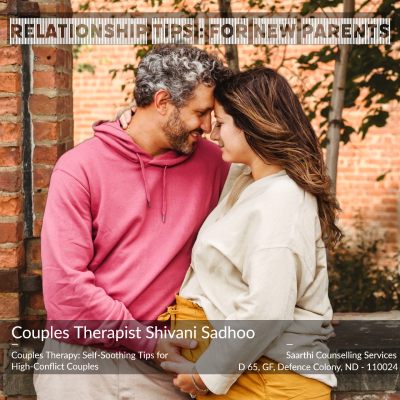
Relationship Tips for New Parents to Thrive in the Transition to Parenthood

Marriage Counselor and Relationship Expert Shivani Misri Sadhoo shares some amazing tips for couples to nurture their relationship as parents

A baby brings boundless joy to new parents, for within their tiny form lies the miracle of life. While the demands of parenthood may challenge their time and energy, the flame of love between mom and dad can still persist.

Balancing the demands of parenthood and maintaining a strong connection with your partner requires effort and understanding. In this article, India’s top marriage counselor Shivani Misri Sadhoo offers some tips and tricks for nurturing your relationship as a new parent.

marriage counselor shivani misri sadhoo blog

What are those ways to nurture your relationship as a parent?

Here, Shivani Sadhoo shares some of the methods, that could make your transition to parenthood a smooth ride.

Why Communicate with Compassion?

Effective communication is the foundation of any healthy relationship. As new parents, take time to listen to each other’s concerns, fears, and joys. Be mindful of your partner’s emotional needs and offer support and encouragement.
Choose your words carefully, speaking kindly and respectfully, even when fatigue and stress take hold. Remember, open and honest communication will help you navigate the challenges together and deepen your bond. When your baby cries, you’re compassionate. Extend that to your partner. Relationships change after a baby, but growth happens when you change together.

Do it together as a team

Parenthood is a team sport, and collaboration between partners is vital. Share the responsibilities of childcare and household chores, support each other’s needs, and find a balance that works for both of you. Recognize and appreciate each other’s contributions, acknowledging the value of teamwork in creating a harmonious environment for your family.

Nurture intimacy

After having a baby, physical and emotional intimacy can be neglected. Yet, it’s vital to prioritize a romantic connection. Make time for intimate moments like cuddling, date nights, or heartfelt conversations. Small gestures and expressions of love foster a strong bond.

Take care of yourself

Remember to take care of yourself amidst the demands of parenthood. It’s essential to nurture your own well-being, as it directly impacts your relationship with your partner. Prioritize self-care activities such as exercise, meditation, or pursuing hobbies that bring you joy. By taking care of yourself, you’ll have more energy and positivity to invest in your partnership.

Express appreciation

Show gratitude for each other’s efforts and support. Recognize and acknowledge the hard work and dedication that goes into being a parent. Small gestures of appreciation can go a long way in fostering a positive and nurturing environment.

The Power of Giving Space

Granting each other space as new parents fosters personal growth and maintains individuality. It involves recognizing the importance of alone time, pursuing hobbies, and nurturing friendships outside of parenthood, strengthening the partnership.

Conflict management

Managing conflicts effectively is crucial in any relationship, and this becomes even more challenging when you have a newborn due to the added stress and exhaustion. Use “I” statements to express how you feel, such as “I feel overwhelmed when…” or “I need support with…”. This can help avoid blaming and encourage understanding.

Seek Support

New parents often feel overwhelmed. Seek support from family, friends, or professionals. Connect with experienced parents, join groups, or consider couples counseling. Asking for help lightens the load and strengthens relationships.

Embrace Imperfections

Parenthood is a journey of constant learning and growth. Embrace the imperfections and understand that mistakes are inevitable. Be patient and forgiving with yourself and your partner. Celebrate the small victories, and remember that every day presents an opportunity to strengthen your bond and create beautiful memories together.

As you embark on the incredible journey of parenthood, remember that nurturing your relationship is just as important as caring for your little one. Enjoy this remarkable chapter of your lives, cherishing the moments of joy, and growing stronger as a couple with each passing day. And if you need any help, we are there to guide you. 

couples therapy for conflict shivani misri sadhoo

Self-Soothing Tips for High-Conflict Couples

Shares Delhi’s Top Marriage Counselor Shivani Misri Sadhoo

In any relationship, conflict is a natural occurrence, and it is not uncommon for things to escalate, even in healthy partnerships. Navigating through an environment that often feels chaotic and confusing can be challenging.

It is important to understand what high conflict looks like and to develop specific strategies for self-soothing during and after such intense situations. Read this blog by India’s top marriage counselor Shivani Misri Sadhoo on how to self-soothe if as a couple there is a high conflict.

marriage counseling for conflict shivani misri sadhoo

What Does High Conflict in Couples Feel Like?

High conflict can be overwhelming for your nervous system, as it triggers a strong response in your body. The stimuli become loud and intrusive, leading to a flood of emotions and physical reactions. You may notice sensations such as increased body heat, muscle tension, a clenched jaw, and a racing heart rate.

In these moments, accessing the rational part of your brain becomes challenging. This is because when you feel emotionally or physically unsafe, your brain tends to operate from the instinctual part, activating the fight, flight, freeze, or fawn response.

Although it may seem like conflict arises out of nowhere, there is often a buildup that leads to those intense moments. Tensions may have been simmering for a day or even longer, without finding a resolution.

To avoid reaching this point, it is crucial to address smaller issues as they arise and create dedicated time to tackle larger ones instead of avoiding or ignoring them. By consistently addressing and resolving conflicts as they come up, you can prevent them from accumulating and escalating into high-conflict situations.

You Find Yourself In A High Conflict, Now What?

Even with the best intentions, finding yourself in a high-conflict situation can happen. In such moments, it is important to take immediate action. Begin by identifying the shift in the conversation. Often, these discussions start off on a reasonable level and gradually escalate, making it challenging to recognize the shift right away.

To help identify where you are in the conflict, consider asking yourself the following questions:

  • Are you having difficulty processing what is being said?
  • Are you merely listening to respond rather than listening to understand?
  • Are you and your partner engaging in name-calling or displaying aggressive behaviors, such as invading personal space, yelling, throwing items, or engaging in unwelcome physical contact?

If you answer yes to one or more of these questions, you are indeed in a high-conflict situation.

Once you’ve recognized the situation, take a moment to acknowledge this realization and promptly change your environment. Let your partner know that you feel the conversation has become unproductive and that you need a break. Find a different room or step outside to get some fresh air.

In your new environment, begin practicing deep breathing. Take slow, intentional breaths by inhaling through your nose for a count of 4, fully extending your torso, including your back. Hold your breath for a count of 2, and then exhale slowly through your nostrils for a count of 6. Repeat this process as many times as necessary.

Next, reinforce your inner strength and grounding by reminding yourself of your truths through affirmations. Here’s an example to get you started: “I am present in my body, I am deserving of love and respect, and I am supported and grounded.”

These three steps—changing the environment, practicing deep breathing, and engaging in self-affirmation—can effectively break the cycle of the instinctual brain response. By consciously implementing these techniques, you can regain control over your emotions, promote a sense of calm, and create space for productive and respectful communication to resume.

marriage counseling for conflict shivani misri sadhoo

How to Self-Soothe?

Once you have regained access to your “smart” brain, you can choose from various self-soothing techniques to further calm yourself:

  • Self-soothing touch: One effective method is to give yourself a comforting hug. Sit upright, stretch your arms wide as you inhale, and then cross your arms around yourself with your right arm underneath on the exhale. Take three deep breaths in this position before releasing your arms and repeating the process, this time with your left arm underneath.
  • Listen to calming music: Select soothing music that helps calm your nervous system and bring your heartbeat back to a normal rhythm. Opt for tunes with a slower beat to promote relaxation.
  • Go for a mindful walk: Engage in a mindful walk by immersing yourself in the present moment. Observe your surroundings with all your senses, taking in the sights, sounds, and smells without passing judgment or getting lost in thought.
  • Engage in your favorite self-care activity: Dedicate time to indulge in activities that bring you comfort and relaxation. This could include taking a warm shower or bath, practicing your favorite stretches for relaxation, engaging in guided meditation, or surrounding yourself with pleasant scents like lavender.

By incorporating these self-soothing techniques into your routine, you can further enhance your ability to calm your nervous system and regain a sense of control and stability during high-conflict situations. Remember, self-soothing is a personal process, so feel free to explore and experiment with different techniques to find what works best for you.

In high-conflict situations, recognizing the problem, practicing self-soothing, and creating a conducive mindset for nonjudgmental conversation are crucial for finding lasting resolutions. Seeking assistance from a couples therapist specialized in conflict resolution can be beneficial. The Gottman Relationship Coach program, “Making Up After an Argument,” provides guidance for managing overwhelming conflicts.

The Gottman Relationship Adviser offers a comprehensive tool for improving relationship health through personalized plans. The Gottman Assessment provides in-depth insights into relationship dynamics. Seeking external support and utilizing these resources can nurture a healthier and more resilient partnership.

Gottman reference has been mentioned as Couples Therapist Shivani Misri Sadhoo is one of few Gottman Certified Marriage Counselors in India

couples therapy by Shivani Misri Sadhoo

5 Ways to Inspire Your Partner to Join You in Attending Couples Therapy

Challenges in relationships are inevitable. When both partners are willing to face the challenges hand-in-hand and act together to find win-win solutions, the majority of problems can be managed.

But many times couples lack the needed skills and tools to work through even solvable issues in their relationship. As unresolved problems, poor relationship habits, and emotional disconnection grow, the stability and spark in the relationship seem to fade. At this stage, one partner might be too eager to get some support since they know the relationship would benefit from the guidance of a professional perspective. Yet the other half is refusing to attend. 

When approaching your partner regarding attending couples therapy, you are likely to meet resistance. Certainly, people have some sort of misconceptions regarding couples therapy; they might fear “exposing” their shortcomings and feeling vulnerable, or they might believe therapy will turn them into a punching bag for the therapist and their partner.

couples therapy by Shivani Misri Sadhoo

Some couples might use therapy as a last-ditch attempt, rather than a preventative method to improve their relationship, says marriage counselor Shivani Sadhoo.

In this article, Delhi’s leading marriage counsellor Shivani Misri Sadhoo explores five effective ways to inspire your partner to join you in attending couples therapy, letting both of you embark on a journey towards a healthier and happier relationship.

Communicate openly and honestly

The primary step towards inspiring your partner to attend couples therapy is open and honest communication. Form a safe and non-judgmental space where you both can express your feelings and concerns. Explain why you feel therapy could be beneficial for your relationship and share your desire to work together towards resolving problems. Emphasize that therapy is not a symbol of failure, but rather a proactive step towards personal and relational growth.

Highlight the benefits of couple’s therapy

Help your partner understand the possible benefits of couple’s therapy. Discuss how therapy could provide a neutral environment for both of you to explore underlying issues, enhance communication, and gain valuable insights into each other’s perspectives.

Emphasize that therapy is an opportunity to learn new methods and strategies to enhance your relationship, boost intimacy, and strengthen the bond between you. By highlighting these benefits, you can easily alleviate any fears or misconceptions your partner may have about therapy.

Lead by example

Sometimes actions speak louder than words. Take the initiative by going for therapy yourself first, whether it is individual counselling or therapy focused on personal growth. This showcases your willingness to invest in your own well-being and shows your partner that therapy is not a one-sided endeavour.

As your partner witnesses the positive transformations you experience through therapy, they may become more willing to join you in couples therapy, realizing the potential it holds for both of you.

Give reassurance and support

Your partner might have reservations or fears related to attending couples therapy. Reassure them that you are committed to the process and that therapy is collaborative work, not an opportunity to shift blame or find fault. Assure them that therapy is a confidential space where both partners will be heard and understood. Give your support throughout the process, emphasizing that you are in this together and that attending therapy is an investment for your relationship’s future.

Explore different therapy options together

Research multiple therapy options together and find a therapist who resonates with both of you. Involve your partner in the selection procedure to ensure their comfort and engagement. Discuss different therapy modalities and methods, like cognitive-behavioural therapy, emotionally-focused therapy, or solution-focused therapy. By involving your partner in the decision-making process, you form a sense of ownership and collaboration, increasing the likelihood of their active participation in couples therapy.

Inspiring your partner to join you in attending couples therapy needs patience, understanding, and effective communication. By following these suggestions above —communicating openly, highlighting the benefits, leading by example, offering reassurance and support, and exploring therapy options together—you might inspire your partner to embark on this transformative journey towards a healthier and happier relationship. Remember, it takes both partners’ commitment and willingness to make a couple’s counselling a success.

emotional neglect marriage shivani misri sadhoo

How to Deal with Emotional Neglect in a Marriage

Emotional neglect happens when the emotional needs of an individual are disregarded or are not valued in a relationship. For the one on the receiving end of the neglect, it could be traumatizing and could harm their psyche. Sadly, emotional neglect in marriage is mostly swept under the rug, simply because it is not as visible as physical pain. Some couples may not even realize that they are suffering from the effects of emotional neglect in their relationship.

How to Deal with Emotional Neglect in a Marriage Shivani Misri Sadhoo

Signs of emotional neglect in Marriage

The first thing you require to do is to identify the signs that you are suffering from emotional neglect in your marriage. As each marriage dynamic is distinct, its manifestations in your relationship are also different.

However, there are certain tell-tale signs to look out for:

  • You feel alone in your relationship.
  • You will rather spend time alone than be with your partner.
  • You do not engage in any social activities together.
  • You are shut down by your spouse when you talk.
  • You repeatedly suppress your feelings
  • You do not feel that you can be yourself around your partner
  • You are not clear about what your spouse wants from you

How Does Emotional Neglect Damage Relationships?

Shivani Sadhoo says emotional neglect is the bane of several marriages.

It is damaging to a relationship since emotional support is one of the core bases to a successful marriage. When there is emotional support, affection, and intimacy also follow. And without affection and intimacy, both partners will become unhappy. The level of emotional support in each marriage differs according to the different emotional needs of the partners involved. Emotional neglect is contextually relative; the extent of what is defined as neglectful conduct varies on a case-to-case basis.

Delhi’s top marriage counselor Shivani Misri Sadhoo shares some tips to cope with emotional neglect in marriage.

How to Deal with Emotional Neglect in a Marriage Shivani Misri Sadhoo

Do not play the victim

It certainly hurts when your spouse is not fulfilling your emotional needs. However, this is no reason to play the victim card. If you do that, it will simply worsen the situation. You end up in a blame game and that does no favour for your relationship. 

The finest way to deal with it is to talk directly to your partner. Let them know how you feel and where you think they are lacking. When talking to your spouse, make certain you do it in a respectful and honest manner. There is no problem in a marriage that open and honest communication cannot fix. This is one of them.

Work through it together

A marriage is a two-way relationship. You cannot fix a problem if there is just one interested party. Both parties should make an equal effort at fixing a problem.

Once you open up to your partner, you require to openly discuss and agree on what steps you require to take to fix the problem. To begin, you can speak up whenever you see any signs of their neglectful conduct. In that manner, they will be able to identify when they are doing something incorrect. Awareness of their behaviour is a good beginning when correcting this issue in your marriage. 

Address the cause

When you face problems in your marriage, the first task to do is to identify the underlying cause for such an issue. You can also use the same procedure in this situation. Before you react to your partner’s behaviour, think about what could be causing it.

  • Is this a recent problem or has your partner been in this manner since the beginning of your marriage? 
  • Is it potentially triggered by an event or situation? 
  • Has there been a sudden alteration in your spouse’s behaviour? 

If the behavioural pattern is triggered by a situation, then your probabilities of fixing it are far better than if it were part of your relationship from the beginning. 

Be proactive

When you are suffering emotional neglect from your spouse, it may be a good time to assess yourself too. Are you neglecting your spouse in other ways? 

Every individual’s requirements are different. Some individuals value emotional support while others value physical intimacy in a marriage. Whatever it is that is the priority of an individual, make it a habit to be aware of it and do your best to fulfil those requirements the best way you can. 

Make time together

Most problems in a marriage can be resolved by making an effort to spend quality time and doing something together. For example, you can travel together or have date nights once a week. 

Marriage can be hard work. While you have this idea of a happily ever after, it cannot be denied that you will experience ups and downs in your marriage. By staying committed to each other, you can overcome these marital issues. 

See a counsellor

A professional counselor is a great choice if you want to resolve conflicts in your marriage like emotional neglect. A counselor can provide an objective and outsider point of view of your problems. 

The counselor could provide some insights into your marital problems that you may not be able to see since you are emotionally and directly involved in the relationship. The counselor can even suggest methods to resolve these problems by assessing the dynamics of your relationship. 

Many couples are hesitant to see a counselor due to the stigma linked with it. However, there is nothing wrong with seeking assistance in order to work through your relationship issues, especially if it means saving your marriage. 

5 Common Tactics People Use to Hide Their Affairs

Infidelity in romantic relationships is surprisingly quite common. Sure, some partners may use infidelity as an exit strategy, eventually wanting their partner to know so that their partner initiates a breakup.

While for some, however, hiding infidelity is a top priority. They want to keep their primary relationship partner. They also want to keep their extra-dyadic partner(s). The price of losing their primary relationship, in these cases, is quite high, so they turn to the hard task of hiding their infidelity, says Shivani Sadhoo.

People differ in how creative they are in hiding infidelity, and how much energy they put into stopping their primary partner from finding out their unfaithfulness.

What are some of the most common tactics used by people to hide their affair?

India’s top couples therapist Shivani Misri Sadhoo cites some of the most common to least common tactics that a person might engage in, in order to hide their affairs.

Be discreet

The most commonly endorsed method to keeping an affair quiet is to be intentional about communications and meetings, to limit any scopes of being discovered.

Behave in the same manner as usual

Unusual behaviors might tip off a primary partner, so unfaithful partners will pay attention and bring their usual self to their interactions with their partner. No matter their usual way of interaction (for instance, as complainers, comedians, helpers, or cheerleaders), they keep that way going after their affair starts. By keeping their couple dynamic the same, they work to eradicate suspicion.

Restrict contact with the extra-dyadic partner

In place of seeing an extra-dyadic partner frequently, a person who wants to maintain their primary relationship (even as they wish to continue their affair) will willingly limit how often they meet up with their extra-dyadic partner. As a ploy of being discreet, attention to frequency lowers the likelihood of discovery.

Pay more attention to their primary partner

A presumed way to distract a primary partner so that they do not become suspicious is to shower them with interest, love, and attention. Being warmer and a lot more generous, for instance, are strategies partners may use to hide an affair.

Lock all technology

Solid evidence of a partner’s affair would not be difficult to come by with all of the recorded communications one relies on today (texting, emailing). Partners who do not delete, or who do delete but want additional safeguards, may make sure, and quite intentionally, lock their devices. Changing passwords, signing out of their social media—these sorts of behaviors are strategies to decrease the primary partner’s awareness.

A person usually knows his/her romantic partners quite well, and he/she, you. On account of this intimacy, unfaithful partners probably have an edge in covering their tracks. They may know which strategies and accompanying mechanisms are more important to use, and which may come off as artificial, suspicious, or alarming to their particular partner. In simple words, they can cater their deception to their primary partner.

Marriage counselling by Shivani Misri Sadhoo

If Your Marriage Going Through Bad Phase, Do These Things

The majority of people underestimate the amount of work it requires to retain a marriage. It is not merely companionship and love but fights, arguments, blame games, and misunderstandings. Couples often fail to realize and act on these negative traits of their marriage, says Shivani Sadhoo thus stumbling into the deep and dark trenches of marital problems. To stop your marriage from struggling further, you and your partner could cater by doing some of the few things that’ll enhance the intimacy between you both, says India’s eminent couples therapist Shivani Misri Sadhoo.

What to do if your marriage is going through a bad phase?

Marriage counselor Shivani Sadhoo says you may do the following if your marriage is going through a bad phase:

Think of your spouse’s happiness

When you start prioritizing your partner’s happiness first, you will witness the wonders it does to your marriage. This would initiate trust, better understanding, and happiness in the marriage. Love, attention, and care completely transform a person.

Surround yourself with healthy relationships

When you are continuously surrounded by negativity i.e. others’ relationships that just include bitterness, fights, and heated arguments, you and your partner are probably to reflect that same energy into your own marriage too. So, it is very essential to surround yourself with couples who have a healthy marriage and are also able to support you likewise.

Repetitive way

When analyzed, you both observe and find a pattern that reflects negative conduct. If you always fight over your partner’s decisions, then look to doing things according to their perspective too. It might be a welcoming change. You could guide your spouse to do the same as well. Once you both come out of a stagnant pattern, you’ll realize there is a lot more to disagreements, arguments, and fights.

A new beginning is not that bad

Never hesitate to begin afresh. If you and your spouse have reached a standstill where things are not working out anymore, you both could start from scratch. Act in a way the teenagers do, who met each other for the first time and took each other on hour-long dates and to the movies. This could be a big change for the both of you, that will result positively.

Professional support

When things simply cannot work out anymore, professional couples therapists or marriage counselors step in to guide you through your struggles. They have a better understanding and neutral approach and intake of your issues as a couple and they will suggest solutions that if implemented, adequately could impact your marriage to a greater degree.

Understand the Power Dynamics in Relationship: Shivani Sadhoo

The role of power plays a crucial role in any relationship. When one specific partner enjoys too much power it often creates disharmony, and imbalance and often becomes the sole cause of the relationship to crumble. Shivani says, that in any marital relationship maintaining the balance in power dynamics helps it to navigate smoothly.

No relationship can blossom when one partner enjoys the power and the other one has little or no say virtually.

India’s top marriage counselor Shivani Misri Sadhoo says times are changing and so do the dynamics of power in your relationship. One who better understands this aspect of balancing power in a relationship stands a higher probability of reaping the goods from their relationship. Here are the things that may help you.

Share power

It is pre-eminent to realize that real empowerment of both partners makes for a happier, healthier family. Learn to balance and divide the power and distribute duties amongst yourselves so that none of you feel stressed or burdened. This needs a mindset shift.

Balance goals for both individual and family

Both partners in a marriage need to honour common goals related to the family and respect individual dreams as well. This lessens the major portion of the load on the husband for the finances and a major portion of the load on the wife for caregiving or in other cases, or vice versa.

Try to influence not impose

Imposing your will and views and one-way communication never help in any relationship. It often leads to a deadlock and damaged egos. The skill of positive impact using listening and questioning is more vital than merely demanding or imposing your views. Honest open communication will assist in solutions when both parties feel empowered and respected.

There may always be a soft balance of power in a husband-wife relationship but to make a long-lasting relationship work, both partners require to feel empowered enough to share their power.

For any relationship to last long, the balancing act of power amongst the partners often decides which way the relationship will march on. If you feel that maintaining the balance in power often creates a rift in your relationship. It is better to introspect and try to include the above-said things to see the positive changes in your relationship.

The 4 C’s That Makes Your Marriage Easy and Enjoyable

Do you remember when you first met your special one? It might have been one of those fairy-tale moments. Everything surrounding you faded into the background and the one thing that existed was them. You gathered up the courage to introduce yourself and your relationship was created

Or it might have been a simple friendship that eventually transformed into a romance.

Regardless of how it started, married life is totally contrasting to dating. And nothing can truly prepare you for marriage.

Marriage could be the most difficult aspect in your life – it could also be the finest thing in your life – likely both too. Shivani Sadhoo says perhaps it is designed that way only.

Marriage is designed to grow two individuals up into better humans. Marriage is not about just being happy, it is about growing.

Keeping this in mind India’s top marriage counselor Shivani Misri Sadhoo shares a few simple points to consider that may help make your marriage better, regardless of how it started.

Even though there is no magical formula for a marriage to work, still certain factors help it to grow. Let us take a look at those factors which are basically the 4 C’s.

What are the key factors between couples, that make marital journeys easy and enjoyable for couples?

Chemistry

There has to be some kind of connection between the two individuals. Similar interests, aims, dreams, etc. While this is not mandatory, it does lay a foundation for several things in marriage, like travel, hobbies, vacations, and outside commitments both individually and together. Take heart and know that if you did not have chemistry, the relationship will be short-lived – so those of you who think or feel you now have nothing in common with your special one after several years of marriage, look and think again because it is probably there.

Communication

Here is another small but important secret for marriage, communication happens every time. In fact, you cannot go without communicating. Everything you say and even don’t say communicates something. Every act you do or don’t do says something too. Communication issues in marriage don’t happen because you cannot communicate, they occur because you do not like the message. In an attempt to master this arena of marriage changes your focus to learning ways to handle the message.

Comedy

Humour is a wonderful reparative aspect of marriage, as well as a fantastic connector. Having the ability to laugh with your loved one, whether this laughter is regarding something external or just about yourself and your relationship, laughter truly is good medicine. Often couples may get bored in a long relationship because of monotonous ways of living life. This is where having a little ingredient of humor in your marital life could often add a spark and color to it.

Commitment

A vital ingredient to any marriage is commitment. Without this, it falls apart. Incidentally, wish to know the secret to a long-lasting marriage? Two individuals who opt to stay married. That is it. Make the decision to stick out through the torrid and rough spots. Often some people say “my marriage is not worth fighting for.” The truth perhaps is they haven’t fought for it. Something is only worth fighting for the post you have fought for it.” Truer words are rarely spoken.

When you are aware of the 4 C’s in marriage, you potentially stand a better chance to have a long and satisfying relationship with your spouse.

Your Therapist Is Now Just Skype/Video Call Away

Feel free to call Counselor Shivani Misri Sadhoo at +91-8860875040 for telephonic or video support and to book an online counselling session to address any relationship issues, emotional and psychological challenges.

Reasons Love Is Not Enough

What Does It Mean To Be Emotionally Safe In A Relationship, Says Shivani Sadhoo?

We all have seen in movies, or read love stories, where the protagonists say that love is everything to survive with their lover. Is it actually, everything? Is it truly possible to love someone but not feel emotionally connected? Do you have a desire to connect? But your (deep yearnings keep making you frustrated without knowing the reason).

Wistfully, there is mostly a gap between the love you feel in your heart and the emotional intimacy you experience with someone. Shivani Sadhoo says the connection one desires may seem so close, so they keep trying, yet it might remain sadly elusive. It is maddening when you love a person but do not experience the trust and safety that is paramount for the relationship to thrive. This emotional safety is a vital foundation for an intimate relationship.

This blog by Couples Therapist and Relationship Counsellor Shivani Misri Sadhoo sheds some light on reasons when love is not enough for your relationship to thrive. Read on to know why?

What are the Components of Emotional Safety?

When you feel emotionally safe, you feel internally relaxed with a person. Your guard is down and your shields do not go up when you interact. You feel truly free to be authentic, which includes expressing your hurts, dissatisfactions, and desires without worrying or fearing that you will be criticized or shamed.

As per John Gottman’s research on marital success, one out of the four factors that lead to disturbed relationships is defensiveness (besides criticism, contempt, and stonewalling). You defend yourself against the painful feelings that may pierce your heart if you are blamed, judged, shamed, and even rejected. Maintaining this invisible wall turns into a barrier that does not let your heart remain soft and open.

There are multiple possible manners to protect yourself when you do not feel safe. You may shield yourself by shutting down and remaining distant; you may minimize contact with your partner or friend. Or you might become critical of others before they have an opportunity to criticize you. Or you defensively turn the tables on them when they show any dissatisfaction with you. (For instance, “well you are not a good listener either” or “you are the one who always forgets not me”).

When you feel safe with a person, you do not have to be defensive since there is little to defend against. When you feel constantly treated with respect and kindness, you can relax internally with a partner. As you trust that your partner or even a friend has the intention and ability to see who you truly are—to hear and understand you, even if they might fall short a few times—you relax more and more with them, which boosts the trust and forms intimacy.

Forming a trusting, non-defensive relationship needs that you provide to another what you desire. Love demands reciprocal sharing—extending yourself toward another’s world in a manner that lets the other one feel emotionally safe with you. Enjoying the wonderful dance of intimacy—the aisle of “undefended love,” the way Jett Paris and Marlena Lyon say it: requires two self-aware, undefended individuals who are emotionally honest with themselves and each other.

Being Yourself and Being Truthful

One of the blessings of forming safety in a relationship is that you feel free to be yourself. If you have been hurt in the past, you may have vowed to never be so trusting and open again. Your heart might flash the signal: “not available for love and to be loved.”

Life is richer when you find a partner with whom to enjoy the special bond that comes from being yourself and feeling accepted as you are. As two people feel secure to be vulnerable with each other—showing tender feelings and desires without the worrying of criticism or rejection—the connection enhances.

Emotional safety also needs telling the truth and keeping agreements. You cannot feel safe with an individual who is deceiving you or when their actions are not in line with their words. Authentic, open, trustworthy communication is the life energy of an intimate relationship.

Certainly, nobody is perfect, and it is much simple to perceive others’ imperfections than to see your own. It is inevitable that sometimes trust will be broken, even in the best of relationships. But emotional safety is something that can be restored if two individuals can find the courage and is determined to address the breach through open, non-defensive communication.

How to Stop Worrying About Small Things?

And Free Your Mind from Anxiety, Reveals Shivani Sadhoo

We worry about various things at home, at our workspace, within our family, and inside our professional circles and that’s obvious but if your worries and fears have turned constant and interfering with your ability to function and relax – then that’s not correct. You might be at risk of having anxiety disorder that involves constant and chronic worrying, nervousness, and tension. And, anxiety disorder is not just a single issue, it commonly triggers various emotional and physical issues like – hypertension, heart issue, depression, ulcers, etc.

Eminent couple’s therapist, Shivani Misri Sadhoo warns that one must try to be careful if one tend to worry about too many things. She adds worry and fear can feel overwhelming and have a way of tricking us into believing that all is lost.  If one is not careful about what to worry about and what to let go then your worry may start to devour you; i.e. it may turn into a habit without notice.

Psychologist Shivani in this blog shares some cool methods that everyone can try and get themselves free from the circle of constant worrying.

“All IZZ Well” – Place your hand over your heart

Like the famous character of Amir Khan, “Ranchordas” in the movie 3 Idiots has suggested, the moment you are worried, stressed, or fearful, place your hand over your heart, close your eyes but instead say “all is well”, try to imagine someone you feel completely safe with.  It could be your spiritual guru, or your parents, or even your pet.  As you remember feeling loved, sit with this feeling for at least 30 seconds.  Notice the calm.

The science behind it? During stress and tension, your fight or flight system is activated and your cortisol levels are elevated.  Deep breathing causes the vague nerve to signal your nervous system to lower your heart rate, blood pressure, and cortisol. Taking just ten deep breaths can assist with relaxation and provide a sense of calm.

Don’t time leap in futures

If you live as if the future has already happened, you will build a habit to worry about something that hasn’t happened yet. You avoid worrying about the future by practising mindfulness, which is a type of meditation in which you focus on being intensely aware of what you’re sensing and feeling in the moment, without interpretation or judgment.

Practising mindfulness involves breathing methods, guided imagery, and other practices to relax the body and mind and help reduce stress.

Practice self-acceptance

There is a strong link between an unsure sense of self and a tendency to worry about small things. Hence it’s important to try shifting your self-concept from negative to positive or develop self-acceptance. It includes body acceptance, self-protection from negative criticism, and believing in one’s capacities.

Your perception drives your worries

If you think deeply, you will realize worries are largely triggered by perceptions. For instance, if your child has not scored well in past academic years, you may start to worry that he/she will not do well in the upcoming examinations too. When you start to constantly worry, you may start to pile stress on your life, and the outcome from it may soon result in constant criticism, constant judgments, constant expression of distrust for your child – resulting in communication gaps. Instead of worrying about what has not happened yet, focus on knowing what may be causing your child to develop disinterest in studies, is there any issue at school or with classmates or with a teacher, etc.