Dynamic Opposites: The “Golden Retriever” partner is openly expressive and seeks constant connection, while the “Black Cat” partner is reserved, independent, and values personal space.
Complementary Strengths: Neither dynamic is better than the other; energetic affection brings spontaneity and warmth, while quiet independence brings stability and calm.
Mutual Respect Over Labels: Healthy relationships aren’t about fitting fixed categories, but rather understanding each other’s needs without creating a cycle of pursuit and withdrawal.
Relationships often bring together two people with very different personalities. One partner may be expressive, affectionate and eager to spend every free moment together, while the other may be quieter, more independent and perfectly comfortable having plenty of personal space.
This contrast has recently been playfully described through the “Golden Retriever” and “Black Cat” relationship archetypes. While these labels are not psychological diagnoses, they offer an interesting way to understand how different personalities can influence attraction, communication and everyday relationship dynamics, shares Shivani Misri Sadhoo who is one of highly experienced couples therapists in Delhi.
Are You the Golden Retriever or the Black Cat in Your Relationship?
The “Golden Retriever” partner is typically portrayed as warm, enthusiastic, affectionate and openly expressive. They may enjoy constant communication, initiating plans and showing their partner how much they care.
The “Black Cat” partner, by comparison, is often portrayed as reserved, independent and selective about when and how they express affection. They may need more alone time and prefer showing love through actions rather than constant verbal reassurance.
Neither personality is inherently better than the other. In fact, the contrast can sometimes be part of what makes the relationship appealing.
“The golden retriever loves like the sun, loud and reaching; the black cat loves like the moon, steady and still. A lasting relationship doesn’t demand the same orbit, only that both appreciate the light they give each other.” Opines Gottman Level 3 Certified couples therapist in Delhi Shivani Misri Sadhoo.
The Golden Retriever Partner
A Golden Retriever-type partner may be naturally optimistic and emotionally expressive. They might text frequently, enjoy physical affection and feel happiest when they are actively sharing experiences with their partner.
They often bring energy and spontaneity into the relationship. However, if their need for closeness becomes excessive, their partner may sometimes experience it as pressure rather than affection.
The Black Cat Partner
The Black Cat-type partner tends to value independence and personal space. They may take longer to open up emotionally and may not constantly communicate their feelings.
That does not necessarily mean they care less. Their affection may appear through quieter gestures, reliability and being present when their partner genuinely needs them.
Why Opposites Can Attract
The differences between these personalities can create a complementary dynamic. The more expressive partner may encourage emotional openness, while the more reserved partner can bring calmness and stability.
The relationship works best when both people appreciate these differences rather than trying to change each other.
When Personality Differences Become a Problem
Problems can arise when one partner interprets the other’s behaviour negatively. A Golden Retriever-type partner may see the Black Cat’s need for space as rejection, while the Black Cat may experience the other’s constant need for reassurance as overwhelming.
Without communication, these differences can create a cycle of pursuing and withdrawing.
It Is Not About Putting People in Boxes
Real personalities are much more complicated than social-media labels. Someone can be affectionate in one relationship and more reserved in another. Personality can also change depending on circumstances, emotional security and life experiences.
Therefore, the Golden Retriever and Black Cat labels are best viewed as fun descriptions rather than fixed categories.
What Matters More Than Your Relationship Type?
Healthy relationships depend less on whether partners are similar or different and more on whether they understand and respect each other’s needs.
One person may need frequent reassurance while the other needs occasional solitude. The important question is whether they can communicate those needs without making the other person feel inadequate or unwanted.
Ultimately, being different is not necessarily a relationship problem. The real challenge is learning how to make those differences work together rather than allowing them to become a source of misunderstanding.
Protecting privacy without hiding the relationship: Discreet dating allows couples to shield their bond from public and digital scrutiny while still openly acknowledging and honoring their commitment to each other.
Driven by safety, peace, and freedom to explore: Modern couples choose discretion to prevent online harassment or doxing, escape social media validation pressures, and navigate relationships on their own terms.
Grounded in mutual honesty and healthy boundaries: True discretion differs fundamentally from deceitful secrecy; it succeeds through transparent communication, mutual consent, and shared relationship boundaries.
When people fall in love, they are literally walking on air. They do not miss any opportunity to express their joy at having found their soulmate.
Whether it is a coffee date, a selfie at a picture-perfect location, or a romantic dinner for two, every little moment becomes an excuse to celebrate their love, often by sharing with the rest of the world, thanks to social media. However, not everyone believes in turning their love life into a public spectacle.
Secret Dating Boom Advices Relationship Counselor
They don’t want an audience for their romance. It is their own private world. They prefer to keep their dates under wraps, meet away from prying eyes and enjoy the company of each other away from the public eye. Surprisingly, Discreet Dating has become a modern trend, nowadays.
Before we proceed further, let us first understand what Discreet Dating means exactly.
Discreet Dating is all about keeping a romantic relationship private, but not a secret. There is a difference between the two. While discreet dating allows you to keep your personal life away from public scrutiny, secret dating on the contrary involves actively hiding a relationship, sometimes by pretending to be single or hiding a partner from family and friends.
In a nutshell, discretion is about setting boundaries, while secrecy may involve hiding the truth. For instance, a couple may choose not to share their love life with their near and dear ones or post on social media. By doing this, they are not denying their relationship. This is their personal choice. But, if a couple hides their relationship for fear of being judged by others or are guilty of something, it can be considered as secret dating.
Secret Dating Boom Advices Relationship Counselor
“Love does not need a public audience to be meaningful. What matters is the honesty, trust, and understanding two people share, whether their relationship is public or private.” — Shivani Misri Sadhoo, Relationship and Marriage Counsellor.
A relationship can be private without being any less meaningful. The difference lies in the intent: privacy sets boundaries while secrecy can hide the truth.
Why Is Discreet Dating the Modern Choice?
1. Privacy Matters
Yes, perhaps one of the most important reasons why some people prefer to date discreetly is because of privacy. Not everybody likes to showcase their romance in public.
Moreover, it is the question of safety. With too much information available online, sharing details will only invite unwanted attention, judgement or even harassment.
Sometimes, one’s private information is revealed without their consent, a phenomenon known as Doxing. Thus, it is wiser to keep your relationship private, rather than advertise it to the whole world.
2. Makes it Exciting
Sometimes, it is simply the joy of having something special that belongs only to the two of them. In a world where people share almost anything and everything about their life on social media, couples may find discreet dating quite refreshing. It could be a simple walk in the park, a quiet dinner at home, or sharing a bowl of popcorn while binge-watching their favourite series. These little moments can become special when couples can enjoy them without feeling the need to share every detail with the world.
3. Fear of Judgment
We all know that love does not always follow the rules. And, when a relationship goes against society’s idea of what is acceptable, keeping it away from the public eye is perhaps the best thing to do. This is one reason why many couples choose to date discreetly nowadays. Whether it is an extramarital affair, a polyamorous relationship, or a romance that goes against family expectations, the fear of being judged can make people shield their love lives. They may worry about losing friends, facing family disapproval, or damaging their professional reputation, making privacy a safer choice.
Secret Dating Boom Advices Relationship Counselor
4. Fake Promises by Dating Apps
Gone are the days when dating was confined to chance encounters, introductions through friends or carefully arranged meetings. Today, dating apps have opened up a world of possibilities, but just like any other good thing also comes with a lot of demerits. These apps to have brought their share of complications. Instead of mindless scrolling, half-hearted conversations and the pressure to put one’s personal life on display. Many are rethinking what they truly want from a relationship. Thus, discreet dating allows you to view the relationship from a very different perspective, where the couples can explore their connection on their own terms, away from public scrutiny and unnecessary expectations.
5. Freedom to Explore
There is no one-size-fits-all formula when it comes to love. While some swear by monogamy, others find fulfilment in open relationships, polyamory or other forms of consensual non-monogamy. But, when love refuses to follow convention, society can be quick to pass judgment. The fear of gossip, criticism or stigma may prompt couples to keep their romantic lives private. Discreet dating, after all, allows them to explore different kinds of relationships on their own terms, without turning their personal choices into a subject for public debate.
Secret Dating Boom Advices Relationship Counselor
Love does not really need an audience to feel real. Whether it is about privacy, safety, fear of judgment or the freedom to explore, discreet dating offers that liberty to love on their own terms. After all, not all love stories need a public announcement for a happy beginning.
Question 1: What is discreet dating, and how is it fundamentally different from secret dating?
Counselor Insight: Privacy is a shared boundary that builds trust; secrecy is a unilateral barrier that fosters doubt and emotional isolation.
Ans. Discreet dating means choosing to keep your romantic relationship away from the public gaze, social media broadcasts, and casual acquaintances. Both partners are fully aware of and celebrate the bond, but they deliberately draw a boundary around their private sanctuary.
Secret dating, by contrast, is characterized by active concealment, evasion, or deception. In a secret relationship, one or both partners often pretend to be single, hide the other from family or trusted friends out of shame or fear, or conceal an illicit arrangement without consent.
As relationship counsellor Shivani Misri Sadhoo notes, ‘The difference lies in the intent: privacy sets boundaries while secrecy hides the truth.’ In discreet dating, you are protecting what is precious; in secret dating, you are hiding something you are afraid to confront.
Question 2: Why are modern couples increasingly choosing to keep their romance off social media?
Counselor Insight: A romance lived for the camera often forgets to live for each other. Discretion restores sacred intimacy.
In a hyper-connected digital culture, sharing every milestone on Instagram or TikTok invites unwanted surveillance, unsolicited opinions, and comparison from strangers and acquaintances.
First, safety is a practical motivator. Oversharing personal dating details, schedules, and locations can lead to unwanted intrusions, unsolicited messaging, or doxing (having private personal information broadcast publicly without consent).
Second, couples are finding that keeping their dates private makes romance significantly more exciting and genuine. Without the performative pressure to stage picture-perfect photos or seek digital likes, partners can focus entirely on each other, turning simple rituals like a quiet dinner or an evening walk into sacred, undisturbed experiences.
Question 3: Can a discreet relationship be truly healthy, deeply committed, and emotionally secure?
Counselor Insight: Love does not require an audience to be validated. True emotional security comes from internal commitment, not public applause.
Ans. There is a pervasive cultural myth that if a partner doesn’t ‘soft-launch’ or proudly display their relationship on social media, they must not be committed. Psychological evidence shows the exact opposite: public displays of affection often correlate with insecure attachment rather than authentic stability
A relationship can be profoundly committed, loving, and long-lasting without being displayed to an external audience. What matters is the emotional safety, transparency, and loyalty the two individuals share within their private world.
Couples who choose discretion often report fewer external arguments, less interference from gossip or family drama, and greater resilience because their bond is anchored in personal connection rather than external social validation.
Question 4: How does discreet dating protect people from societal judgment and professional repercussions?
Counselor Insight: You owe nobody a front-row seat to your personal life. Protecting your career and peace of mind is an act of self-care.
Ans. Societal expectations around dating remain rigid in many communities and professional circles. When a couple’s connection challenges conventional norms—such as significant age gaps, interfaith or intercultural partnerships, polyamorous structures, or workplace romances—public exposure can trigger severe backlash
In corporate and high-profile careers, an individual’s professional credibility and privacy are paramount. Broadcasting a personal relationship can invite office gossip, biased evaluations, or boundary violations by colleagues and clients.
Discreet dating shields partners from premature external criticism, giving the couple the protective time and space needed to strengthen their connection before deciding if, when, and how to introduce their bond to the wider world.
Question 5: How can couples ensure discreet dating remains healthy and doesn’t devolve into harmful secrecy?
Counselor Insight: If keeping things private makes you feel cherished, it is healthy discretion. If it makes you feel invisible or invalidated, it is toxic secrecy.
Ans. To prevent discreet dating from slipping into toxic secrecy or emotional manipulation (such as ‘pocketing’ or hiding an affair), couples must practice active communication around three key benchmarks:
Mutual Willingness: Privacy must be a joint decision that makes both partners feel valued and protected, never a demand imposed by one partner to keep their options open or hide infidelity.
Inner Circle Awareness: While the relationship is kept off social media and away from casual acquaintances, healthy discretion typically allows trusted inner confidants or close family to know that the couple is happily together.
Regular Check-ins: Partners should periodically discuss how the privacy arrangement feels. If either partner begins feeling hidden, dismissed, or ashamed, the boundaries must be reassessed honestly and with empathy.
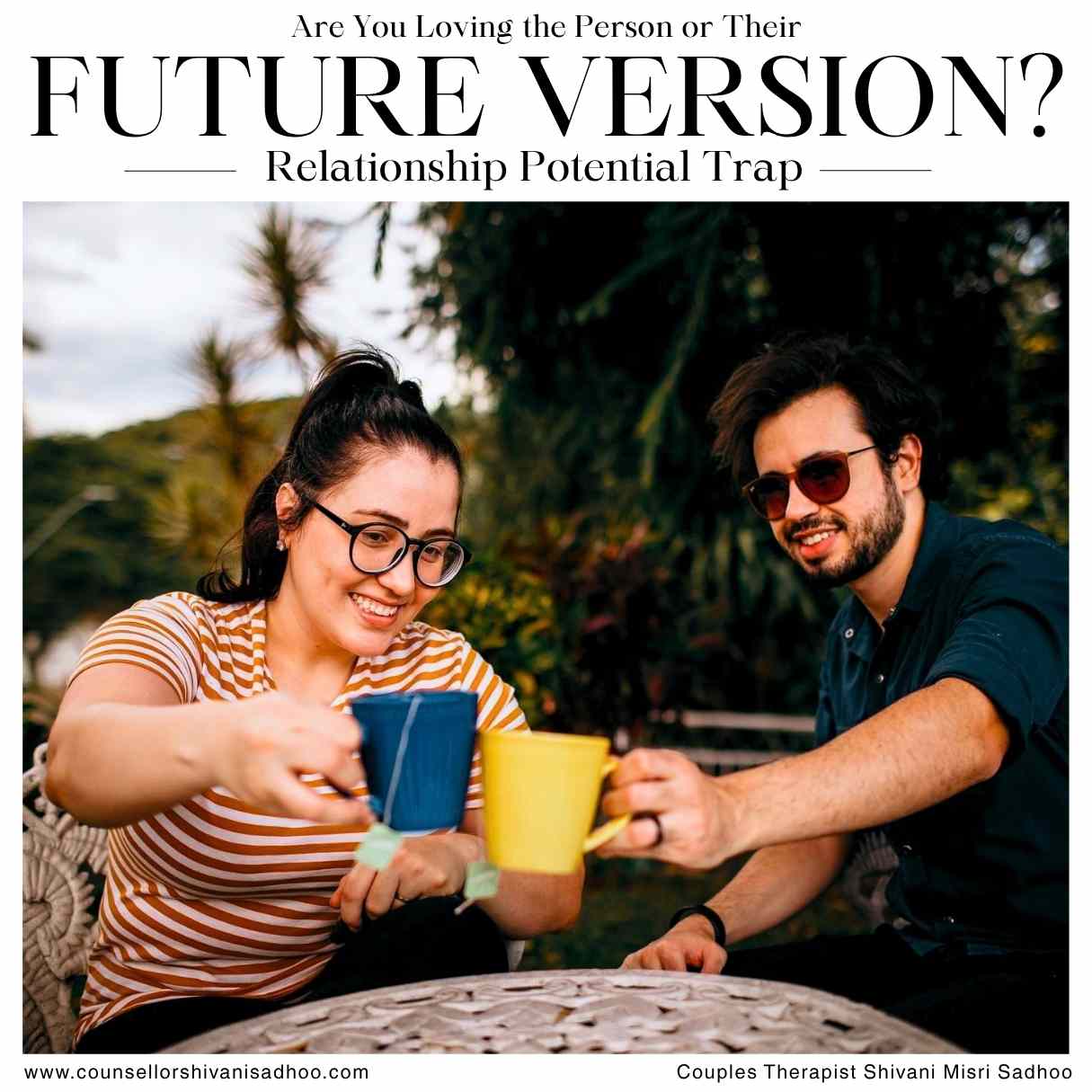
Potential describes who someone might become, while behaviour shows who they are today.
Supporting personal growth is different from waiting indefinitely for someone to change.
A healthy relationship should be evaluated by its present reality as well as its future possibilities.
Sometimes, a relationship can feel full of promise even when the present reality is complicated. You may see how caring, confident, ambitious or emotionally available your partner could become and find yourself deeply attached to that possibility.
But there is a subtle difference between supporting someone’s growth and building a relationship around who you hope they will eventually become. When the imagined future becomes more important than the person in front of you, you may find yourself loving potential rather than reality, shares Shivani Misri Sadhoo who is an eminent couples therapist in Delhi.
Why Does Relationship Potential Feel So Powerful?
Potential gives a relationship a sense of possibility. You may notice someone’s good qualities and imagine how much better the relationship could become if certain things changed.
Perhaps they communicate poorly now but you believe they will eventually open up. Maybe they avoid commitment but you expect them to become ready. Or they have qualities you love, while the behaviours that hurt you are treated as temporary.
Every person can change and grow. However, potential is something imagined, while behaviour is something observable.
Someone may say they want to become more communicative, responsible or committed. Those intentions matter, but their repeated actions provide more information about where they currently stand.
A healthy relationship does not require someone to be perfect. It does, however, require you to recognise the person they actually are rather than constantly adjusting your expectations around who they might become.
One sign of the potential trap is repeatedly making excuses for behaviour that hurts you.
You might tell yourself that they are distant because they have had a difficult past, that they will become more reliable once their career settles down, or that they will eventually understand what you need.
Understanding someone’s circumstances can create empathy, but it does not automatically change the impact of their behaviour on the relationship.
You May Become Attached to the Future
When your emotional investment is based heavily on what could happen, the relationship can start feeling like a project.
Instead of enjoying the relationship as it exists, you may constantly wait for the next stage: when they become more committed, communicate better, change their priorities or finally become the partner you imagined.
This can make the present feel like something you simply have to tolerate until the future arrives.
Supporting Growth Is Different From Waiting for Change
There is an important distinction between encouraging a partner and expecting them to transform.
Supporting growth means accepting that your partner is responsible for their own choices while appreciating genuine progress. Waiting for change can mean staying emotionally invested in a version of someone that does not yet exist.
A partner can grow while remaining fundamentally themselves. You should not have to construct an entirely different version of them in your imagination to make the relationship work.
Pay Attention to Patterns, Not Promises Alone
Words can communicate intentions, but patterns reveal consistency.
If someone repeatedly says they will change but their behaviour remains unchanged, it may be useful to look at what is actually happening rather than relying solely on future promises.
This does not mean people cannot change. It simply means meaningful change is generally demonstrated through consistent behaviour over time.
Ask Yourself What You Are Experiencing Now
A useful way to reflect on a relationship is to temporarily remove the imagined future from the picture.
Consider the relationship as it exists today. Do you feel respected? Can you communicate openly? Are your needs acknowledged? Is there mutual effort? Do you enjoy the relationship beyond the hope that it will eventually become something different?
These questions can help separate genuine compatibility from attachment to potential.
Relationships naturally involve hopes, plans and dreams for the future. Wanting your partner to grow is not inherently unhealthy.
The problem arises when the future version of someone becomes the reason you tolerate an unsatisfying present. A relationship has to exist in the present, not only in the version you imagine it could become.
Recognising the difference between someone’s potential and their current reality can help you understand what you are actually choosing—and what you are simply hoping will happen.
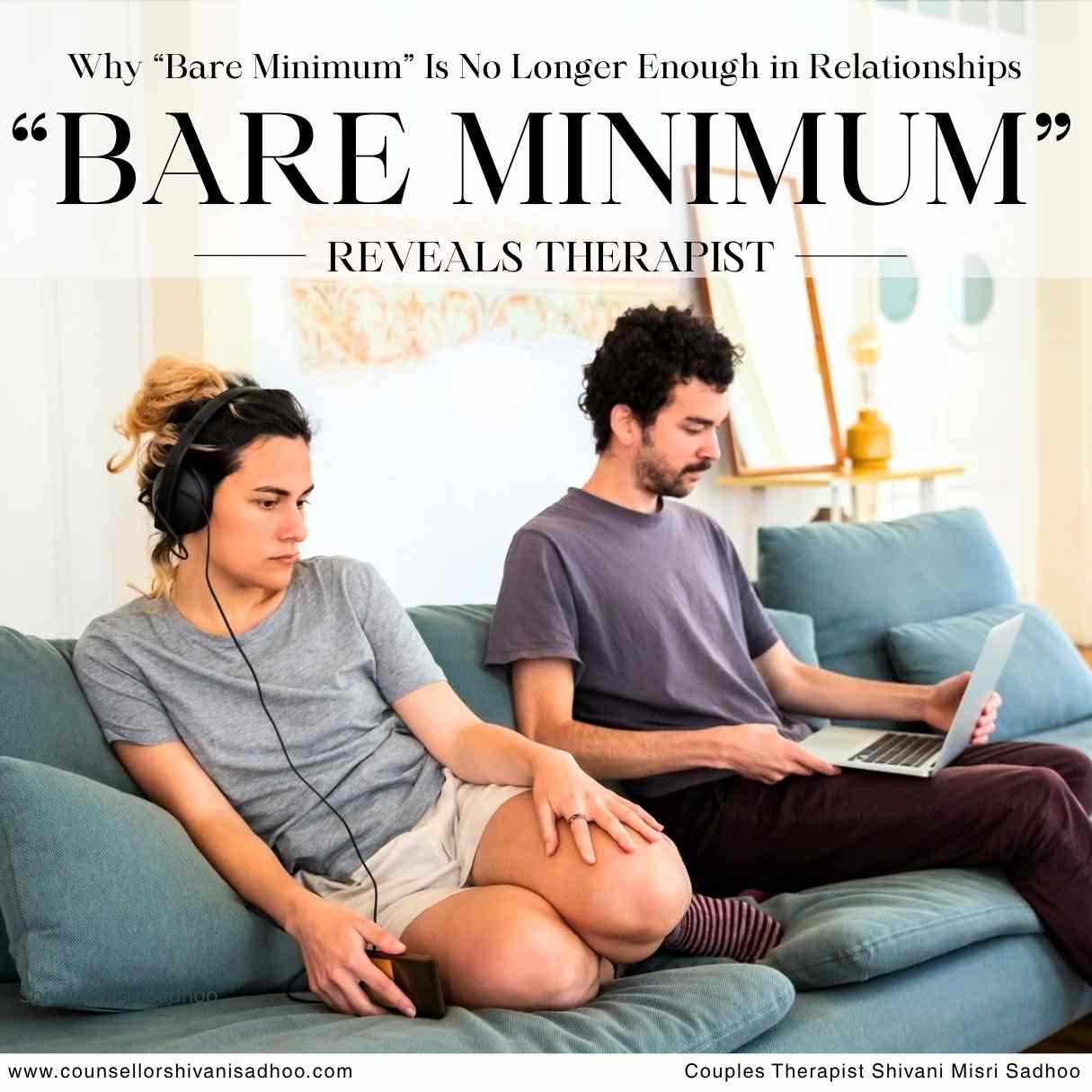
Bare minimum is not enough: Healthy relationships need consistent care, effort and emotional support.
Effort should be mutual: Both partners must communicate, compromise and contribute to the relationship.
Respect and consistency matter: Genuine love is shown through everyday actions, understanding and trust.
Relationships are often built on love, trust, care and mutual understanding. However, in today’s world, people are beginning to question what they truly deserve from a partner.
Simply being present, replying occasionally or avoiding major mistakes may once have been considered enough. Now, many people believe that healthy relationships require more than the bare minimum.
The phrase “bare minimum” refers to the basic effort someone makes to maintain a relationship. While these actions are important, they should not be mistaken for genuine emotional investment.
The bare minimum includes basic actions that should naturally exist in a healthy relationship. These may include being honest, showing basic respect, communicating regularly and remaining faithful.
These are not extraordinary acts. They are the foundation of a relationship. When someone expects praise for doing only these basic things, it may suggest that the relationship lacks deeper effort.
For example, replying to a partner only when convenient, remembering important dates occasionally or offering support only after repeated reminders may not create a strong emotional connection.
A relationship cannot thrive when one person is constantly asking for attention, care or understanding.
People are becoming more aware of emotional well-being, personal boundaries and relationship standards. Social media, conversations around mental health and changing ideas about partnership have encouraged individuals to reflect on what makes a relationship fulfilling.
Many people no longer want relationships where they feel ignored, emotionally unsupported or taken for granted. They want partners who actively participate in building a meaningful connection.
This does not mean expecting perfection or grand romantic gestures every day. Instead, it means wanting consistent effort, emotional availability and a sense that both people genuinely care about the relationship.
Emotional Availability Matters
Being physically present is not the same as being emotionally available. A partner may spend time in the same room but still remain distant, distracted or unwilling to discuss feelings.
Emotional availability means being willing to listen, understand concerns and create a safe space for honest communication. It involves showing interest in a partner’s experiences, fears, goals and emotional needs.
People increasingly want relationships where they can express themselves without feeling judged or dismissed. Emotional support is not an extra benefit; it is an important part of emotional intimacy.
Consistency Is More Important Than Occasional Grand Gestures
A surprise date, expensive gift or romantic message can feel special, but meaningful relationships are built through everyday actions. Consistency often matters more than occasional displays of affection.
Checking in after a difficult day, remembering small details, keeping promises and making time for each other can create a stronger bond than dramatic gestures.
When effort appears only after an argument or when a partner feels they might lose the relationship, it may not feel genuine. Healthy effort should be regular rather than dependent on conflict or pressure.
Communication Should Not Feel Like a One-Person Responsibility
In many relationships, one partner becomes responsible for starting difficult conversations, solving misunderstandings and keeping the connection alive. This can create emotional exhaustion over time.
A healthy relationship requires both partners to communicate openly. This includes discussing expectations, addressing problems respectfully and being willing to listen without becoming defensive.
Good communication does not mean agreeing on everything. It means making an effort to understand each other and finding ways to handle differences with maturity.
Effort Should Be Mutual
A relationship becomes unbalanced when one person is always planning, apologising, supporting and making compromises while the other simply receives the benefits.
Mutual effort does not always look identical. One partner may express love through words, while the other may show it through actions. What matters is that both people contribute in ways that make the relationship feel valued and secure.
When effort is mutual, neither person feels that they are carrying the entire emotional responsibility of the partnership.
Respecting Boundaries and Individuality
Modern relationships are also placing greater importance on personal boundaries and individuality. Being in love does not mean giving up personal interests, friendships, goals or independence.
A supportive partner respects personal space and understands that both individuals need time for themselves. Healthy love should encourage growth rather than create control, fear or emotional dependence.
Respect also means accepting a partner’s feelings, opinions and limitations, even when they are different from one’s own.
Bare Minimum Versus Genuine Care
There is a clear difference between simply avoiding harmful behaviour and actively making a relationship better.
Not lying, not cheating and not being abusive are basic expectations. Genuine care goes further by showing kindness, offering support, making thoughtful decisions and considering how one’s actions affect the other person.
A partner who truly values the relationship does not only ask, “What can I get away with?” Instead, they think about how they can contribute to trust, comfort and emotional security.
Healthy Expectations Are Not the Same as Unrealistic Demands
Expecting more effort does not mean demanding constant attention, expensive gifts or a perfect relationship. Every person has different responsibilities, emotional needs and limitations.
Healthy expectations are based on respect, honesty, consistency and communication. Unrealistic demands, on the other hand, may involve expecting a partner to meet every emotional need or never make mistakes.
The goal is not perfection. It is a relationship where both people are willing to acknowledge mistakes, make improvements and show that the connection matters.
Building Relationships Beyond the Bare Minimum
The changing attitude towards relationships reflects a desire for deeper and more meaningful partnerships. People want to feel chosen, heard, respected and supported—not merely tolerated.
Moving beyond the bare minimum involves small but consistent actions: listening carefully, keeping promises, communicating openly, showing appreciation and making space for each other’s growth.
A fulfilling relationship is not measured only by the absence of problems. It is measured by the presence of care, understanding and shared effort.
A New Standard for Love
The bare minimum may keep a relationship functioning, but genuine effort helps it grow. Love requires more than simply being present; it requires emotional involvement, responsibility and a willingness to show up consistently.
As relationship expectations continue to evolve, people are recognising that they deserve partnerships where effort is mutual and affection is expressed through everyday actions.
A healthy relationship should not make someone grateful for basic respect—it should make both partners feel valued, understood and loved.
Paperclipping is when someone reconnects after ghosting without genuine commitment.
It often creates emotional confusion and can reopen old wounds.
Healthy relationships require consistency, accountability, and respect.
Dating trends continue to evolve with the rise of social media and dating apps, bringing new relationship behaviors into the spotlight. One term that has recently resurfaced is paperclipping, a pattern where someone who once disappeared from your life suddenly reaches out again with little or no explanation.
While the message may seem harmless, paperclipping can stir old emotions, create confusion, and prevent people from moving forward. Understanding this behavior can help you recognize unhealthy relationship patterns and protect your emotional well-being shares Shivani Misri Sadhoo who is an eminent marriage counselor, relationship expert in Delhi.
Why Do People Return After Ghosting Without Real Intentions?
Paperclipping happens when someone who previously ghosted or ended communication unexpectedly reconnects through a text, social media reaction, or casual conversation. In many cases, the person is not looking to rebuild the relationship or offer a sincere apology.
Instead, they may be seeking attention, validation, or simply checking whether they still have a place in your life. This behavior can create false hope because it often lacks genuine commitment or accountability. While every situation is different, consistently returning without meaningful effort is a sign of an unhealthy communication pattern.
“A genuine connection doesn’t disappear without explanation and return only when it’s convenient. Consistency, honesty, and respect are what truly define a healthy relationship.” Says couples counselor Shivani Misri Sadhoo
The Origin of the Term
The name paperclipping comes from Clippy, the animated paperclip assistant once featured in Microsoft Office. Just as Clippy would unexpectedly pop up on a computer screen, a paperclipper suddenly reappears after a long period of silence, often acting as if nothing happened.
How Paperclipping Affects Emotional Well-Being
When someone unexpectedly returns after disappearing, it can reopen emotional wounds that had already begun to heal. The sudden contact may create uncertainty, encourage overthinking, and make it harder to move on. People often find themselves questioning the other person’s motives or wondering whether the relationship deserves another chance.
Signs You May Be Experiencing Paperclipping
Paperclipping usually begins with a casual message after weeks or months of no contact. The person may avoid discussing why they disappeared, show inconsistent interest, and disappear again once they receive attention. They rarely make meaningful efforts to rebuild trust or establish a healthy relationship.
Setting Healthy Boundaries
Not every person who reconnects has bad intentions, but actions matter more than words. A sincere attempt to reconnect includes honesty, accountability, and consistent effort. If someone repeatedly enters and exits your life without addressing the past, setting clear boundaries can help protect your emotional health and prevent the cycle from repeating.
Paperclipping is a reminder that not every return deserves a second chance. While reconnecting with someone can sometimes lead to a healthy relationship, genuine intentions are shown through accountability, consistency, and respect. Recognizing the signs of paperclipping can help you make informed decisions, maintain healthy boundaries, and prioritize relationships that offer stability rather than uncertainty.
Dating apps have changed how people in India meet and form relationships. What was once considered taboo is now widely accepted, especially among urban youth and working professionals. Apps like Tinder, Bumble, Hinge, and several Indian platforms promise convenience, choice, and compatibility.
Dating apps are growing rapidly in India due to changing social dynamics and digital accessibility. Young adults today value independence and prefer choosing their partners based on shared interests and personal compatibility rather than traditional matchmaking systems.
Another key factor is lifestyle change. Long working hours, remote jobs, and migration to new cities make it difficult to meet people organically. Dating apps provide a fast and convenient way to connect without relying on social circles.
Increased smartphone usage and affordable internet have also played a major role. Dating apps are no longer limited to metro cities; users from tier-2 and tier-3 cities are actively joining these platforms.
Lastly, dating apps offer flexibility and control. Users can decide whom to talk to, what information to share, and when to disengage, making online dating appealing to people who prefer privacy and autonomy.
Warning Signs and Dangers of Using Dating Apps in India
One of the most common risks on dating apps is encountering fake profiles. Scammers often use stolen or heavily edited photos and fabricate personal details to appear trustworthy. Over time, they build emotional connections and eventually ask for money, favors, or sensitive information.
Financial Fraud and Romance Scams
Financial scams are a serious issue in India. Fraudsters may pretend to be business professionals, army officers, or NRIs and lure users into fake investments or emergency money requests. Once emotional trust is built, victims often ignore red flags and suffer significant financial losses.
Emotional Manipulation and Harassment
Some users engage in emotional abuse through gaslighting, guilt-tripping, or pressuring matches for intimacy. Persistent messaging, controlling behavior, or pushing for explicit content are major warning signs. In extreme cases, private chats or photos may be used for blackmail or threats.
Physical Safety Risks
Meeting strangers offline carries real physical dangers. There have been reports of assault, stalking, extortion, and coercion after in-person meetings arranged via dating apps. Since most platforms do not conduct detailed background checks, users often have limited knowledge of a person’s true identity or intentions.
Privacy and Data Misuse
Sharing personal details too early can lead to privacy violations. Phone numbers, addresses, workplace information, or social media accounts can be misused for identity theft, cyberstalking, or long-term harassment.
Some of the best tips to follow for safety while using dating apps are:
Verify Profiles Carefully
Check for consistency in profile photos, bios, and conversation details. Profiles with very limited information or overly perfect images should be treated cautiously. Reverse image searches can help identify stolen pictures.
Never Share Financial or Sensitive Information
Avoid sharing bank details, OTPs, Aadhaar numbers, home addresses, or personal documents. No genuine match will ask for money or confidential information, especially in the early stages.
Use In-App Messaging
Stick to the app’s chat feature initially instead of shifting immediately to WhatsApp or Telegram. Dating apps provide reporting, blocking, and moderation tools that offer an extra layer of protection.
Meet Only in Public Places
For first meetings, choose well-lit, public locations such as cafés, restaurants, or malls. Inform a trusted friend or family member about your plans and avoid isolated or late-night meetups.
Trust Your Instincts
If someone rushes intimacy, avoids video calls, gives inconsistent stories, or makes you uncomfortable, disengage immediately. You do not owe politeness at the cost of your safety.
Stay Informed and Update Privacy Settings
Regularly review app privacy settings and stay aware of common online dating scams in India. Knowledge and awareness are your strongest defenses against misuse.
Dating apps can be a powerful tool for meeting new people, but they require caution and awareness. By understanding common dangers, recognizing warning signs, and following practical safety tips, users can enjoy online dating while protecting their emotional, financial, and physical well-being.
Smart decisions and strong boundaries are the key to safe and meaningful connections in the digital dating world.
In today’s hyper-connected digital age, mobile phones have become personal vaults of communication, memories, and daily routines. Within relationships, this can create tension—especially when one partner feels tempted to check the other’s phone. From a couples therapy standpoint, this behaviour is not just about curiosity or suspicion—it often reflects deeper issues such as insecurity, boundary confusion, or a lack of emotional trust. Understanding the dynamics behind this urge is crucial for nurturing healthy, respectful relationships.
Relationship therapists consistently highlight that trust forms the foundation of emotional safety between partners. When one partner checks the other’s phone without consent, it may signal a breakdown of that trust. Such actions are less about finding concrete evidence and more about addressing emotional uncertainty or fear of betrayal. Without rebuilding trust through open dialogue, phone-checking can erode the sense of security in the relationship.
Privacy Does Not Equal Deception
Therapeutic models of healthy relationships recognise the importance of individual boundaries, even within close emotional bonds. Each partner is entitled to a sense of personal space—digital or otherwise. Privacy in this context is not synonymous with secrecy; rather, it is a sign of respect for individuality. When partners respect each other’s boundaries, it fosters mutual confidence and emotional maturity.
The Behavior Often Escalates Conflict
Research and clinical observations show that covertly accessing a partner’s phone can create more harm than resolution. Misinterpretations of messages, lack of context, or unexpressed emotions often lead to defensiveness, accusations, and emotional withdrawal. Over time, repeated violations of privacy can create a pattern of distrust, making conflict resolution more difficult and damaging relational stability.
Underlying Issues Must Be Addressed, Not Avoided
Phone-checking is rarely the core problem—it is typically a symptom of deeper relational concerns such as past infidelity, emotional disconnect, or fear of abandonment. Therapy focuses on identifying these root causes and facilitating honest communication. Without addressing these underlying issues, the urge to monitor a partner’s digital behaviour may persist, perpetuating a cycle of mistrust and anxiety.
Open Communication Is the Healthier Alternative
Rather than resorting to surveillance, couples are encouraged to engage in transparent, non-confrontational conversations about their concerns. When both partners feel heard and understood, the need for secretive behaviour diminishes. Establishing shared boundaries, clarifying expectations around digital privacy, and rebuilding emotional trust are all essential steps supported by relationship therapy frameworks.
Checking a partner’s phone without consent is rarely a sign of a healthy relationship. While the impulse may stem from genuine fear or hurt, the act itself often causes greater harm. From a therapeutic perspective, the path to stronger relationships lies not in silent monitoring but in open-hearted communication, emotional safety, and mutual respect for boundaries.
Many a time, people in love wonder how much their partner truly loves them. Can love be measured, just like we measure physical quantities like weight, height, or time?
The answer is no. Love is an emotion—a deeply personal and abstract feeling that cannot be quantified by tangible metrics. It is not about how many candlelight dinners you share, the number of gifts exchanged, or even how often the words “I love you” are said.
Love is far more profound and complex than that. Small, meaningful gestures often reveal the depth of a relationship.
Helping your partner with household chores, taking on tasks they dislike just to make their day easier, or showing empathy in moments of stress can signify deep affection. Interestingly, a simple act like peeling an orange can become a litmus test of love.
Yes, you read that right! The Orange Peel Theory, a concept currently trending on TikTok, apparently tells you how much your partner loves you.
The “orange peel theory,” a concept that has captivated social media, beautifully illustrates the essence of a healthy relationship through the lens of small, everyday acts of care.
Imagine this: you’re seated at the kitchen table, staring at an orange, wishing someone would save you the trouble of peeling it. You casually ask your partner, and their response—whether an effortless “Sure, love” or “Do it yourself” — speaks volumes.
It’s not about the orange or the task itself; it’s about their willingness to make your life easier, even in trivial moments. This simple act reflects a deeper emotional truth: love isn’t measured by grand gestures but by the quiet, thoughtful ways someone shows they care.
Whether it’s brewing your favorite cup of tea after a long day or offering to handle a chore you dislike, these small actions signal empathy, understanding, and a readiness to meet your needs. At its core, the orange peel theory reminds us that the strength of a relationship lies in the details, where love thrives in the mundane.
How does it help people?
The “orange peel theory” emphasizes small, thoughtful gestures over grand declarations of affection. It highlights attunement—being present and noticing subtle ways to brighten your partner’s day, like peeling an orange for them.
These simple acts of service can strengthen intimacy and self-esteem without words. The theory also helps de-escalate conflicts through care and attention when words fail. Gaining popularity for its relatability, ease of application, and immediate feedback, it offers a practical approach to fostering deeper connections in today’s fast-paced world.
Love Languages
The Orange Peel Theory helps explore how you and your partner give and receive love. Love languages include:
· Gift-giving
· Quality time
· Acts of service
· Physical touch
· Words of affirmation
Newer
Shared experiences & emotional security. For example sharing an orange can highlight a partner’s preference for quality time.
Communication Styles
The theory encourages understanding communication methods and improving them and asks meaningful questions to uncover how you both communicate and your goals.
Areas to Work On
It helps identify strengths and areas for improvement in the relationship. and celebrate the good and discuss areas that need change.
Limitations of this Theory
– Oversimplifies relationship dynamics by focusing on one act, ignoring deeper aspects like communication and conflict resolution.
– Assumes everyone expresses love the same way, overlooking other love languages like quality time or words of affirmation.
– Small actions may be misinterpreted, leading to misunderstandings about a partner’s feelings.
– Encourages unhealthy “testing” of love, creating insecurity instead of trust.
– Sets unrealistic expectations, ignoring the need for compromise and respecting individual boundaries.
Love isn’t one-size-fits-all but thrives in simple gestures. The Orange Peel Theory shows that love often lies in small acts, like peeling an orange without hesitation. Such thoughtful moments highlight care and connection.
If your partner doesn’t do this, it doesn’t mean they love you less—love is expressed in many ways. Embracing these differences fosters stronger, more meaningful relationships.
Ready for the Next Step in Your Relationship? Indicators to Transition from Situationship to Relationship
In the world of modern dating, the concept of a “situationship” has become increasingly common. A situationship is a gray area between casual dating and a committed relationship. While it can be exciting, it often lacks clarity, leaving people wondering where they stand. If you’re in a situationship and questioning whether it’s time to take the next step.
What are the key indicators to switch from situationship to relationship?
One of the strongest signs that your situationship might be ready to evolve is consistent communication. Are you both checking in on each other daily or discussing topics beyond surface-level small talk? If your partner initiates meaningful conversations and shows genuine interest in your life, it signals emotional investment—a foundation for a serious relationship.
Shared Future Plans
When the person you’re seeing stars involving you in their future plans—whether it’s a weekend getaway or attending a family event—it shows they’re thinking long-term. Situationships often focus on the present, while relationships require planning and aligning life goals. If discussions about “us” replace casual “me” or “you” plans, it’s a strong sign of progress.
Introduction to Friends and Family
Introducing you to their inner circle is a major step. Friends and family often act as sounding boards for significant decisions. If they’re making an effort to integrate you into their personal life, it shows they view you as someone important and are moving away from a casual dynamic.
Emotional Vulnerability
Relationships require trust and emotional openness. If your partner is sharing their fears, dreams, and vulnerabilities, it indicates they feel safe with you. This level of intimacy goes beyond the surface and demonstrates a desire to connect on a deeper level—a key ingredient in transitioning to a committed relationship.
Mutual Effort and Balance
In a situationship, the dynamic might feel one-sided or sporadic. However, if both of you are putting in equal effort to spend time together, communicate, and support each other, it’s a sign that you’re moving towards a partnership. Relationships thrive on mutual give-and-take, so noticing this balance is essential.
Exclusive Behavior
Have you stopped seeing other people? If both of you naturally gravitate towards exclusivity without explicitly discussing it, it’s an indicator that the bond has grown stronger. Once exclusivity becomes clear, it’s easier to have a conversation about defining the relationship.
Desire for Clarity
In a situationship, the lack of labels might initially feel liberating. However, if both of you start seeking clarity about “what we are,” it’s a signal that the current arrangement may no longer suffice. Having the “define the relationship” talk can feel intimidating, but mutual willingness to clarify your status is a sign of readiness for the next step.
Alignment of Values and Goals
Relationships require compatibility, not just chemistry. If you find that your values, life goals, and expectations align, transitioning to a relationship becomes more feasible. Shared values create a strong foundation for long-term success and deepen the connection.
When to Pause Before Transitioning?
While these signs can indicate readiness, it’s essential to assess whether both of you genuinely want a relationship. Sometimes, one partner might be ready while the other is not. If there’s hesitation, consider having an honest conversation about where each of you stands.
How to Transition Smoothly?
If the indicators are present and you feel ready, take the leap with a clear and open conversation. Express your feelings, intentions, and hopes for the future. Respect your partner’s perspective, and give them time if needed. A successful transition requires mutual agreement and understanding.
Deciding to move from a situationship to a relationship is an exciting but delicate process. Recognizing the signs of readiness—like emotional vulnerability, consistent communication, and shared goals—can help you make the transition confidently. Remember, relationships are built on mutual effort and alignment. If the timing feels right and both of you are on the same page, taking the next step could lead to a fulfilling partnership.
Overthinking can sabotage even the healthiest of relationships. It can create doubt, insecurity, and unnecessary stress, driving a wedge between partners. If you often find yourself stuck in a loop of “what-ifs” and second-guessing, it’s time to take a step back and regain control. Here are some practical ways to prevent overthinking in your relationship and cultivate a healthier, more fulfilling connection.
What are the ways to prevent overthinking in your relationship and how to overcome it?
Clear communication is one of the most powerful tools to prevent overthinking. When you leave things unsaid or unresolved, it’s easy for your mind to fill the gaps with assumptions or insecurities. Make it a habit to communicate openly with your partner. If something is bothering you, voice it rather than letting it fester. Effective communication strengthens your bond and eliminates the need to overthink every little thing.
Tip: Set aside regular time to talk about how you both feel. It’s essential to keep the conversation respectful and empathetic.
Challenge Negative Thoughts
Overthinking often stems from negative thought patterns, like assuming the worst or doubting your partner’s intentions. Instead of accepting these thoughts as truth, take a moment to challenge them. Ask yourself, “Is this really true, or am I projecting my fears?” Redirect your energy toward understanding the difference between reality and the scenarios your mind creates.
Tip: Writing down your thoughts and then reviewing them later can help you see whether they were rational or not.
Focus on the Present
A significant part of overthinking is either dwelling on past events or worrying about the future. This robs you of the joy of the present. Make a conscious effort to focus on what is happening right now in your relationship rather than dissecting the past or imagining future problems.
Tip: Practice mindfulness by immersing yourself in shared activities like cooking, walking, or simply talking without distractions.
Develop Trust
Trust is the foundation of any healthy relationship. Without it, overthinking is almost inevitable. If trust issues are triggering your overthinking, address them head-on. Work with your partner to rebuild trust and ensure both of you feel secure in the relationship. Trust reduces the mental space needed for overanalysis.
Tip: Engage in trust-building exercises, such as sharing your feelings or spending quality time with each other consistently.
Set Healthy Boundaries
Sometimes, overthinking occurs because we’re too intertwined with our partner’s life. It’s essential to have a sense of individuality and autonomy in a relationship. Setting healthy boundaries allows both partners to retain their sense of self, which can ease unnecessary worry and overanalysis. When you both respect each other’s space, there’s less room for doubts or misunderstandings.
Tip: Discuss boundaries early in the relationship, such as time for personal hobbies or time spent with friends and family.
Keep Yourself Busy
Idle time is the enemy of overthinkers. When your mind has too much time to wander, it’s easy to spiral into overthinking. Keep yourself engaged in your personal goals, hobbies, and social life. A well-balanced life outside of the relationship leaves little room for obsessive thinking about your partner’s behavior or the status of your relationship.
Tip: Pick up a new hobby or set personal goals to stay focused on yourself, which also benefits the relationship.
Stop Seeking Constant Reassurance
One of the signs of overthinking in a relationship is the need for constant validation or reassurance. While it’s normal to seek occasional reassurance, doing so excessively can create tension. Learn to build self-assurance and trust that your partner cares about you. Repeatedly asking for validation can lead to unnecessary strain and make you question things even more.
Tip: Instead of seeking reassurance, reflect on why you feel the need for it and address the underlying insecurities.
Embrace Imperfection
No relationship is perfect, and it’s important to accept that fact. Overthinking often comes from the desire for perfection – whether it’s expecting flawless behavior from your partner or idealizing how the relationship should be. Embrace imperfections as part of the journey rather than something to worry about.
Tip: Shift your perspective to see challenges as opportunities for growth instead of problems to overanalyze.
Talk to a Therapist
If overthinking becomes a recurring issue that you can’t control, seeking professional help might be the right step. A therapist can help you identify the root cause of your overthinking and equip you with tools to manage it. Relationship counseling is also a good option for couples who want to strengthen their communication and understanding.
Tip: Consider individual therapy or couples counseling if overthinking is significantly impacting your relationship.
Overthinking can be harmful to any relationship, but it doesn’t have to be. By communicating openly, focusing on the present, and challenging negative thoughts, you can build a stronger connection with your partner. Trust, boundaries, and personal growth are also crucial in preventing overanalysis. Ultimately, learning to embrace imperfection and seek help when needed will create a healthier, more peaceful relationship where overthinking doesn’t stand in the way of love.