Category Archive : Marriage & Relationship

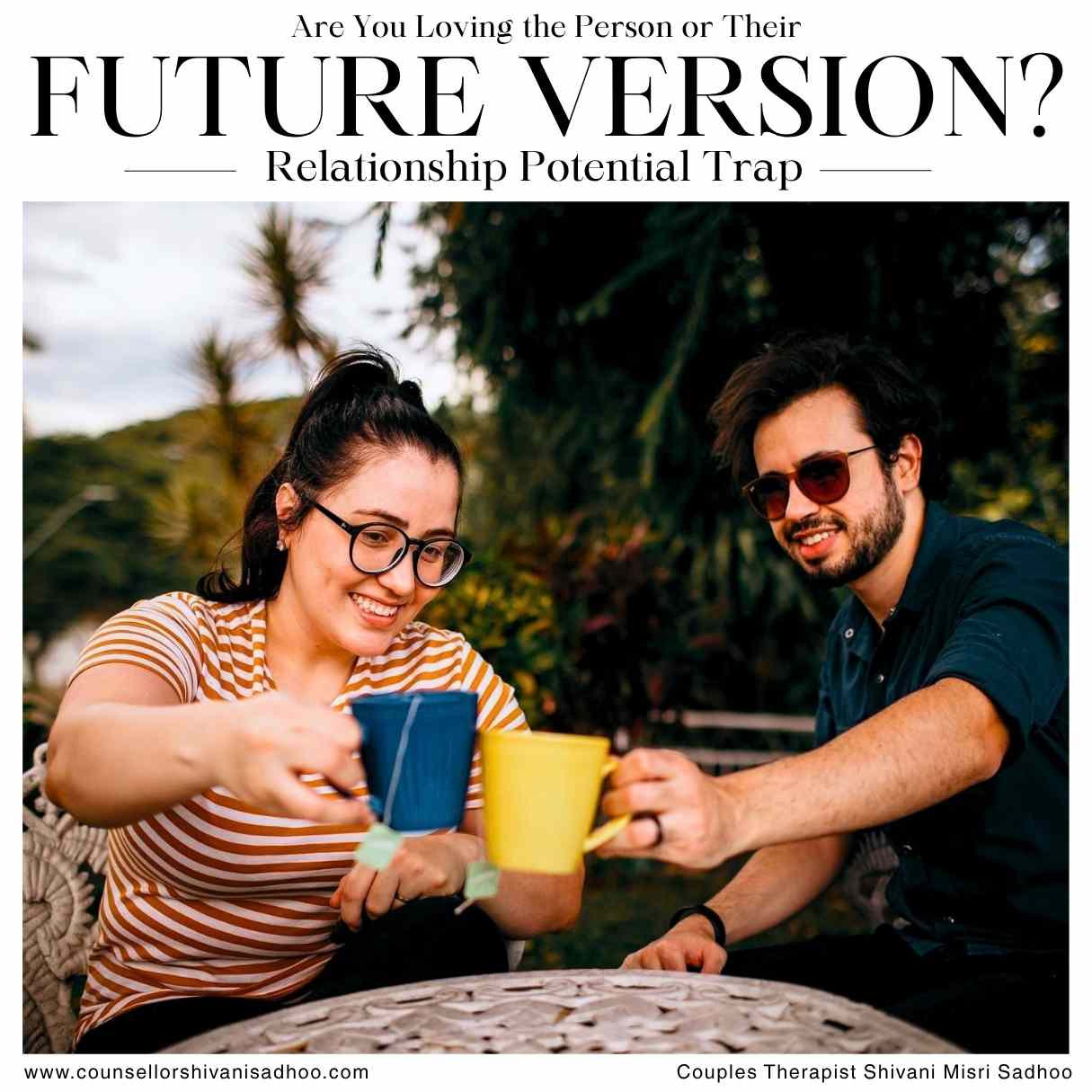
The “Relationship Potential” Trap: Are You Loving the Person or Their Future Version?

The “Relationship Potential” Trap: Are You Loving the Person or Their Future Version?

Summary
  • Potential describes who someone might become, while behaviour shows who they are today.
  • Supporting personal growth is different from waiting indefinitely for someone to change.
  • A healthy relationship should be evaluated by its present reality as well as its future possibilities.

Sometimes, a relationship can feel full of promise even when the present reality is complicated. You may see how caring, confident, ambitious or emotionally available your partner could become and find yourself deeply attached to that possibility.

But there is a subtle difference between supporting someone’s growth and building a relationship around who you hope they will eventually become. When the imagined future becomes more important than the person in front of you, you may find yourself loving potential rather than reality, shares Shivani Misri Sadhoo who is an eminent couples therapist in Delhi.

Why Does Relationship Potential Feel So Powerful?

Potential gives a relationship a sense of possibility. You may notice someone’s good qualities and imagine how much better the relationship could become if certain things changed.

Perhaps they communicate poorly now but you believe they will eventually open up. Maybe they avoid commitment but you expect them to become ready. Or they have qualities you love, while the behaviours that hurt you are treated as temporary.

The “Relationship Potential” Trap: Are You Loving the Person or Their Future Version?

Hope itself is not a problem. The difficulty begins when hope becomes the main reason for staying despite a consistent pattern in the present.

“You can believe in someone’s potential without making your happiness dependent on who they might become.” Cites Shivani Misri Sadhoo a Certified Gottman Level 3 Couples Therapist.

The Difference Between Potential and Reality

Every person can change and grow. However, potential is something imagined, while behaviour is something observable.

Someone may say they want to become more communicative, responsible or committed. Those intentions matter, but their repeated actions provide more information about where they currently stand.

A healthy relationship does not require someone to be perfect. It does, however, require you to recognise the person they actually are rather than constantly adjusting your expectations around who they might become.

The “Relationship Potential” Trap: Are You Loving the Person or Their Future Version?

When You Start Explaining Away Their Behaviour

One sign of the potential trap is repeatedly making excuses for behaviour that hurts you.

You might tell yourself that they are distant because they have had a difficult past, that they will become more reliable once their career settles down, or that they will eventually understand what you need.

Understanding someone’s circumstances can create empathy, but it does not automatically change the impact of their behaviour on the relationship.

You May Become Attached to the Future

When your emotional investment is based heavily on what could happen, the relationship can start feeling like a project.

Instead of enjoying the relationship as it exists, you may constantly wait for the next stage: when they become more committed, communicate better, change their priorities or finally become the partner you imagined.

This can make the present feel like something you simply have to tolerate until the future arrives.

Supporting Growth Is Different From Waiting for Change

There is an important distinction between encouraging a partner and expecting them to transform.

Supporting growth means accepting that your partner is responsible for their own choices while appreciating genuine progress. Waiting for change can mean staying emotionally invested in a version of someone that does not yet exist.

A partner can grow while remaining fundamentally themselves. You should not have to construct an entirely different version of them in your imagination to make the relationship work.

Pay Attention to Patterns, Not Promises Alone

Words can communicate intentions, but patterns reveal consistency.

If someone repeatedly says they will change but their behaviour remains unchanged, it may be useful to look at what is actually happening rather than relying solely on future promises.

This does not mean people cannot change. It simply means meaningful change is generally demonstrated through consistent behaviour over time.

Ask Yourself What You Are Experiencing Now

A useful way to reflect on a relationship is to temporarily remove the imagined future from the picture.

Consider the relationship as it exists today. Do you feel respected? Can you communicate openly? Are your needs acknowledged? Is there mutual effort? Do you enjoy the relationship beyond the hope that it will eventually become something different?

These questions can help separate genuine compatibility from attachment to potential.

The “Relationship Potential” Trap: Are You Loving the Person or Their Future Version?

Love the Person, Not Just the Possibility

Relationships naturally involve hopes, plans and dreams for the future. Wanting your partner to grow is not inherently unhealthy.

The problem arises when the future version of someone becomes the reason you tolerate an unsatisfying present. A relationship has to exist in the present, not only in the version you imagine it could become.

Recognising the difference between someone’s potential and their current reality can help you understand what you are actually choosing—and what you are simply hoping will happen.


Marriage vs. Mother-in-Law: Navigating the Mama’s Boy Dynami

We all love our parents. It is of very good quality. In fact, if we are incapable of loving our parents, then we are not supposed to be called human.

Loving one’s mother is a divine characteristic. But treating others in a bad manner is an inhuman quality. If your husband loves his mother, then you do not need to find any fault with it. But during this process, if he insults you or makes things uncomfortable for you to live with him, then it is up to you how you resolve it.

If you remain silent, a lifetime of suffering could afflict you. If you deal with it hurriedly, chances are you could be misunderstood by your husband. So, find a better way of resolving the issue.

In this article, Delhi’s top marriage Counsellor and Relationship expert Shivani Misri Sadhoo tells about signs your husband is a mama’s boy.

He cannot make any Decision Without Mom’s Help

As an independent woman, you have a mind and think of your own. So, you have decision-making abilities but you are surprised to see your husband consulting his mom for every minor or major decision. That bothers you a bit. This is one of the initial signs that your husband is a mama’s boy.

He Never Supports You When His Mother Shouts At You

He thinks his mother is always correct. So, when his mom shouts at you for any reason, he prefers to remain a silent spectator.

He Asks You To Be Like His Mother

This appears funny to you. But he asks you to dress up, cook and behave like his mom, and worship his mom. His mom is a role model to him and he expects an ideal woman has to be like her.

Your Husband Spends More Time Talking To His Mom

When your husband’s mom is out of town for a few days, he spends most of his time talking to her over the phone. And also, sometimes complains to her over the phone that you do not cook like her.

He Seeks Her Permission Even To plan A Family 

That looks absurd but it is true that he seeks his mom’s approval before planning to expand his family.

He Shares All Your Secrets To His Mom

You trust your husband completely and tell him everything about your life and past. And, he discloses them to his mom. She begins to suspect you and starts ill-treating you.

When You Are On A Holiday

When you are on a holiday, you tend to spend some time with your husband in a lonely spot and slowly try to kindle his passion. He suddenly takes out his phone, calls his mom and says “Mama, I miss you! You could have come with us” and weeps for a moment.

P.S. Well, there is nothing wrong if your husband loves his mom. Let him love his mom. But if his love bothers you, then you can voice out your opinion and try to get a solution.

Tips To Create Trust in A Relationship & Marriage

Trust usually is the act of establishing confidence and being able to depend on someone or something. Trust is essential for relationships, to function and for any person to be relatively happy. Without trust, insecurity sets in.

Trust is a matter of degree, and certain life experiences can affect an individual’s ability to trust others. The matter of trust and relationships focuses on the question of whether the partners are honest and faithful enough to each other.

Being able to trust your partner is the most essential part of a being in a relationship. Trust is said to be the core foundation of every relationship from which a strong connection can be created. Without trust in a relationship, relationships will not grow and prosper to a deeper level.

Delhi’s Top Marriage Counselor and relationship expert Shivani Misri Sadhoo shares tips to create trust in a relationship. Here they are.

Communicate Effectively

Communication is an essential factor in creating trust between partners in a relationship. Partners must communicate about their problems instead of sitting on them and brooding. When the time comes for communication, do it face to face. Personal verbal communication bolsters the bond between partners in a relationship.

Try to avoid communicate over emails, phone calls or texts. Instead, make it more personal and direct. When communicating, ensure that you keep eye contact with your partner as frequent eye contact during a discussion increases the bond of partners.

Do Not Hide Secrets from Each Other

Trust needs honesty and openness. If you are looking to build trust in a relationship, you must avoid to keep secrets and be open with your partner. To become a trustworthy partner, you must be honest in all your conversations and dealings with your partner.

Secrets ruin up relationships quite rapidly, so it is important, to be honest, and sincere about issues that arise together or individually. Having an open mind towards your partner assists him or her to share their deep dark secrets which are a sign that they trust you.

Set Boundaries

Defining clear boundaries set together is important to develop trust amongst partners. Setting boundaries help in explaining how much space you are comfortable with, in a relationship, physically and emotionally.

Boundaries can be about any kind of things, how much time you need to be alone, how convenient you feel about your relationship to tell other people and so on. Accepting one another’s boundaries is helpful when it comes to creating trust in the relationship.

Learn To Say No

You need to understand one thing, everything that your partner wants is what you are willing or capable to provide. You do not have to say YES every time to everything your partner wants or asks to do. If you do not like the certain thing he or she proposes to do, simply say no. You should not be enslaved to a relationship. You should not be forced to sustain what you don’t like. When a relationship is based on equality, it will be easier for both of you to march forward.

Do not cater to the vagaries of your partner just to make him or her happy, as this will ruin the relationship.

Never Make Promises You Cannot Keep

Never break your promises. Keep your words and your promises. If you have promised your partner that you are going to do something, ensure that you do it.

It makes a lot of sense that you want to keep promises you have made to your partner, but often the little things you promised get forgotten. Keeping your promises about small things is as important as keeping your promises about the big ones

When you are late, call your partner and tell what is holding you down, remember to pick up those items from the local store and remember to pay the bills on time. Yes these things appear small and it might be overlooked, but they go a very long way towards developing trust in a relationship.

Do Not Cheat On Your Partner

It is in the natural configuration of humans to get attracted to more than one person. But this does not permit you to cheat on your partner. Even if you are bored in the relationship, resolve it up or else walk out of it. But you should not cheat on your partner simply because she/ he is not fun to be with or you do not enjoy his or her company any longer. To develop trust in a relationship, make sure you tell your partner plainly that you are not happy with the way things are amongst the two of you, and need to sort it out, or else, walk out of the relationship.

Take Accountability of Your Actions

Take ownership of your behaviour, action, and inaction. Never try to pass the blame to a situation or someone else. Be true with yourself and to your partner as to why you made your decisions.


Counsellor Shivani MIsa

Counsellor Shivani Misri Sadhoo is an experienced and certified Couples Therapist with specialization in the area of Personal Crisis interventions like coping-up with Relationship Issues, Marriage Counselling, Separation and divorce, Child and Adolescent issues, Depression, Stress, Domestic, Loss & Grief. Counsellor Shivani is currently working with India’s top hospital groups like Fortis Hospital, IBS (Indian Brain & Spine) Hospital and with Express Clinics.