Category Archive : best couples therapist Delhi

relationship counseling by shivani misri sadhoo

Relationship Tips for New Parents to Thrive in the Transition to Parenthood

Marriage Counselor and Relationship Expert Shivani Misri Sadhoo shares some amazing tips for couples to nurture their relationship as parents

A baby brings boundless joy to new parents, for within their tiny form lies the miracle of life. While the demands of parenthood may challenge their time and energy, the flame of love between mom and dad can still persist.

Balancing the demands of parenthood and maintaining a strong connection with your partner requires effort and understanding. In this article, India’s top marriage counselor Shivani Misri Sadhoo offers some tips and tricks for nurturing your relationship as a new parent.
marriage counselor shivani misri sadhoo blog

What are those ways to nurture your relationship as a parent?

Here, Shivani Sadhoo shares some of the methods, that could make your transition to parenthood a smooth ride.

Why Communicate with Compassion?

Effective communication is the foundation of any healthy relationship. As new parents, take time to listen to each other’s concerns, fears, and joys. Be mindful of your partner’s emotional needs and offer support and encouragement.

Choose your words carefully, speaking kindly and respectfully, even when fatigue and stress take hold. Remember, open and honest communication will help you navigate the challenges together and deepen your bond. When your baby cries, you’re compassionate. Extend that to your partner. Relationships change after a baby, but growth happens when you change together.

Do it together as a team

Parenthood is a team sport, and collaboration between partners is vital. Share the responsibilities of childcare and household chores, support each other’s needs, and find a balance that works for both of you. Recognize and appreciate each other’s contributions, acknowledging the value of teamwork in creating a harmonious environment for your family.

Nurture intimacy

After having a baby, physical and emotional intimacy can be neglected. Yet, it’s vital to prioritize a romantic connection. Make time for intimate moments like cuddling, date nights, or heartfelt conversations. Small gestures and expressions of love foster a strong bond.

Take care of yourself

Remember to take care of yourself amidst the demands of parenthood. It’s essential to nurture your own well-being, as it directly impacts your relationship with your partner. Prioritize self-care activities such as exercise, meditation, or pursuing hobbies that bring you joy. By taking care of yourself, you’ll have more energy and positivity to invest in your partnership.

Express appreciation

Show gratitude for each other’s efforts and support. Recognize and acknowledge the hard work and dedication that goes into being a parent. Small gestures of appreciation can go a long way in fostering a positive and nurturing environment.

The Power of Giving Space

Granting each other space as new parents fosters personal growth and maintains individuality. It involves recognizing the importance of alone time, pursuing hobbies, and nurturing friendships outside of parenthood, strengthening the partnership.

Conflict management

Managing conflicts effectively is crucial in any relationship, and this becomes even more challenging when you have a newborn due to the added stress and exhaustion. Use “I” statements to express how you feel, such as “I feel overwhelmed when…” or “I need support with…”. This can help avoid blaming and encourage understanding.

Seek Support

New parents often feel overwhelmed. Seek support from family, friends, or professionals. Connect with experienced parents, join groups, or consider couples counseling. Asking for help lightens the load and strengthens relationships.

Embrace Imperfections

Parenthood is a journey of constant learning and growth. Embrace the imperfections and understand that mistakes are inevitable. Be patient and forgiving with yourself and your partner. Celebrate the small victories, and remember that every day presents an opportunity to strengthen your bond and create beautiful memories together.

As you embark on the incredible journey of parenthood, remember that nurturing your relationship is just as important as caring for your little one. Enjoy this remarkable chapter of your lives, cherishing the moments of joy, and growing stronger as a couple with each passing day. And if you need any help, we are there to guide you. 
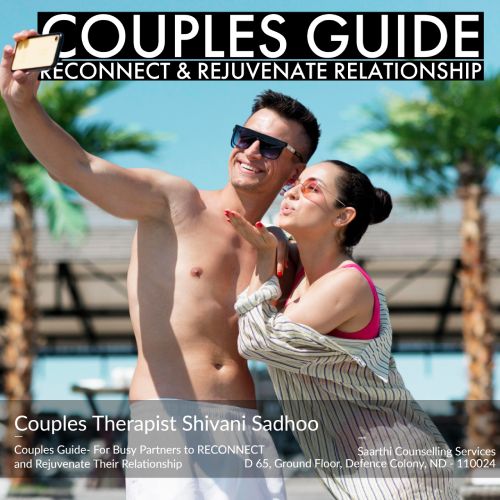
couples goals by shivani misri sadhoo

Couples Guide- For Busy Partners to RECONNECT and Rejuvenate Their Relationship

In the hustle and bustle of our fast-paced lives, it’s all too easy for the flames of romance to flicker and fade. The demands of work, family, and personal commitments often leave little time and energy for nurturing our relationships. However, building a healthy and vibrant connection with your partner is crucial for both your individual well-being and the longevity of your relationship.

So, if you find yourself in a situation where your partner’s busyness has caused a strain, fear not! In this article, we will explore creative and effective ways to reconnect and rejuvenate your relationship with your busy partner. India’s eminent marriage counselor, Shivani Misri Sadhoo is here to guide you.

1. Open Communication:

The foundation of any successful relationship lies in open and honest communication. Set aside dedicated time each day to engage in meaningful conversations with your partner. Create an atmosphere of trust where both of you can openly express your thoughts, concerns, and dreams. Effective communication builds understanding and empathy, fostering a deeper connection between partners.

2. Quality over Quantity:

While it may be challenging to find large blocks of time together, focus on the quality of the time you do have. Plan activities or outings that both partners enjoy and that allow for meaningful connection. It could be as simple as a romantic dinner at home, a walk in the park, or a weekend getaway. By maximizing the quality of your time spent together, you can create cherished memories and rekindle the spark in your relationship.

3. Surprise Gestures: 

Small, thoughtful gestures can go a long way in rekindling the spark in your relationship. Surprise your partner with their favorite meal, leave a heartfelt note in their briefcase or purse, or plan a surprise outing that aligns with their interests. These simple acts demonstrate your love and appreciation, creating moments of delight and reinforcing the emotional bond between you. Use technology for good. Sending text messages to your partner is a wonderful way to maintain a connection, share small moments, and show you care.

best marriage counseling blog in Delhi

4. Support and Understanding: 

Acknowledge and validate the challenges your partner faces due to their busy schedule. Show genuine interest in their work and offer support whenever possible. By demonstrating understanding and empathy, you build a strong foundation of trust and solidarity. Your partner will feel valued and cherished, fostering a sense of belonging within the relationship.

5. Shared Hobbies and Interests: 

Finding common ground and engaging in shared hobbies can infuse new energy into your relationship. Discover activities that you both enjoy and make time for them regularly. Whether it’s cooking, dancing, hiking, or painting, the shared experiences will create lasting memories and deepen your bond.

6. Save the date: 

Intentionally carve out time in both of your calendars for regular date nights. This dedicated time allows you to focus solely on each other, away from the distractions of work and daily responsibilities. Whether it’s a candlelit dinner, a movie night, or a cozy evening, make it a habit to schedule these dates to strengthen the bond and keep the romance alive.

7. Tender Touch: 

Physical intimacy is an integral part of any romantic relationship. Find moments to express affection, even amidst busy schedules. A warm hug, a gentle touch, or a passionate kiss can communicate love and desire. Prioritize intimacy and make it a regular part of your routine, reigniting the passion and desire within your relationship.

So, take the first step today, and embark on a path toward reconnecting and rejuvenating your relationship with your busy partner. Together, you can create a love that withstands the tests of time and nourishes your soul for a lifetime.

problems in live-in relationship

Problems in a Live-In Relationship in India

Explains Top Couples Therapist Shivani Misri Sadhoo

It is often said that marriages are made in heaven. But not all of them last forever. Many marriages do not stand the test of time and end in divorce or separation. Nowadays, Live-in relationships are becoming more common, as they offer people an alternative to marriage. This allows couples to experiment and find out if they are compatible before taking the step of marriage. However, these relationships can be just as fragile and many end up in breakups.

Despite being legally accepted, live-in relationships in India are still frowned upon by many because they go against traditional values and beliefs. Though the freedom such relationships offer is often attractive, they come with their own set of challenges and complications. Let’s find out more about the challenges of live-in relationships in India from Shivani Misri Sadhoo, the top marriage counsellor and relationship expert.

Problems in a Live-In Relationship in India shares shivani misri sadhoo

Social Taboo 

Live-in relationships in India are still considered social taboos. This is because traditional Indian culture emphasizes the importance of marriage as a sacred institution. So, staying together before marriage is seen as a kind of disobedience to the established norms. Social stigma has led to many couples living in secret. People treat you like outcasts.

Lack of commitment 

Lack of commitment is a big problem in live-in relationships. People in live-in relationships tend to take each other for granted and do not work towards making it a long-term commitment. This can lead to a lack of trust, communication, and overall stability in the relationship.

Freedom seems to be a double-edged sword in these types of relationships, as it can lead to more misunderstandings and a lack of security. This can result in the dissolution of the relationship, leaving both parties feeling frustrated and hurt.

Finding shelter is a big challenge 

Finding a house for unmarried couples in India is a big challenge. Either it is difficult to locate a landlord who is willing to rent a house to unmarried couples or even if they find one, the couple may face discrimination and judgment from their neighbours. This creates a huge obstacle for unmarried couples looking for a place to call home.

Money trouble 

It is common for people in live-in relationships to struggle with their finances. It can be difficult to combine two different incomes and expenses in a way that is mutually beneficial. This can lead to financial stress, which can in turn put a strain on the relationship.

Conflict pertaining to career choices

 In live-in relationships, career challenges can be tricky. Since there is no legal commitment between the partners, they often have to make compromises when it comes to career decisions.

For example, when one partner receives a job offer in another city/country either through promotion or simply as a better career prospect, he or she must decide whether to accept the offer or not, while considering the impact it would have on their relationship. This can create feelings of resentment and frustration in the relationship.

Family Pressure

Family plays a crucial role in shaping relationships in India. In live-in relationships, family opinion is often considered more important than that of the couple. This often leads to pressure on the couple to conform to the family’s expectations instead of making their own decisions. As a result, many couples opt to continue their relationships in secret or even break up.

Problems in a Live-In Relationship in India shares shivani misri sadhoo

Love and commitment should be at the heart of any relationship. Whether it is a marriage or a live-in relationship, both partners need to be willing to put in the effort to make it work.

5 Common Tactics People Use to Hide Their Affairs

Infidelity in romantic relationships is surprisingly quite common. Sure, some partners may use infidelity as an exit strategy, eventually wanting their partner to know so that their partner initiates a breakup.

While for some, however, hiding infidelity is a top priority. They want to keep their primary relationship partner. They also want to keep their extra-dyadic partner(s). The price of losing their primary relationship, in these cases, is quite high, so they turn to the hard task of hiding their infidelity, says Shivani Sadhoo.

People differ in how creative they are in hiding infidelity, and how much energy they put into stopping their primary partner from finding out their unfaithfulness.

What are some of the most common tactics used by people to hide their affair?

India’s top couples therapist Shivani Misri Sadhoo cites some of the most common to least common tactics that a person might engage in, in order to hide their affairs.

Be discreet

The most commonly endorsed method to keeping an affair quiet is to be intentional about communications and meetings, to limit any scopes of being discovered.

Behave in the same manner as usual

Unusual behaviors might tip off a primary partner, so unfaithful partners will pay attention and bring their usual self to their interactions with their partner. No matter their usual way of interaction (for instance, as complainers, comedians, helpers, or cheerleaders), they keep that way going after their affair starts. By keeping their couple dynamic the same, they work to eradicate suspicion.

Restrict contact with the extra-dyadic partner

In place of seeing an extra-dyadic partner frequently, a person who wants to maintain their primary relationship (even as they wish to continue their affair) will willingly limit how often they meet up with their extra-dyadic partner. As a ploy of being discreet, attention to frequency lowers the likelihood of discovery.

Pay more attention to their primary partner

A presumed way to distract a primary partner so that they do not become suspicious is to shower them with interest, love, and attention. Being warmer and a lot more generous, for instance, are strategies partners may use to hide an affair.

Lock all technology

Solid evidence of a partner’s affair would not be difficult to come by with all of the recorded communications one relies on today (texting, emailing). Partners who do not delete, or who do delete but want additional safeguards, may make sure, and quite intentionally, lock their devices. Changing passwords, signing out of their social media—these sorts of behaviors are strategies to decrease the primary partner’s awareness.

A person usually knows his/her romantic partners quite well, and he/she, you. On account of this intimacy, unfaithful partners probably have an edge in covering their tracks. They may know which strategies and accompanying mechanisms are more important to use, and which may come off as artificial, suspicious, or alarming to their particular partner. In simple words, they can cater their deception to their primary partner.

daiting tips by shivani misri sadhoo

Red and Green Flags You Must Watch when Dating Someone?

Getting to know someone actually you really like is a wonderful experience. You feel as if you will conquer the whole world. You stay up the entire night getting to know that special person and daydreaming about when you may see them again. And there is a nice reason for this.

Human beings are designed to bond with other humans. When you date, oxytocin is released into your brain. This helps you to bond. Dopamine releases to make you feel happy and elated when in the presence of your special person.

Due to this, you are not necessarily seeing clearly. You seem to minimize or completely ignore the bad and maximize the good. When you opt for something that does not feel right or a characteristic you do not like, you perhaps justify it or explain it away. This is the reason it is hard to recognize red flags at the initial stages of your relationship. Your body form does not want you to.

Fortunately, there is certainly research on what makes certain couples the “masters” and others the “disasters” of relationships. Relationship counselor Shivani believes you can use it as early as the first date to begin paying attention to whether or not you wish to continue with the other person.

Read on this blog by eminent couples therapist in India Shivani Misri Sadhoo that shares clues that you need to watch out for while you are dating someone.

couples counselling shivani misri sadhoo

What are the Red flags in dating?

So what actually makes a couple a “disaster”? One of the top predictors of that is the utilization of something according to Dr. John Gottman who called “The Four Horsemen,” which is a play about the “Four Horsemen of the Apocalypse” coming to indicate the end of times.

The Four Horsemen basically are:

  • Criticism – Describing flaws in character within your partner
  • Defensiveness – Not taking responsibility for your part
  • Contempt – Belittling and taking a superior position
  • Stonewalling – Shutting out your partner or shutting down

You can begin to notice whether or not these are visible in your relationship even in the initial phases. What may look like?

Criticism

If a person that you are dating, often criticizes you or other people, you may notice them saying words such as “always” or “never.” For instance, “you are always very late” or “you never think about me at night!”

Defensiveness

Defensiveness seems like counter-criticizing, over-explaining, or justifying actions, or playing the victim. If you are dating and bring up an issue that you have and the other individual responds defensively, that could be something to watch out for. It might look like them saying, “I know I keep showing up late but I truly have a very busy job. Why do not you get that?”

Stonewalling

Stonewalling is mostly the outcome of physiological overwhelm. This means the individual that is stonewalling perhaps has a racing heart and a rush of stress hormones. If you are with someone who is stonewalling, it will appear as if the other individual is zoned out or could not care less about what you are saying. You may experience this during the starting conflict. Probably the other person goes disappeared or is offline and becomes unresponsive.

Contempt

This one is quite important to watch out for. Contemptuous is the most damaging of the horsemen. Contempt seems when someone holds on a position of superiority. It could sound like put-downs or mean-spirited sarcasm.

Other instances of contempt are laughing at you (not with you), putting down your own interests or profession, or taking on a position of being better than you in a certain capacity. If someone shows contempt in the initial stages of dating, this is one big red flag. So now that you have looked at what you need to avoid, let us look at what you need to look for.

What are the Green flags in dating

Fortunately, it did not just stop with studying the disasters of relationships. There was an attempt to know what it was the masters did differently. In the research, Dr. Gottman found the antidotes to the Four Horsemen, which are counteractive behaviors for each of the above.

When you are in the process to know someone, look for them. It is a good sign they can manage conflict and show you respect, even while you differ.

Gentle Start-up

Instead of becoming critical, the masters of relationships discuss their problems and complaints by initiating the conversation gently. They also look to follow a formula of “I noticed this, I feel that, I need this” when discussing what is troubling them, instead of being accusatory “You always do this, you need to do that, why don’t you…

Responsibility taking

Rather than being defensiveness, you want to take proper responsibility for your part. It means that you own even the tiniest piece of the problem when it is there. Individuals who take responsibility listen to their partner when they have a problem, validate the issues, and take pause prior to responding.

This could sound like one partner saying, “Hey, I have noticed that when we go out with your friends, I am left all alone in the corner. I feel truly awkward in those moments. I require you to stay by my side a bit more until I get to know them” (a gentle start-up). In turn, the other individual responds non-defensively by saying, “You are correct. I should not walk away from you like that. I can imagine it is uneasy when you don’t know everyone yet.”

Self-soothing 

Everyone gets upset. It is human to have overwhelming emotions momentarily. However, those that do well in relationships seem to take responsibility for soothing themselves and they have partners who are willing to let them take the time they want to self-soothe. It means that when someone needs a break, they take it and the other individual provides them space.

Contempt

To overcome contempt, the individual expressing it requires to lean into recognizing and expressing their own feelings. They perhaps also need to explore their earlier experiences that are leading them to feel anger or hostility toward their partner. Rather than showing contempt and saying “I cannot believe you are late. You disgust me,” a partner who can properly express themselves may say, “When you are late, I feel so upset.”

The conclusion

The initiation of the relationship is full of happy hormones that want you to bond (and mate) with your newfound significant other. Learning to identify the signs of a healthy partner can assist you to override some of those hormones and see a little more clearly.

Watch out for people who are critical, defensive, withdrawn, and contemptuous. The use of these conducts doesn’t imply that you should not be in a relationship with them, but it actually means you need to get curious regarding how they respond when you set boundaries around those sorts of behaviors.

Eventually, you want a partner who is gentle with you (even when you are upset), able to take responsibility for his or her actions (even when it’s difficult), works with you to soothe your emotional systems, and own your past pain and resentment so that he or she don’t inflict it upon you.

Shivani Misri Sadhoo is a Gottman Certified Therapist. Every day several couples and individuals seek her professional advice. Be it about their relationships or psychological or behavioral issues.

5 Major Marital Issues and their Solutions, Shares Shivani Sadhoo

Several couples face at least four out of five common marital problems at some stage of their prolonged companionship. Shivani Sadhoo says if you are among that group too, take heart: every marital relationship has certain issues. The good news is that by being proactive rather than reactive, you can make a huge transformation and see growth and health come to your most essential relationship.

Some couples always struggle with communicating. They are not able to find time to discuss because one of the partners is always busy with work during the day and exhausted in the evenings. This is when perhaps you suddenly realized you needed to schedule a lunch date just as if you were scheduling it to catch up with a friend. But things always do not work like that. Here India’s top marriage counselor Shivani Misri Sadhoo shares some solutions to the 5 major marriage issues.

Lack or absence of emotional intimacy

Planning time to be intentional in sharing your mind and heart with one another is vital here. Talk about things that are truly important to you, and remember not to disagree with or challenge your spouse when they are being vulnerable and telling you what is most essential to them. If time is an issue, look to create a dedicated time into your weekly schedule to be intentional in doing this; otherwise, it is not going to happen.

A dearth of physical intimacy

One great idea for enhancing physical intimacy is to plan time for it. If you both are aware that you have agreed to be together on a specific day and time, you would be able to make it a priority and mentally get ready to enjoy it.

Communication

One method to address a lack of communication is to decide a time for a face-to-face each day, even if it is only for 15 minutes. Make it the same every day, so it is easy for neither of you to miss this opportunity. Do this prior to you spending time with the kids. Or if daily planning is too difficult perhaps because of your professional commitments. Then set up a dedicated day of the week.

Losing interest or lack of appreciation

It is important to opt to put the relationship above everything else, including work and your kids. Act like you are dating again. Enact as you did then. Take time to pay attention only to your partner. Have both of you take the texting challenge to make certain you are staying in touch through the day.

Finance

Decide upon a time to work out a budget that is agreeable to both. Agree to sit down to check at expenses at the end of each month. If the discussion is prearranged and you both come to the table with complete transparency, then the conversation about finance could move from the emotional and into the practical ones.

Your Therapist Is Now Just Skype/Video Call Away

Feel free to call Counselor Shivani Misri Sadhoo at +91-8860875040 for telephonic or video support and to book an online counselling session to address any relationship issues, or emotional and psychological challenges.

Things that Helps You Develop Trust in Your Relationship

One of the oldest and biggest mantras to a healthy and lasting relationship is trust. It is a fragile yet powerful adhesive that holds two people together. It certainly is hard and at times a complex task to develop trust when you are beginning out in a relationship. But it is not so much of an arduous challenge once both the entities in a relationship are in it together says Shivani Sadhoo.

Here India’s eminent relationship counselor and couple’s therapist Shivani Misri Sadhoo shares some effective tips that will assist you to form trust, feel loved, respected, secure, and content in your relationship.

·       Understand the causes why you two are together and make certain the reasons are right. Develop a framework around your relationship first.

·       If you love somebody, you have to respect them. The more respect you form between the two of you, the greater the love is. Define things that makes you feel disrespected and agree not to use that as a ploy in your relationship.

·       Do not expect the sort of romance that is shown in movies. Have realistic expectations related to your relationship and romance. You need to know that true romance is an outcome of respect, trust, and freedom of expression.

·       Always express what you feel like. If you are too worried or scared to speak out, it will simply make it difficult for you in the future. Make certain you let it all out of your system for the benefit of your relationship.

·       Providing each other space is equally vital as spending quality time with each other. Both of you must enjoy a space where you do things individually that makes you happy.

·       Changes are inevitable. You fall in love with a person’s mind and the person you fell in love with is bound to change with time. You need to expect and accept it. It is basic human nature to change, so do not let it get in your way.

Your Therapist Is Now Just Skype/Video Call Away

During the current challenging time, it’s common to experience anxietydepressionsleeplessness, and relationship challenges at home. While you are under lockdown and maintaining social distancing norms to help the country to control the pandemic’s spread, your very own counsellor Shivani is now just a call and Skype video call away from you.

However, in this age of pandemic, we hope to offer our therapeutic help. Change is difficult for all of us and changing the way you meet with your therapist is no exception.  But try it before you disregard this option.  This is a challenging moment in time, and fears and anxieties are running high.

You may find, telepsychology isn’t a second-rate option. Instead, it’s an effective and efficient upgrade to a valuable service!

Feel free to call Counselor Shivani Misri Sadhoo at +91-8860875040 for telephonic or video support and to book an online counselling session to address any relationship issues, emotional and psychological challenges.

Signs You Are Anxious And Do Not Know About It

If one is anxious, one would know it, correct? Well, that would be good, but the truth is several anxious persons are not certain what they feel. Recognizing and naming emotions is a skill to learn, that not everyone is good at doing. There are certain signs you can use to identify if you are struggling with anxiety but avoiding the emotion at the same time, says Shivani Sadhoo.

As you may know, several health issues are also linked to stress-related issues. Some studies have also indicated that issues such as IBS (irritable bowel syndrome) and headaches are also the causes of anxiety.

Top family therapist and couples counselor Shivani Misri Sadhoo in this blog shares certain signs that suggest you are anxious, but perhaps do not know about it.

Signs Anxiety is Troubling You

Anxiety shows up when you do not have the sort of control in life you would like. For instance, anxiety naturally happens when you are driving on a snow-covered road and realize that your car has begun to slide; as the car slides, you do not have the sort of control you would like.

Anyone can experience this emotion that arises due to the loss of control in any number of situations, including work, relationships, or in other aspects. One can also experience anxiety when visualizing or imagining future events where one might not have control, like giving an office presentation a week from now. One can be anxious and still look calm, conduct normally, and accomplish important things. Anxiety is not every time about looking or acting like a nervous person.

It is Hard for You to Name Emotions

If you pass through your day without thinking much about what you feel, have a problem explaining to others what you feel, rarely ask others what they feel, and are not certain what leads to feeling good or bad, you could be struggling with alexithymia.

The Chronic Pain or Other Health Issues Began During a Stress or Transition

If you try to look back at when your shoulder started to hurt, your lower back went out, or your overwhelming fatigue crept in, you may find that your life was in a major transition or stressful period. Perhaps one of your kids started school, or your daughter left home, you lost a job or your parents died, graduated from college, or began a new job. Transitions and stress are significantly hurdled some because of the lack of control in these situations, which leads to anxiety.

You Have No Idea What You Need

When your basic needs for connection with others, competence, and freedom are not met, you are going to experience negative emotions. If you are not aware of your own needs, you might not be aware of what you feel when your needs aren’t met.

You Do Not Share Your Emotional Ups and Downs with Others

A person who openly shares his life with others talks about emotions. A person who connects with others majorly through activities such as work, sports, or discussions regarding politics may not be getting below the surface to discuss what they feel or need.

Coping Strategy of Your’s are Not Healthy

Although you keep telling yourself you are doing well, you are consuming more alcohol, picking up your past smoking habit again, spending more time and money using unhealthy products to manage your sleep problems, watching more television, and reacting angrily at pretty minor irritations or nothing at all.

Having Unexplained Pain Issues

If you have life hurdles and unmet desires but no clearly defined emotions, chronic pain might be what you do feel in the end. The stress you feel during work, the unhappiness you experience at home, and the pressures of life formed emotions, emotions that assist you to know that something is wrong and needs attention. Think of physical pain as an alternative method of your brain getting your attention that something is not right if your emotional warning system is switched off.

Are you also struggling to identify your emotions? Or do not know what to do? Don’t worry psychologist Shivani Misri Sadhoo will assist you and guide you to come out of this phase and help you overcome your anxiety-related issues.

shivani misri sadhoo_best marriage counselor_in india

Ways Marriage Will Transform your Life

Probably, marriage brings about the biggest transition in an individual’s life and no matter how ready he/she might be, it will always take the person by surprise. When you begin living with your spouse, changes are bound to happen. Some will bring joy, while others may challenge your patience and sanity. How you adapt to those challenges marriage throws at you and adjust to the changes, will further dictate the course of this lifelong relationship, says Shivani.

So, through this blog renowned couples’ therapist, Shivani Misri Sadhoo shares a few changes and challenges the sacred bond of matrimony would bring in your life.

There will be Several Vulnerable Moments

When you begin your conjugal life with a partner, he or she will gradually discover your strengths and weaknesses. You will share your deepest secrets, and desires and tell them things, which you may not have told anyone before.

But when you share such intimate details with a person, you are bound to feel vulnerable. There will be times when you would wonder if you have done the right thing by revealing it all, but this is what marriage is. Everyone and every circumstance will demand that you trust your partner with your heart and soul. It will not be simple initially, but things will fit into place with time.

Relationship with In-laws Might not be what you Hoped for

We have sufficient Hindi movies and TV serials highlighting the strained relationship between a daughter-in-law and her mother-in-law. It is only natural for people to form a perception of the partner’s family much before even they are married.

However, an individual would only get to know how that relationship would alter his or her life only post getting married. It could be for the good or in the predicted lines of what we have seen in TV shows or movies, but one thing is certain—it will create a deep impact on your life.

Responsibilities will Increase

Under usual circumstances, responsibilities, when shared between two individuals, will decrease. But not in marriage. With every passing year, you will end up getting more responsibilities. And by responsibilities, it is not merely meant for materialistic goals.

When you are married to someone, you also have to bear the responsibility of looking after his or her well-being. And your partner will also have to do the same. The weight of responsibility can at times be overwhelming but when you do a fine job, the rewards will also be manifold.

Certainly, you will Yearn for some Me Time

Companionship is a wonderful thing. Post-marriage, the starting days will be nothing but full of sheer joy. You would see new things that may have remained unobserved till now. You will be spending plenty of time together—be it visiting friends and relatives post the wedding or shopping for household items. The world you kept for yourself, your bed, your room—all the things will now have two people in it.

And there will come a time when you will wish that you could spend some time alone, simply like the way you did before you were not married. And such thoughts will be immediately followed by a feeling of guilt. Believe it this is not simple.

Money will be an Important Factor

It is easier said than done, that love is all you need to keep you happy. But only love cannot provide the food on your plate or the roof to live under. Only money can. You will need to have a bigger house, probably buy a car and when you have a family, you will need money to pay for your kid’s school fees. Marriage can teach even the most carefree individual about the importance of money in his life.

You Might not Fall in Love with your Partner

It may sound strange but not all married couples fall in love with each other. Though there are exceptions who tied the knot after falling in love. In several arranged marriages, where the would-be-spouses only get to know each other shortly, hope to find love post-marriage.

Now, love may happen but there are also probabilities that they may never fall in love. Moreover, plenty of couples fall out of love after being married for a long time. Does it mean their marriage too falls apart? No, not for everyone though.

Ways to Enhance the Bonding with your Partner

You might associate bonding with your spouse in the early stages of your relationship. But whether you are 6 months or 6 years in, there are always numerous opportunities to grow closer with your partner says Shivani. Learning methods to bond in a relationship could be a lifelong pursuit, but it certainly does not have to be difficult.

Couples Therapist Shivani says there is a difference between struggling and putting effort into your relationship. With bonding, at times it will simply take a little bit of conscious effort. “Bonding with your spouse takes effort.

Sometimes ‘bonding work’ feels simple and at times it feels difficult. Bonding with your partner seems easy when it flows out of shared interests, hobbies, and experiences. So if you can recognize what small ways you are already sharing with your partner, you might be a step closer to bonding even more, and potentially growing your love and bonding.

You do not have to ask each other the endless questions that lead to love, or do any kind of forced activity or bonding, simply to get to know your partner better. At times simply expressing your interest will do the magic. And professionals who work with couples have identified some brilliant ways to bond a little bit more with your partner — methods that you may even already be doing to some extent.

This blog by Couples Therapist Shivani Misri Sadhoo shares some ways to enhance bonding in your relationship.

Express Interest and Curiosity

When you have been together for a considerable time, or even live together, you and your partner might fall into the pattern of asking fewer open-ended questions: questions that start with “how” or “why,” and normally do not have a “yes” or “no” answer.

“It appears so simple, but it is easy for couples to end initiating open-ended questions since they fall into a habit of taking each other for granted. The reality is that you and your partner will change over a period and that you need to constantly update your knowledge of your partner. Asking open-ended questions helps boost emotional link and friendship within the relationship.” Being aware of how you ask your questions will help you develop this bonding as a habit.

Verbally Express Your Appreciation

Saying “thank you” to your loved one may seem more like an act of politeness, instead of an act of bonding, but appreciation is a lot more nuanced than that.

This too looks simple and you are perhaps doing it to a certain extent, but appreciation gives huge benefits,”. When you show appreciation towards your partner you create a protective shield surrounding your relationship [since] appreciation counteracts contempt — which is one of the major destructive forces in a relationship. Learning to show your appreciation regularly will assist you two grow even closer than ever before.

Give Priority to your Partner’s Emotional Calls

While you might know your partner better than anybody else, it can still become easy over some time to not always see when they are reaching out to you emotionally. Paying attention to “emotional calls,” and responding to them is an integral form of bonding.

Emotional calls are all small attempts to bond with your partner throughout the day, If, you wish to improve the health of your relationship, make it a priority to see your partner’s attempts to connect with you. Respond to their calls by lovingly responding and meeting their needs and communicating to your partner that you are there and care for them.” It is worth finding avenues to respond or pay attention to your partner, even when they are communicating non-verbally, to show your bond.

Make an Effort at Eye Contact

When you and your partner have been staying together for quite some time, the realities of everyday life as a couple might mean that you are not staring lovingly into each other’s eyes as much as you once used to. But working towards more eye contact could be a major boost in terms of bonding.

Partners can bond with each other by maintaining eye contact regularly, while they communicate, specifically, if discussing important topics such as their feelings, experiences, or needs. So even if you are not in your honeymoon stage anymore, at least you will be opening the windows towards more honest and vulnerable communication.

Keep your Phone Down

While there is something to be said regarding a connection so deep that you can sit in silence on a couch, scrolling through social media, and not feeling awkward about it, there is still a certain thing to be said about dedicated phones and gadget-free time for couples.

“A truly vital task you should do to make your partner feel worthy and appreciated of your time is to put the phones down while communicating, which also enhances bonding. Whether it means actively following a no phones at the dinner table or bedroom policy, or simply leading by example, you might find that these moments are good opportunities to bond.

Initiate Physical Touch

Having or maintaining a strong sexual connection with your partner is great, but physical touch does not have to be saved for moments of sexual intimacy between you and your partner only. Making physical touch a more common, regular habit in your relationship could be quite beneficial.

A simple task you can do to facilitate bonding is through physical touch when you are in the same space such as watching TV, cooking together, or getting ready to go out. Sometimes, a simple and gentle touch is good enough to create a substantial emotional association. Not all touch has to lead to anything, and practising it more can support grow the bond between you and your partner.

Make Rituals Together

Creating rituals or traditions as a couple could give you two something to look forward to daily, and be able to make sure that you and your partner are continuously building your connection — even if you have hectic daily life schedules.

Creating a ritual of bonding — like going on a walk post-dinner, or having coffee ready for your spouse after putting the kids to bed or in the morning so that you can talk about your day, could be something you both look forward to as well. Whether you decide you wish to build in daily, weekly, or monthly rituals, there is something about the continuation of these simple acts of bonding that could help actually, level up your existing connection.

Whichever method you decide to grow your bond with your partner, the probabilities are — you are already likely well on your way. Bonding has no concrete targets to get as it is something a couple does and keeps on doing, for the course of a relationship. And making even the smallest of changes in your daily interactions could assist blossom your love even further.