Modern life has become so hectic that even 24 hours is not enough. Our brains are busier than ever before. Finding time for each other sounds like an impossible task. But, sometimes we need to disconnect from the hustle and bustle of everyday life in order to reconnect with our significant other. The need of the hour is to spend some quality time together as a couple. And what could be more blissful than a romantic getaway far from the madding crowd? Let’s find out from Shivani Misri Sadhoo, India’s top marriage counsellor, how a romantic getaway can add magic to your relationship.
Makes your relationship stronger: Besides rejuvenating your soul, a romantic getaway makes you stronger as a couple. From hiking to scuba diving, and spa treatments to candlelit dinners, you spend time together from sunrise to sunset. This constant togetherness rekindles the spark and strengthens your relationship further.
Stress buster: Travelling together takes away all your worries. The change in environment makes you feel happier and healthier. With beautiful surroundings, your mind remains calm and composed. As a couple, you can savor these moments of peace and comfort. Studies reveal that regular romantic getaways improve your quality of life. The stress of your stressful days can be left behind, albeit temporarily.
Renews intimacy: Romantic vacations bring two people closer. The bond of love and trust deepens. They get more comfortable with each other. This allows couples to confide in one another and become good friends. Spending time together in a romantic ambiance enhances emotional and physical intimacy in a relationship. It gives them the strength to handle tough situations together.
Know each other better: While traveling together you discover another side of your partner. You see your partner in a different light. Getting out of your comfort zone and exploring new places together simply helps you to know each other better. It develops mutual understanding, trust, and confidence.
Reduces conflicts: Travelling broadens your perspective. Romantic vacations give you the opportunity to accept and adjust to new circumstances where you learn the art of cooperation and coordination. This helps you to become a better problem solver. It reduces conflicts and disagreements.
Become happier: Taking time off from your busy schedule and traveling together helps to recharge your mood. By stepping away from their daily grind, their mind becomes stress-free. The mere act of planning a vacation together creates an environment of anticipation and excitement. This feeling of something to look forward to itself gives you a positive vibe. You feel happier as a couple.
Rekindles love: Sometimes romantic feelings fade away as life takes a roller coaster ride. Romantic trips can help you fall in love with each other once again by creating beautiful memories that you will cherish for a long time.
Takeaway
So, what are you waiting for? Stop making excuses and pack your bags for that much-awaited romantic vacation to come back home relaxed, recharged, and rejuvenated.
Studies confirm the truth that in romance, the end is mostly predictable. The evidence indicates that the strongest sign that a romance is over is certainly not what a partner says or does, but how he makes the other one feel.
In simple words, Shivani Sadhoo says, if you sense your partner has moved on emotionally, he/she probably has. Although he/she might still perform the relational bare minimum, like dutifully calling every day, a partner’s “quiet quitting” might be obvious in other ways, like through the choice to increasingly make plans alone or with others. While it is tempting to wonder if you are “simply too sensitive,” or assume you should have done something to prompt your partner to pull away, actions speak louder than words—and a partner’s behavior speaks high volumes.
Lack of intimacy predicts a breakup
A top university investigated the connection between a lack of intimacy and the likelihood of relationship dissolution. They found that partners who perceived lower levels of reward in their relationship were more prone to head for a breakup. They found this effect was significant even post-controlling for relationship satisfaction and attachment insecurity.
Operationalizing reward in a manner that captures various features of intimacy like connection, love, and self-disclosure, the findings of the study validate the importance of intimacy within a romantic relationship, confirming previous findings that intimate connection is one of the core reasons people stay in a relationship. They also noticed that because there might be a difference in the extent to which a person values intimacy or considers it a “reward,” there might also be a difference in the reward’s predictive power for a breakup. They report that their exploratory analyses yielded assistance for this possibility by showcasing that reward did not predict breakup as strongly for those people who place less value on intimacy.
Taking note of the presence or absence of the features of intimacy noted in the study like connection, love, and self-disclosure, could make it easier to observe when your partner is disengaging. Here are a few signs to look for.
Building up boundaries
Some partners start to withdraw by forming walls instead of bridges. This might occur physically, like when a partner seeks to spend more time in a different room, or emotionally, through reduced information sharing. However, it is manifest, forming boundaries is a roadblock to relational development, showcasing the beginning of a future apart.
Withdrawing affection
If your partner has lost interest in getting intimate and doing romance, you most probably want to know why. Barring significant life alterations like a cancer diagnosis, or the loss of a job or loved one, which could be associated with withdrawal and depression, withdrawing affection is mostly a sign that the relationship is faltering.
Looking for socialization
A partner who is cascading towards meeting new people or attending events solo might be showing a preference for singlehood. You can respectfully seek the queries into the reasons or rationale for the change in preference, but consider whether there would ever be an acceptable answer to the desire to spend time socializing without you.
Starting a new chapter
If your relationship does come to an end, bear in mind that a failed relationship is not the end of the world; rather, it might be the beginning of a fresh chapter in your life. There is nothing about romantic rejection that defines you; breakups happen to several people at some point, and various breakups have more to do with the partner who prompts the dissolution. If a breakup was actually, provoked by your behavior, you can learn from it and march on, stronger and wiser.
If marriages are truly made in heaven, then why are divorce rates increasing globally? Is it because of the pandemic or should we blame the 7-year itch? Whatever the reason, divorce is not a solution because problems do not disappear after a divorce. Nowadays, people have become accustomed to everything being disposable. We keep changing our gadgets, our jobs, and even our life partners. Many couples feel divorce is the only way of getting out of the routine. However, that is not true because even if you feel that your marriage is on the edge of collapsing, it is within the realm of repair.
What are the ways to bolster your marriage and avoid divorce?
Expectations must be realistic: We feel upset when our expectations remain unfulfilled. Usually, marriages fail when partners cannot fulfil one another’s needs, leading to disappointments and disagreements, and in most cases, divorce. Learn to burn your resentments. Instead, sit and discuss which of the expectations are realistic enough to be fulfilled and what kind of adjustments can make things better.
Communicate daily: Proper communication will foster emotional intimacy that will strengthen the relationship further.
No secrets: Transparency is the best policy when it comes to any relationship. Let your better half know all about you—your ambitions and aspirations, your deep concerns, and your deep fears without invading your privacy. Being transparent builds trust and fosters intimacy and a sense of security in a relationship.
Laugh with each other: Love can keep a couple together, but shared laughter strengthens the bond between the two. Laughing and giggling with your partner helps to overcome stress and conflicts in a relationship thereby making it stronger. Laughter is indeed the best medicine.
Money matters: While it is true that money isn’t everything, yet one of the main reasons for divorce today, is related to finance. Couples must share their financial expectations to strengthen their marriage. Whether it is sharing your debt and credit status or combining of finances, you must be aware of each other’s financial goals.
Show kindness and respect: Mutual respect is one of the cornerstones of all successful marriages. Be kind and considerate towards each other. Marriage is all about the little things. Small gestures of love and appreciation add a whole new dimension to your relationship. Consider picking up her favorite coffee table book or flowers from the store. Use the golden words—please, sorry, and thank you frequently.
Bottom line
Marriage is all about sharing and caring. A marriage is built day by day and brick by brick, just as Rome was not built in a day. A lot of work goes into living “happily ever after”. So, keep investing in your relationship and make the right changes that will bring sunshine to your life.
Have you ever felt overwhelmed by the plethora of “quick fix” relationship advice offered by various books, magazines, blogs, and daytime TV talk shows? Though there is no doubt it is presented with good intent, much of this advice is terribly contradictory. Such as a quick-fix weight loss program, it abandons any effort to support hypotheses with research, basing guidance rather on personal opinion and anecdotal evidence.
Probably, the most prominent quick-fix advice is that communication – and more categorically, learning to resolve your conflicts – is the key to romance and an enduring, happy relationship. This notion is a myth, and it is hardly the only misconception out there.
Myths are destructive to your relationship because they can lead couples down the wrong way, or worse, convince them that their relationship is a hopeless scenario, says Shivani Sadhoo.
What are some of the most common myths about relationships?
Communicating and employing active listening skills in trying to reach conflict resolution will save your relationship
While active listening is surely a useful skill, it alone cannot save your relationship. As Dr. Gottman points out, “even happily married couples can have screaming matches – loud arguments don’t necessarily doom a marriage.” We all have our disagreements, in a range of different ways. So go ahead, break all those active listening rules! Bear in mind your affection and respect for each other, and remember that using a softened startup when bringing up a problem can override natural variations in conflict style.
Neuroses or personality issues ruin a marriage
Everyone has issues they are not totally rational about, but they do not necessarily interfere with our relationships. The secret to a happy relationship is not having a “normal” personality but finding someone with whom you mesh.
For instance, a person has a problem dealing with authority – he hates having a boss. If he were in a relationship having an authoritarian partner who tended to give commands and looked to tell him what to do, the outcome would be disastrous.
The point is that neuroses do not have to ruin a relationship. What matters is the way you deal with them. If you can accommodate each other’s strange aspects with care, affection, and respect, your relationship can thrive.
Common interests bind you together
It depends on the way you can interact while pursuing those interests. Imagine that you and your partner are walking hand in hand inside your favorite used book store, smelling that old book smell, coffee in hand, headed for the “Literature” section.
Romance is in the air. But wait! Just around the corner in “Politics,” a couple seems to be having an argument! Books are flying and tempers are flaring. “You stupid! He will never get sufficient electoral votes!”
Clearly, enjoying the same activities could create an incredibly strong bonding between you and your partner, but these activities could also be a source of tension, depending on the way you interact while pursuing your common interests.
You scratch my back and…
It looks to make sense that deals must be made in order to maintain a sense of fairness and balance and that in romance a kiss must meet a kiss and a smile meet a smile. In reality, deal-making and contracts, quid pro quo, mostly are done in unhappy marriages.
Do not keep score. Build bonding and strengthen your relationship by freely providing each other with positive overtures and support.
Dodging conflict will ruin your marriage
Everyone has separate methods of dealing with disagreements. A continuous barrage of honest criticism, for instance, might not be the best policy. An example here is when you head to the living room to watch the game, rather than getting in a tiff with you about the noise and constant TV watching, your wife goes for a run and comes back feeling better.
When you are upset with your wife, you go into the backyard to play catch with your kids. Each of you finds a way to self-soothe, and both of you go on as if nothing happened. Finding a middle path that you both can agree on can let you talk things out when you truly need to while averting clashes over every trivial matter.
Affairs are the primary cause of divorce
In several cases, it is the other way around. According to a project it was found that around 80% of divorced men and women cited growing apart and loss of a sense of closeness to their partner as reasons for divorce, as opposed to just 20-27% blaming their separation on an extramarital affair.
The reality is that most affairs are not started in an attempt to quench an unfulfilled desire for physical intimacy, but rather in an attempt to find friendship, support, attention, caring, concern, and respect beyond a relationship that feels lacking in these qualities.
Men are not biologically, “created” for marriage
Specific, theorists call upon natural evolutionary differences between males and females to argue that men have always been predisposed to have as many offspring as they can and follow successful reproduction with one female with a fast sprint to the next available, while women are inclined to nurture their young and look to keep the father close for protection.
The conclusion they had is that men are just biologically more likely to have affairs. This is, in modern times, not a particularly worthy or accurate observation. It has been found out that affairs have to do with the availability of potential partners. According to one theorist, since women have entered the workplace in huge numbers, the number of extramarital affairs of young women now slightly exceeds that of men.
Men and women hail from different planets
You have all heard that men are from Mars and women are from Venus. This specific notion you may dispose of easily. Here is math for you. Dr. Gottman says that “the deciding factor in whether wives feel satisfied with the physical intimacy, romance, and passion in their marriage is, by around 70%, the quality of the couple’s friendship… and for men, the deciding factor is, by 70%, the quality of the couple’s friendship, so men and women come from the same planet after all.”
Nowadays, people use the word “relationship” so much that it is mostly assumed to have one universal definition. In reality, though, the word encompasses such a huge variety of kinds of human connections, both romantic and non-romantic, and it is likely that no two people share the exact same kind of understanding of what defines a relationship. So, here’s a cheat sheet of the basics.
A relationship is any sort of association or bond between people, whether intimate, platonic, positive, or negative, says Shivani Sadhoo. Generally, when people talk about “being in a relationship,” the term is referencing a particular type of romantic relationship involving both emotional and physical intimacy, some level of ongoing commitment, and monogamy (i.e., romantic and physical relationship exclusivity, wherein members do not have this sort of relationship with anyone else). That said, romantic relationships can take several different forms, from marriage to casual dating to ethical non-monogamy.
There are 4 basic forms of relationships, they are family, friendships, acquaintanceships and romantic. Few more forms of relationships are work, teacher/pupil, and community or group relationships. A few of them may overlap and coincide with each one. For instance, two individuals can be both colleagues as well as close friends.
Dating is the act of intentionally spending time with a person to get to know them better, have fun together, and enjoy being romantic. Dating could sometimes be about seeing if there’s probability of a more long-term relationship, or it can merely be about having fun without expectations for the future, which is at times called casual dating.
Not everyone agrees on what stage of commitment is implied when two individuals say they’re “dating.” Some people just use the term when there is already a defined, committed relationship in place, while others use the term to mean they are just exploring to see if there’s relationship potential.
Committed
In the context of couples, the terms “in a relationship” generally means being in a committed, long-term romantic relationship. A committed relationship is one where two people agree to continue being in a relationship for the foreseeable future.
There is an understanding that the two will continue to spend time together, work on enhancing their relationship with each other, and continue nurturing their bond. People in committed relationships might choose to use identifiers such as a boyfriend, girlfriend, or partner to signify their relationship to others.
In traditional monogamous relationships, being in a relationship also means that a couple will be romantically and sexually exclusive—that is, they would not have any other romantic or sexual partners other than each other. In non-monogamous relationships, exclusivity isn’t needed
Marriage is one form of committed relationship wherein a couple publicly vows to live together and forms a legally binding union.
Casual relationship
A casual relationship is the one where two individuals may be dating, regularly spending time together, and engaging in romantic or physical intimacy activities—but sans any expectations for the relationship to last into the future. These sorts of relationships are generally, more situational and short-term, and they might or might not be exclusive.
People in casual relationships generally do like each other and are attracted to each other, though there might not be an intense emotional bond or desire to deepen the connection. Whereas people in committed relationships might see each other as life partners, people in casual relationships might not be as integrated into each other’s lives. They typically will not use terms like boyfriend, girlfriend, or partner.
Casual intimate relationship
This relationship is one where two individuals spend time together majorly to have physical intimacy with each other. They may see each other regularly getting physically intimate, or they might get physically intimate once and never see each other again.
They perhaps like each other and enjoy each other’s company, but they are not interested in a romantic union with each other. Usually, there is no emotional connection, or the connection is distinctly platonic or friendly, like in a “friends with benefits” situation.
Situationship
A situationship is a romantic relationship that has not been explicitly defined, normally by omission. The relationship might have several of the same qualities as a committed relationship, a casual relationship, or dating, but the people involved have merely not put labels on it—usually intentionally, whether that is to avoid making things complicated, because they are still figuring out what they want from each other, or because they are too afraid to bring up the “DTR talk” (conversation defining the relationship).
Normally, situationships usually have more emotional involvement than a friends-with-benefits scenario but not the explicit romantic feelings and commitment of a committed relationship.
While relationships sans labels work great for some people, situationships can mostly happen because the two people are not on the same page about what they want or because there is an assumption that the relationship would be short-term enough for it not to matter.
Ethical non-monogamy
Ethical non-monogamy is a wide umbrella term for any relationship where individuals can have multiple romantic and sexual partners at the same time. It includes polyamory, open relationships, relationship anarchy, and several other types of relationships between more than two individuals.
Ethically non-monogamous relationships can be casual, committed, open, exclusive, dating or physical-only, or some combination of these categories, and people in these sort of relationships might or may not use terms such as boyfriend, girlfriend, or partner to describe each other.
However, according to psychology, there are 7 kinds of relationships
Infatuation: just passion
Friendship: only intimacy
Empty love: commitment solely
Romantic love: passion and intimacy
Fatuous love: passion and commitment
Companionate love: intimacy with commitment
Consummate love: passion, intimacy with commitment
How do you define your relationship?
When it comes to dating, romantic relationships, and sex, it is essential for partners to be transparent about what form of relationship they want and to ensure they are on the same page.
Here are a few things to ask each other to define the relationship:
a) What do you want from this relationship? Something casual, in-the-moment? Something more future-based? Not certain yet and simply want to explore for now?
b) Are you looking for a long-term relationship? If yes, do you see potential here?
c) Are you seeing another person?
d) Are there any romantic feelings here? Are both interested in exploring those feelings, or just want to keep things more casual?
e) How frequently do you both want to talk and see each other?
Well, these questions could feel intimidating or too serious, looking to avoid these questions means you’re simply choosing to make assumptions rather than seeking the truth.
People form commitments and expectations even sans labels. Not talking about the terms of your relationship does truly not mean you don’t have one.
And bear in mind, that defining the relationship does not mandatorily mean you need to enter into a serious or committed relationship. Defining the relationship is just about clarity.
Some people might choose not to label their relationship because they are afraid of being tied down too early or in a place where they feel trapped. However, one needs to understand that you maintain complete autonomy of yourself in every relationship you are in, and you are the one who is responsible for communicating what you require, what you want, and what you do not want.
So, if you feel you are at a place where you cannot do not wish to date one person exclusively, that must be communicated to your partner so that he/she can make a decision about whether that works for them or not.
You have perhaps fallen in love at least once in your life. As you grow older, you come to the realization that falling in love is actually the easiest part. It is being in a relationship that can be quite challenging.
Marriage counselor Shivani Sadhoo says, relationships are not always easy. In fact, it takes a lot of work to cultivate them.
But this is the way love grows and lasts. So how do you make sure that you start your romantic relationships on the right note?
While each relationship is unique in its own way, there are generally 5 stages every couple goes through. It does not matter how you met or what your goals in the relationship are.
You will pass through each of these stages.
And how you manage them will define the shape — or the end result — of your relationship.
Every stage is a challenge on its own. Actually, the first two stages mostly prove to be the most challenging to every couple.
Let’s dive deeper into the 5 stages of a relationship.
The attraction and romance stage
This is what movies are all made of. In the initial stage of a relationship, you are in complete euphoria.
You are falling in love, and nothing could go wrong. Everything is just perfect – right from your first kiss to that energy you feel around them. They cannot do anything wrong, and you can never find any flaw in them. In fact, you go around your day in continuous high thinking about this person. And in a manner, you are actually high. Strong levels of dopamine, norepinephrine and even oxytocin are all released into your brain when you are attracted to someone. These chemicals force you to feel giddy and euphoric.
Your loss in appetite, and insomnia, all side effects of this little chemical haywire. This feeling can last from a couple of months to a couple of years. You better enjoy this phase while you can, because the next stages are where things turn real.
Crisis stage
As it has been mentioned before, couples have a difficult time going through the first two stages of a relationship. This is because of the difference between the Attraction Stage and the Crisis Stage.
In the first few months of a relationship, everything appears to be going exceptionally well. However, the dopamine in our system eventually trickles out, and one begins seeing things more clearly. Your love glasses are removed. You begin becoming comfortable with each other, and things are becoming all too real. You see the toilet seat up one too many times, or they said something improper to your friends. The crisis stage is where your first arguments and relationship anxiety takes place.
Most couples will go through this stage and sadly, will actually break up. Suddenly, the other person seems too annoying or it’s a one-sided relationship. And one of you may be having cold feet. Are you truly compatible? The crisis stage is where your mettle as a couple will get tested. You are suddenly struggling for power and searching for harmony at the same time.
Working stage
So you eventually conquered the crisis stage. Whoa!
You have clawed your way out of the hole, and now you find yourself in perfect harmony. You have formed a routine as a couple. Someone cooks and the other partner does the dishes. Everything is calm, and you see yourself in love with this person — in the manner that counts.
Shivani Misri Sadhoo_Best Marriage Counselor in India
Commitment stage
You decide to be together. Even when the going gets tough. Even when it may be difficult sometimes. You recognize that your partner is a completely other person with their own set of flaws, dreams, goals, desires, and needs. But you choose them anyway. This is what the commitment stage is all about. It is all about consciously deciding that this individual is the one for you. You may think the working stage was good, but the commitment stage is where you genuinely feel like you belong to this person.
This is generally, when couples take big steps in committing to each other – moving in, marriage, or having kids.
Real love/bliss stage
This is it. This is what everything you did was for. All the sweat, hard work, blood, and tears have brought you here. Finally, you are a team. Your relationship is no more the center of your world. Rather, you go outside of your relationship and make something beautiful. The real love or bliss stage is where couples work together on an ultimate goal or project.
This could be anything creative that means a lot to both of you, or something practical such as your dream home. But to several couples, it is about starting a family. And although there are continuous challenges that will test you, you have all the things you need to make it through. You have learned from your past mistakes. You remember the good times fondly and the bad times make you realize it was all worth it after all.
The takeaway
Relationships are a journey. But so is anything else in our life. True love is not something that simply gets handed to you. And these 5 stages prove just that.
It is important to know which stage you are in so that you will know how to get through it. If you see yourselves in a loop, repeatedly arguing about the same things, then you are probably still in the crisis Stage.
Concentrate on communicating better. If you are feeling stagnant, where everything looks fine, but it feels like you are not moving anywhere, then you are most likely in the working stage. Find out your next goals as a couple.
Eventually, being aware of where you are as a couple is the key to moving ahead.
When a train passes through a tunnel and it gets dark, you don’t throw away the ticket and jump off. You sit still and trust the engineman. Life is not always about roses and rainbows or chocolates and candies. There are good times and bad times. Good relationships and bad relationships. You just need to stay strong and have faith; things will work out slowly.
Has your partner left you confused lately? Do you feel unloved or unwanted? Have you stopped listening to each other? Do you keep arguing over petty issues? Stop burying your head in the sand and pretending that everything is alright.
What are the 5 ways to sail through torrid phases in your relationship?
According to Shivani you may try to follow the given points:
Walking down memory lane: Remembering the good old days can bring back that spark in your relationship. Flipping through the pages of an old album or scrolling through your social media photos can add positivity to your relationship.
Break the silence: Silence is not always golden. Communicate with each other. Discuss your problems. Communication is effective only when both the speaker and listener cooperate with each other. Both partners need to listen, understand and respect each other’s point of view. Only then will this problem be solved.
Learn to forgive: Let bygones be bygones! Research suggests that the act of forgiveness can improve your mental and physical well-being. Isn’t that good news? While it is not easy to let go of past grudges and bitterness, forgiveness can act as a healing balm for your wounded relationship. We must always remember that;
‘Darkness cannot drive out darkness; only light can do that. Hate cannot drive out hate; only love can do that.’
Spend more quality time together: Make a ‘couple’s bucket list. Do things that may or may not excite you but make sure you do it together. Plan secret dates for each other. Go for long walks. The more time you spend together, the closer you will get to each other and this will help you understand each other better.
It takes two people to make or break a relationship: It takes two to make a relationship work. No matter how much you try to be good, your partner will have to put in equal effort to make the relationship work. Love is not solely about finding a good partner. It is also about you, being a good partner.
Sometimes conflict also gives you the opportunity to understand, appreciate and embrace differences. So, whatever happens, don’t give up. Make sure that you give your heart to the same person every time.
Infidelity in romantic relationships is surprisingly quite common. Sure, some partners may use infidelity as an exit strategy, eventually wanting their partner to know so that their partner initiates a breakup.
While for some, however, hiding infidelity is a top priority. They want to keep their primary relationship partner. They also want to keep their extra-dyadic partner(s). The price of losing their primary relationship, in these cases, is quite high, so they turn to the hard task of hiding their infidelity, says Shivani Sadhoo.
People differ in how creative they are in hiding infidelity, and how much energy they put into stopping their primary partner from finding out their unfaithfulness.
What are some of the most common tactics used by people to hide their affair?
The most commonly endorsed method to keeping an affair quiet is to be intentional about communications and meetings, to limit any scopes of being discovered.
Behave in the same manner as usual
Unusual behaviors might tip off a primary partner, so unfaithful partners will pay attention and bring their usual self to their interactions with their partner. No matter their usual way of interaction (for instance, as complainers, comedians, helpers, or cheerleaders), they keep that way going after their affair starts. By keeping their couple dynamic the same, they work to eradicate suspicion.
Restrict contact with the extra-dyadic partner
In place of seeing an extra-dyadic partner frequently, a person who wants to maintain their primary relationship (even as they wish to continue their affair) will willingly limit how often they meet up with their extra-dyadic partner. As a ploy of being discreet, attention to frequency lowers the likelihood of discovery.
Pay more attention to their primary partner
A presumed way to distract a primary partner so that they do not become suspicious is to shower them with interest, love, and attention. Being warmer and a lot more generous, for instance, are strategies partners may use to hide an affair.
Lock all technology
Solid evidence of a partner’s affair would not be difficult to come by with all of the recorded communications one relies on today (texting, emailing). Partners who do not delete, or who do delete but want additional safeguards, may make sure, and quite intentionally, lock their devices. Changing passwords, signing out of their social media—these sorts of behaviors are strategies to decrease the primary partner’s awareness.
A person usually knows his/her romantic partners quite well, and he/she, you. On account of this intimacy, unfaithful partners probably have an edge in covering their tracks. They may know which strategies and accompanying mechanisms are more important to use, and which may come off as artificial, suspicious, or alarming to their particular partner. In simple words, they can cater their deception to their primary partner.
Social media has been ruling everyone’s life, work and relationships for quite some time now. It has portrayed a series of positive and negative aspects in our relationships; certain people met their soulmates via social media while others divorced after finding out their significant other cheated on them via social media apps.
Shivani Sadhoo says, it is no surprise that social media has triggered a number of conflicts among people, particularly among married couples.
How Social Media is ruining your love or married life?
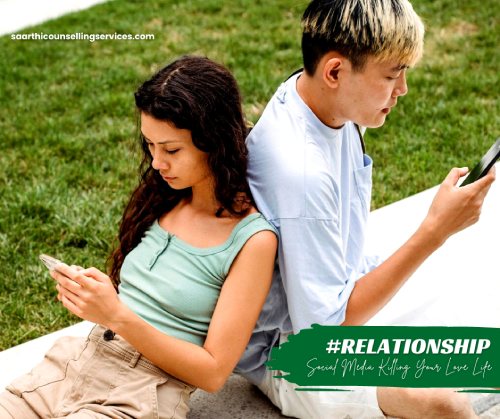
Scrolling through your social media app feed seems more interesting and engaging than talking and laughing with your loved one about your favourite TV show. The more time you spend on your phone, the more you will miss out on those little moments of happiness and fun you can have with your partner. Thus, this leaves you close to nil or little time for your partner.
Jealousy over other’s lives on social media
Jealousy is a quite negative emotion that can impact an individual in various conflicting ways. Couples who extensively use social media face issues of jealousy and over-possessiveness over online friends and activity. Higher social media activity with others can also strain your relationship with your loved one.
Self-esteem problems
No matter how much your significant other assures you of your beautiful self, you will still continue to drown in doubt and low self-esteem issues. Social media harmfully robs you of your confidence and esteem, leaving you to compare yourself to others and their projected perfect lives, and marriages. As a result, most people end up comparing their relationships or present status to the ones they see on social media, leading to bitter and unhappy marriages.
Increased probabilities of infidelity
A small chat or commenting on your ex-flame’s picture could spark signs of possible infidelity in your marriage. Studies indicate that the probabilities of people cheating over the virtual world or social media is quite high. Several partners have reportedly found their partners cheating on them via social media platforms.
Over sharing emotions
Several people vent out their frustration on social media by talking to an online friend about the problems that have been presently going on in their marriage. Sharing minor details of your marital conflicts is alright, but solely to an extent where it doesn’t involve you sharing every single piece of detail of your marriage with them. This eliminates all possibilities of open communication with your spouse because you end up relying on social media friends to vent out your problems.
Yet Very Stable Relationship According to Couples Therapist Shivani Sadhoo
Unluckily, relationship skills and self-care are never taught in school. Yet, these two aspects and life necessities can certainly have a huge effect on any person’s happiness and success in life.
And things become even worse, amidst the chaotic and hectic modern-day life, where most people don’t even have quality time for themselves. So, just imagine how those people can have time for others. And this is the case with several couples too, where they simply have no time to contribute anything to their relationship.
All, these later contribute to arguments, and quarrels, eventually leading to quitting the relationship. On the other hand, we have couples who even in the midst of all the chaos and dramas are living a dream-like relationship that is sometimes even hard to imagine, if that actually is possible. Relationship coach and couples counselor Shivani says, this is very much possible to have a loving and happy relationship.
What are some of the finest ingredients that are needed for a stable relationship?
In the process of life, several of us learn to hide our feelings, strengths, desires, and personal goals. If those are hidden from ourselves, we cannot show up as complete people in a relationship. Thus, taking time to look inside of yourself and visit the hidden areas of your feelings, experiences and desires help you to show up as a genuine and honest person.
Too many of you are taught by well-meaning figures to bury your feelings and to be ashamed of your dreams and to simply plain keep others happy. It never works in a relationship. So mostly as Shivani says she hears from couples: “I just do not know who he or she is. I get such mixed signals or no response at all about where we want to go together, in life.”
In knowing yourselves, you do know what you personally need to keep on your own pathway towards success and happiness and then you can communicate that to your partners. It all starts with yourself “Do what you love!”
Practicing self-care
Do you know the number of people who are simply plain burned out in life, lately? You have been tested in your abilities to survive and adapt during certain current tough challenges here in your life. Being the best version of yourself in a relationship means you know how to and you do all it takes to be healthy in mind, body, and spirit.
When you do not feel good, or you are too stressed or lack faith in yourself or in the future, you cannot be a good partner to anyone. You all know the steps to take for good self-care, but do you really practice these behaviors? As human beings, you need good sleep, exercise, healthy food, time outdoors in nature, adventures, and fun, constant learning, and a belief in something greater than yourself.
Whatever your religious or spiritual thought process may be, spending time with the practices will enhance your vibrational level and lead you to better self-care and creativity.
Communicating in a positive way
As in any relationship, differences will arise. And in fact, in relationships with the biggest differences, growth and deeper learning takes place in an attempt to relate to one another. So enjoy the differences and learn to try to understand each other and those differences.
If you can learn to converse from your heart rather than putting your partner on the defensive, overcoming differences and learning to be more open can truly be fun. For years you have been learning about “I statements.”
They are truly heart statements. Here is an instance. Your partner comes home late. A typical reaction would be a question like “Why are you so late while coming home?” The implication here is that the individual is in trouble or has misbehaved.
A heart statement would be “Oh I really miss having time with you and I get sad or worried when you reach home later than I expected.” Observe how the communication is about caring, about loving the other one instead of interrogating the partner.
Letting do-overs
When conflict and misunderstanding occur in a relationship, it is mostly difficult to practice positive communication. In those situations when buttons are being pushed harder and frustration or anger grows, take a break from the discussion.
During that break genuinely try to imagine what your partner is looking to communicate and where he or she is coming from. Then go back to your inner communication and approach with the aim of understanding, accepting, and loving the other person.
Any one of you can call a Do Over or a Break as things get even slightly heated. In calling a break, again bring this back to yourself with statements such as” I genuinely feel bad with how this is going and I wish to find a better way to understand and support you.
How about if we try the same discussion again when we both feel prepared?” There is so much respect and love in that manner of dealing with misunderstandings or differences.
Keeping passion and excitement alive
As you keep growing in your individual passions and your learning, you bring excitement into a relationship. This journey is meant for learning and growth and not retreating into comfort or any mundane.
Fear might create a desire to protect yourself from facing life’s tough challenges head-on. The only two fears everyone is born with are fear of falling and fear of loud noises. The remaining ones have learned fears. The good thing about learned fears is that you can unlearn those fears by facing them when that opportunity arises.
As you individually face your fears, you create adventure, fun, and stimulation in the relationship. The passion enhances in response to those behaviors. Words such as “this is interesting” or “challenge accepted” can help assist you in your self-talk as you take on the challenges life gives you. Think of the energy you bring home to the relationship as you keep moving ahead in life and following your dreams.
As you could see, the best relationships need self-focus and an honoring of your true selves. Then when you show up to your partner an incredibly positive and fulfilling relationship will take place.