Category Archive : leading Relationship counsellor in India

best couples therapist in delhi_shivani misri sadhoo

Using Dating Apps in India: Warning Signs, Dangers, and Safety Tips

Dating apps have changed how people in India meet and form relationships. What was once considered taboo is now widely accepted, especially among urban youth and working professionals. Apps like Tinder, Bumble, Hinge, and several Indian platforms promise convenience, choice, and compatibility.

However, along with opportunities for genuine connections, dating apps also carry serious risks. Being aware of common warning signs, potential dangers, and essential safety practices is crucial for anyone navigating online dating in India, says Shivani Misri Sadhoo who is an experienced couples and relationship counselor in Delhi, India.

shivani misri sadhoo_delhi's top couples and relationship therapist

Why Are Dating Apps in Demand in India?

Dating apps are growing rapidly in India due to changing social dynamics and digital accessibility. Young adults today value independence and prefer choosing their partners based on shared interests and personal compatibility rather than traditional matchmaking systems.

Another key factor is lifestyle change. Long working hours, remote jobs, and migration to new cities make it difficult to meet people organically. Dating apps provide a fast and convenient way to connect without relying on social circles.

Increased smartphone usage and affordable internet have also played a major role. Dating apps are no longer limited to metro cities; users from tier-2 and tier-3 cities are actively joining these platforms.

Lastly, dating apps offer flexibility and control. Users can decide whom to talk to, what information to share, and when to disengage, making online dating appealing to people who prefer privacy and autonomy.

shivani misri sadhoo_india's best relationship counselor

Warning Signs and Dangers of Using Dating Apps in India

India’s leading couples therapist and relationship counsellor Shivani Misri Sadhoo, asks to watch out for these warning signs:

Fake Profiles and Catfishing

One of the most common risks on dating apps is encountering fake profiles. Scammers often use stolen or heavily edited photos and fabricate personal details to appear trustworthy. Over time, they build emotional connections and eventually ask for money, favors, or sensitive information.

Financial Fraud and Romance Scams

Financial scams are a serious issue in India. Fraudsters may pretend to be business professionals, army officers, or NRIs and lure users into fake investments or emergency money requests. Once emotional trust is built, victims often ignore red flags and suffer significant financial losses.

Emotional Manipulation and Harassment

Some users engage in emotional abuse through gaslighting, guilt-tripping, or pressuring matches for intimacy. Persistent messaging, controlling behavior, or pushing for explicit content are major warning signs. In extreme cases, private chats or photos may be used for blackmail or threats.

Physical Safety Risks

Meeting strangers offline carries real physical dangers. There have been reports of assault, stalking, extortion, and coercion after in-person meetings arranged via dating apps. Since most platforms do not conduct detailed background checks, users often have limited knowledge of a person’s true identity or intentions.

Privacy and Data Misuse

Sharing personal details too early can lead to privacy violations. Phone numbers, addresses, workplace information, or social media accounts can be misused for identity theft, cyberstalking, or long-term harassment.
shivani misri sadhoo_india's best couples and relationship counselor

Safety Tips for Using Dating Apps in India

Some of the best tips to follow for safety while using dating apps are:

Verify Profiles Carefully

Check for consistency in profile photos, bios, and conversation details. Profiles with very limited information or overly perfect images should be treated cautiously. Reverse image searches can help identify stolen pictures.

Never Share Financial or Sensitive Information

Avoid sharing bank details, OTPs, Aadhaar numbers, home addresses, or personal documents. No genuine match will ask for money or confidential information, especially in the early stages.

Use In-App Messaging

Stick to the app’s chat feature initially instead of shifting immediately to WhatsApp or Telegram. Dating apps provide reporting, blocking, and moderation tools that offer an extra layer of protection.

Meet Only in Public Places

For first meetings, choose well-lit, public locations such as cafés, restaurants, or malls. Inform a trusted friend or family member about your plans and avoid isolated or late-night meetups.

Trust Your Instincts

If someone rushes intimacy, avoids video calls, gives inconsistent stories, or makes you uncomfortable, disengage immediately. You do not owe politeness at the cost of your safety.

Stay Informed and Update Privacy Settings

Regularly review app privacy settings and stay aware of common online dating scams in India. Knowledge and awareness are your strongest defenses against misuse.

Dating apps can be a powerful tool for meeting new people, but they require caution and awareness. By understanding common dangers, recognizing warning signs, and following practical safety tips, users can enjoy online dating while protecting their emotional, financial, and physical well-being.

Smart decisions and strong boundaries are the key to safe and meaningful connections in the digital dating world.


Check out popular blog post on Dating Apps

Romantic Attraction sign of genuine interest relationship counselling Shivani Misri Sadhoo

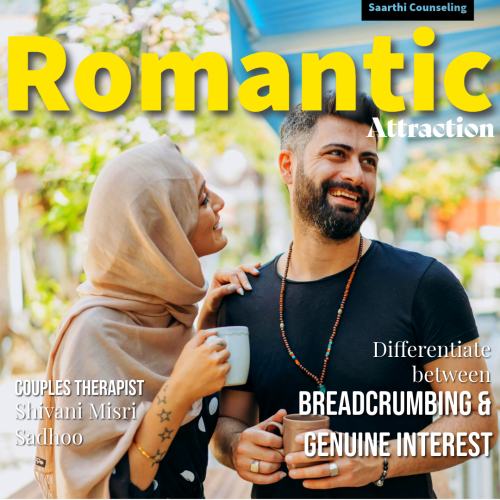
Breadcrumbing or Genuine Interest? How to Tell the Difference

In today’s digital dating and relationship landscape, mixed signals have become almost normal. One day, you receive sweet messages or compliments, and the next day, there is silence. This confusing pattern often leaves people wondering whether someone is genuinely interested or merely using them for attention. This is where the concept of breadcrumbing comes in. Understanding the difference between breadcrumbing and genuine interest is essential for protecting your emotional well-being and building healthy connections, according to Shivani Misri Sadhoo, one of Delhi’s top relationship and marriage counsellors.

What Is Breadcrumbing?

Breadcrumbing is a relationship behaviour where a person gives you small, inconsistent bits of attention to keep you emotionally invested, without any real intention of committing or moving the relationship forward. The term comes from the idea of leaving “breadcrumbs” — just enough to keep you following, but never enough to satisfy your needs.

This behaviour is common in dating apps, friendships, and even workplace or social relationships. A breadcrumber may send occasional texts, react to your social media posts, or check in randomly, especially when they sense you are pulling away. However, they avoid deeper conversations, plans, or emotional availability.

How Does Breadcrumbing Typically Look?

Breadcrumbing often follows a predictable pattern. The person may:

  • Text or call only when it suits them
  • Disappear for days or weeks without explanation
  • Avoid making concrete plans or cancel them repeatedly
  • Offer vague promises like “we’ll meet soon” without action
  • Show interest only when you seem less available

The key characteristic is inconsistency. Their attention comes in waves, leaving you confused and constantly waiting for more.

Why People Breadcrumb?

People breadcrumbs for different reasons. Some enjoy the validation and ego boost of knowing someone is interested in them. Others may be emotionally unavailable, afraid of commitment, or keeping multiple options open. In some cases, they may not even realise the emotional impact of their behaviour, but that does not make it any less harmful.

Breadcrumbing allows the other person to stay in control while investing minimal effort.

What Genuine Interest Looks Like?

Genuine interest, on the other hand, feels very different. It is consistent, respectful, and reassuring. Someone who is genuinely interested in you makes an effort to be part of your life, not just an occasional presence in it.

Signs of genuine interest include:

  • Regular and consistent communication
  • Making and following through on plans
  • Showing curiosity about your life, feelings, and goals
  • Being emotionally present and responsive
  • Clear intentions rather than vague promises

With genuine interest, you are not left guessing. Even if the relationship is moving slowly, the effort and direction are clear.

Romantic Attraction sign of genuine interest relationship counselling

Key Differences Between Breadcrumbing and Genuine Interest

Understanding the contrast between breadcrumbing and genuine interest becomes much easier when you look at specific behaviours. Below are clear, real-life examples that highlight how the two differ.

1. Communication Style

BreadcrumbingCommunication is sporadic and unpredictable. You may receive a sudden “Hey, what’s up?” after days of silence, with no real conversation or follow-up. Messages often lack depth and disappear once they have your attention.

Genuine Interest: Communication is consistent and intentional. Even during busy periods, the person makes an effort to check in, explain delays, and maintain a sense of connection.

2. Effort and Follow-Through

BreadcrumbingPlans are vague and frequently postponed. Statements like “Let’s meet someday” or “We should catch up soon” are repeated but never acted upon.

Genuine InterestPlans are specific and honored. If something comes up, they reschedule rather than disappear, showing that spending time with you matters.

3. Emotional Availability

Breadcrumbing: Emotional depth is avoided. Conversations stay light or surface-level, especially when you try to discuss feelings, expectations, or the future.

Genuine Interest: Emotional openness is present. The person listens, shares their thoughts, and is willing to have honest conversations, even if they feel uncomfortable at times.

4. Accountability and Respect

BreadcrumbingDisappearances go unexplained. When questioned, the person may deflect, minimise your feelings, or suggest you are overreacting.

Genuine Interest: Accountability is taken seriously. They acknowledge mistakes, apologise when needed, and make changes to avoid repeating the same behaviour.

5. Impact on Your Emotional Well-Being

BreadcrumbingYou often feel anxious, confused, or insecure, constantly questioning where you stand.

Genuine InterestYou feel calm, valued, and secure, knowing where you stand even if the relationship is still developing.

6. Long-Term Intentions

BreadcrumbingThere is no clear direction. The connection remains stuck in the same place with no progress over time.

Genuine InterestThere is forward movement. The person expresses intentions through actions, showing a desire to grow the relationship naturally.

These differences make it clear that genuine interest provides clarity and emotional safety, while breadcrumbing thrives on uncertainty and minimal effort.

How to Protect Yourself?

The best way to deal with breadcrumbing is to set clear boundaries. Notice patterns instead of excuses. Communicate your expectations calmly and observe how the other person responds. Genuine interest will meet your clarity with respect, while breadcrumbing often fades or becomes defensive when confronted.

Remember, consistency is more important than intensity. Someone who truly cares will show up in actions, not just words.

Breadcrumbing and genuine interest can look similar at first, but over time, their differences become clear. You deserve relationships where effort matches words and interest is shown through consistency. Trust patterns, trust your feelings, and do not settle for crumbs when you deserve a full connection.

Live-in relationship is Good or Bad Idea marriage counselling advice

In 2026, Would a Live-in relationship be a Good or Bad Idea?

Love, faith, and communication are the perfect recipe for a healthy relationship. Yet we live in an era where touchscreens often speak louder than our voices, and notifications interrupt moments that once belonged solely to each other. Couples today are constantly busy—physically present but emotionally elsewhere—scrolling through lives instead of truly living their own. In this climate of distraction and constant movement, relationships are expected to adapt, bend, and survive at a faster pace than ever before.

As priorities shift and independence becomes more valued, commitment itself begins to take on a different meaning. The idea of lifelong promises can feel overwhelming in a world that celebrates flexibility and personal freedom.

Many people now seek companionship without the perceived weight of traditional expectations, believing that emotional connection does not always need formal labels to be real or meaningful. Gradually, this mindset has opened the door to alternatives where love is tested in shared spaces, daily routines, and mutual understanding—without immediately stepping into the institution of marriage.

Shivani Misri Sadhoo, who is a leading couples therapist and marriage counsellor in Delhi, shares her thoughts on whether a Live-in relationship would be good or bad in 2026 in this article.

What is a Live-in Relationship?

So, by now we all know what a live-in relationship is. It is an arrangement where a couple in love decides to live together without the social or legal sanction of marriage, yet remains equally responsible toward each other.

Pros of Live-in Relationship

1. Freedom Remains Intact

One of the things that happens when you are married is that you seem to lose some freedom, because your individual choices inevitably start affecting your partner. You cannot simply say no to your partner’s relatives’ wedding even if you do not wish to attend, or you may have to cancel a weekend trip so that your in-laws can spend time with both of you.

There are many ‘ifs’ and ‘buts’ you cannot ignore once you are married. In a live-in relationship, however, this freedom largely remains intact—choices are still personal, boundaries are more flexible, and compromises are made out of willingness rather than obligation, allowing both partners to retain a stronger sense of individuality. In fact, one does not have to legally separate like a divorce; they can simply part with each other amicably whenever they want to.

2. Compatibility Testing

One of the key factors of a healthy relationship is being truly compatible with each other, and a live-in relationship makes that easier to test. Living together allows partners to see the real person behind the smiles and polite gestures of dating.

When you share the same space, use the same kitchen, spend more time with each other, you get to know each other’s daily routine, mood swings, and quirks– things that aren’t visible during brief dates. Couples often put on their best behaviour during these short meetups, which makes it hard to see the real person.

3. Enhanced Communication

When couples choose a live-in relationship, their communication often naturally improves. Sharing a living space requires them to navigate daily routines, responsibilities, and conflicts together, which encourages clearer expression of needs and feelings. This constant interaction helps partners develop better conflict resolution skills and fosters healthier, more effective communication patterns within the relationship.

4. Saves Money

This is perhaps one of the most practical benefits of a live-in relationship. Couples can share their rent, bills, and other household expenses in a live-in relationship.

Cons of Live-in Relationship

1. Legal Problem

Without a clear legal or societal framework, live-in relationships can create uncertainty about commitment, future plans, and personal boundaries. This lack of clarity may trigger insecurity, anxiety, and misunderstandings between partners, making communication more challenging and leaving individuals unsure about their rights, responsibilities, and the relationship’s long-term stability.

2. Societal Factor

Society may not approve of such relationships. This further leads to emotional stress.

3. No Commitment

Lack of commitment is a major drawback of live-in relationships, as partners may avoid long-term responsibility. Without clear promises, emotional security often suffers, making the bond feel temporary. This uncertainty can lead to trust issues, unequal effort, and hesitation about future plans, leaving one or both partners feeling unstable inside.

So, is a live-in relationship a good or bad idea in 2026?

Honestly, it depends—not on the trend, but on the people involved.

A live-in relationship can work beautifully when there’s clarity. When both partners are open about what they want, where they’re headed, and what their boundaries are. When independence doesn’t turn into emotional distance. When freedom comes with responsibility. And when love isn’t treated as disposable just because it isn’t legally defined.

But it can fall apart when it’s used to dodge commitment instead of understanding it. When comfort replaces effort. When fear of permanence gets dressed up as “being modern.” And when the emotional work isn’t shared equally, leaving one person giving more, hoping more, and quietly settling for less.

Maybe the issue isn’t live-in relationships at all. Maybe it’s how confused we’ve become about commitment. Somewhere along the way, we started mistaking flexibility for depth, and freedom for bravery. Real commitment—married or not—has never been about paperwork. It’s about intention. It’s about choosing to show up, even after the excitement wears off.

  • Love doesn’t demand a specific format. But it does demand sincerity.
  • And whether you share a home or take sacred vows, the question stays the same:
  • Are you building something meaningful—or just passing time together?

So, ultimately, a live-in relationship in 2026 can be good or bad depending on the couple. It all depends upon the perspective.

It works when there is honesty, clarity, respect, and shared responsibility. Without commitment and communication, it can cause confusion and hurt. Ultimately, meaningful relationships depend on intention, not labels.

relationship in digital age insight by relationship counsellor Shivani Misri Sadhoo

Is Online Culture Making Rejection Harder for Today’s Youth?

Rejection has always been a part of growing up, but for today’s youth, it often feels heavier, louder, and more public than ever before. In a world shaped by social media, instant feedback, and constant comparison, rejection is no longer just a private disappointment.

It can feel like a public verdict. From being left on “read” to not getting enough likes or being excluded online, digital culture has transformed how young people experience and process rejection. This raises an important question about whether the online world is making emotional resilience harder to build, says Shivani Misri Sadhoo, who is one of the top couples therapists and relationship counsellors in Delhi.

relationship in digital age insight by relationship counsellor Shivani Misri Sadhoo

Rejection in the Age of Visibility

In earlier generations, rejection usually happened in limited social circles. A declined invitation, a failed exam, or a romantic disappointment was often experienced privately or shared with a few trusted people. Today, online platforms make social interactions visible and measurable.

When a post receives little engagement or a message goes unanswered, rejection feels quantified and exposed. For many young people, these small digital signals are interpreted as judgments on their worth, making rejection feel constant rather than occasional.

relationship in digital age insight by relationship counsellor Shivani Misri Sadhoo

The Pressure of Constant Comparison

Social media encourages users to compare their lives with carefully curated versions of others’ success and happiness. When young people see peers achieving milestones, gaining attention, or appearing confident and admired, rejection can feel like personal failure rather than a normal life experience.

This comparison culture amplifies self-doubt and can make setbacks feel more significant than they truly are. Instead of seeing rejection as a temporary obstacle, many begin to internalise it as a defining trait.

relationship in digital age insight by relationship counsellor Shivani Misri Sadhoo

Fear of Public Failure

Online culture has blurred the line between private mistakes and public embarrassment. A rejection can quickly become visible through screenshots, unfollows, or subtle online signals. This creates a fear of trying at all.

Many young people hesitate to apply for opportunities, express feelings, or share creative work because the possibility of rejection feels too public and permanent. The internet rarely forgets, and this perceived permanence adds emotional weight to every risk.

relationship in digital age insight by relationship counsellor Shivani Misri Sadhoo

Reduced Opportunities to Build Resilience

Resilience is often built through repeated exposure to disappointment and recovery. However, digital interactions can limit this process. Online rejection tends to be abrupt, silent, or ambiguous, offering little explanation or closure.

Being ignored or excluded online does not provide the feedback needed to learn and grow. Over time, this can make rejection feel confusing and deeply personal, rather than a normal part of human interaction.

Emotional Validation and External Approval

Online culture places strong emphasis on validation through likes, comments, and followers. When approval becomes external and numerical, rejection feels like the absence of value. Youth who grow up equating attention with self-worth may struggle more when validation is withdrawn. This dependency can make rejection emotionally overwhelming, as it challenges both confidence and identity.

Learning to Reframe Rejection

Despite these challenges, online culture does not make rejection impossible to handle; it simply changes how it must be understood. Teaching young people to separate online feedback from self-worth is essential.

Rejection, whether online or offline, is not a reflection of personal value but a natural outcome of diverse opinions, preferences, and circumstances. Developing digital literacy, emotional awareness, and self-compassion can help youth navigate rejection more healthily.

Online culture has undeniably reshaped how today’s youth experience rejection, making it more visible, frequent, and emotionally intense. While this environment presents new challenges, it also offers an opportunity to redefine resilience for the digital age. By encouraging meaningful offline connections, fostering self-worth beyond online approval, and normalising rejection as part of growth, young people can learn not only to cope with rejection but to grow stronger through it.

De-Escalate Heated Fights Between Couples by Couples therapist Shivani Misri Sadhoo

How to De-Escalate Heated Fights Between Couples? Relationship Strategies

Yes, a movie ends on a happy note — the hero and heroine walking into their “happily ever after.” But real life actually begins from there. When two people meet and fall in love, they make promises — some spoken, many unspoken.

As days turn into months and years, conflicts slip in naturally. Misunderstandings arise, expectations grow heavier, and the magic of the beginning can start to dim under the weight of everyday reality. But not all conflicts are bad. In fact, some are necessary. They peel away the illusions of perfection and invite both partners to grow. Yet when arguments begin to cross a line — when every disagreement feels like a battlefield — that’s when it’s time to pause.

How to de-escalate heated fights amongst couples?

How to de-escalate heated fights amongst couples?

Arguments shouldn’t spoil the bond; instead, learning to de-escalate them can strengthen it. And to help couples handle these stormy moments, says Shivani Misri Sadhoo, a leading relationship expert and one of the highly experienced marriage counsellors in Delhi, India.

Press the Pause Button

When an argument starts to intensify, it helps if one person presses pause right away. A relationship grows stronger when both people choose connection over winning, because it’s not about who’s right—it’s about how you treat each other while you work through things together.

Taking a short break lets emotions cool, prevents regretful words, and gives each person space to reflect on what they’re really feeling.

Research even shows that about twenty minutes is often enough to bring your heart rate down and regain a sense of calm. In moments like these, the healthiest thing you can do is step back and say, “Let’s stop here for a moment. We need to hear each other out.”

How to De-Escalate Heated Fights Between Couples? Relationship advice

Reflect

Once you hit the pause button, the next step is to reflect on your own feelings, on what the situation is really asking of you, and on how things might look from your partner’s side. This small moment of self-check creates space for calm and clarity, making it easier to speak with empathy rather than react out of frustration.

It’s natural to feel convinced that we’re right and the other person is wrong, but pausing helps us soften that instinct and look at the situation with a bit more honesty. In that brief break, you can sort through what you actually need, what may have triggered you, and how to express yourself without blame.

Often, just taking those few intentional seconds is enough to shift the entire tone of the conversation and prevent it from spiraling.

Find out the Real Why

When couples argue, the real issue often slips beneath the surface, buried under reactions, tone, or the heat of the moment‌. That’s why it helps to pause and look for the⁠ true trigger—sometimes it’s something as small as feeling unheard, overwhelmed⁠, or unappreciated, rather than whatever started the argument on the surface.

If you peel back the layers a bit, you might find that one person was already carrying stress‍ from elsewhere, or that an old, unresolved concern got brushed up‍ again without anyone realising it. Getting to that “why” isn’t about assigning blame; it’s about understanding the emotional undercurrent‌ so both people can respond with empathy instead of frustration.

How to De-Escalate Heated Fights Between Couples? Relationship tips

Listen to Your Partner

Sometimes the simplest advice is the hardest to follow — just listen. In the middle of a heated argument, couples often talk over each other, raising their voices without actually hearing a word being said. But listening is one of the most powerful tools for de-escalation.

When you slow down and genuinely pay attention, you’re not just absorbing words — you’re acknowledging your partner’s feelings, showing that their emotions matter, and creating space for understanding instead of defensiveness.

Real listening means trying to grasp what they’re really upset about, what they need, and why it matters to them. It’s a sign of respect, care, and willingness to fix the issue rather than fuel it further.

And often, once someone feels heard, the tension softens naturally; solutions appear more easily, and the conversation becomes less about winning and more about reconnecting. Listening doesn’t magically solve everything, but it opens the door to resolution — and that’s usually all a relationship needs to start moving forward again.

Choose Your Words

It’s surprising how quickly a‍ few careless words can‍ turn a small disagreement into something painful. In the heat of an argument—especially between couples—words can come out harsh, thoughtless, or completely misunderstood, and once they’re said, you can’t take them back.

That’s‌ why choosing your words‍ with intention matters so much, instead of slipping into blame,⁠ personal attacks, or sweeping statements like “you always” or “you never,” try grounding the conversation in your own feelings with gentle “I”‌ statements.

Slow down, listen without interrupting, and make space for your partner to feel heard. Not every disagreement needs a winner; sometimes the real victory is understanding each other better. A little patience, clarity, and‍ kindness can keep a difficult⁠ moment from becoming a damaging one.

In a nutshell, de-escalating arguments isn’t about winning—it is about caring for each other. Take a step back,‍ listen, understand what’s really bothering each other, and communicate gently. Little pauses, honest reflection, and thoughtful words can turn tension into connection, helping couples grow closer instead of drifting apart.

Check out Popular Blog Posts on relationship tips on Couple fights

How To Repair A Collapsing Relationship?

There is an old saying that developing a relationship is easier than maintaining it. We are living in such a world now where relationships are becoming complex day by day. We often look to run away when it is time to mend the relationships due to various reasons. But once a relationship is broken, it’s very hard to recover. Thus, it is very important to pay attention when you start to feel that your relationship is on the verge of collapsing.

When you start observing that you are saying we need to talk more, it is a sure sign that relationship is collapsing. Thus, this becomes very important to repair a relationship before it becomes too late. You have to be patient and devoted to the problems that need to be taken care of.

Delhi’s Eminent Marriage Counsellor Shivani Misri Sadhoo shares her insights on how to repair a relationship that is collapsing. These are:

Find Out The Reasons

Before you try to repair the loopholes of your relationship, you need to find out the root of the issues. If you observe a change in your partner’s behavior, try to find out the possible reasons behind it. Since, you are well aware of your partner’s interests and concern areas, finding out the reason and fixing the problem would not be a difficult task.

Enhance Your Communication

Before involving in an argument, try being a good listener. Always ensure that you always lend an ear to what your partner wants to say. Honestly saying, you cannot be the only one talking all the time. If you let your partner speak, it makes them feel valued and gives you an opportunity to understand the issues better.

Spend More Time With Each Other

Try spending a good time with each other. Even if it involves doing something which you do not like, put an effort. Spending more time with your partner will help you find out the real problem and then you can look for ways to resolve it.

Do Not Bring Up The Past

Even it is a past issue or a long-forgotten fight, avoid discussing the past. It will only make the situation difficult by blowing things out randomly. Pay attention to your present, address the complaints and try to resolve the causes that are ruining it. You will never be happy discussing what happened in the past.

Learn To Forgive

If you can forgive your partner, it will help you save your relationship. Repairing your bonding and connection issues is all about understanding each other and giving another opportunity. Forget what has happened and start afresh. It will help detox your mind and prevent the past from clouding your judgments.

Learn To Compromise

When you are in a committed relationship, it is also about making compromises. You cannot always have things as per your wishes. The earlier you accept this; the better opportunities you will have at repairing things. A relationship that is on the verge of collapsing requires more compromises than a healthy one.

Talk About Your Feelings

Never expect your partner to guess your emotions and thoughts. Rather, be vocal about your feelings. If you do not talk openly about your feelings, your partner will never be able to understand it. As a result, it will create a communication gap which would be be very tough to bridge.