Tag Archive : renowned marriage counseling in Delhi

emotional neglect marriage shivani misri sadhoo

How to Deal with Emotional Neglect in a Marriage

Emotional neglect happens when the emotional needs of an individual are disregarded or are not valued in a relationship. For the one on the receiving end of the neglect, it could be traumatizing and could harm their psyche. Sadly, emotional neglect in marriage is mostly swept under the rug, simply because it is not as visible as physical pain. Some couples may not even realize that they are suffering from the effects of emotional neglect in their relationship.

How to Deal with Emotional Neglect in a Marriage Shivani Misri Sadhoo

Signs of emotional neglect in Marriage

The first thing you require to do is to identify the signs that you are suffering from emotional neglect in your marriage. As each marriage dynamic is distinct, its manifestations in your relationship are also different.

However, there are certain tell-tale signs to look out for:

  • You feel alone in your relationship.
  • You will rather spend time alone than be with your partner.
  • You do not engage in any social activities together.
  • You are shut down by your spouse when you talk.
  • You repeatedly suppress your feelings
  • You do not feel that you can be yourself around your partner
  • You are not clear about what your spouse wants from you

How Does Emotional Neglect Damage Relationships?

Shivani Sadhoo says emotional neglect is the bane of several marriages.

It is damaging to a relationship since emotional support is one of the core bases to a successful marriage. When there is emotional support, affection, and intimacy also follow. And without affection and intimacy, both partners will become unhappy. The level of emotional support in each marriage differs according to the different emotional needs of the partners involved. Emotional neglect is contextually relative; the extent of what is defined as neglectful conduct varies on a case-to-case basis.

Delhi’s top marriage counselor Shivani Misri Sadhoo shares some tips to cope with emotional neglect in marriage.

How to Deal with Emotional Neglect in a Marriage Shivani Misri Sadhoo

Do not play the victim

It certainly hurts when your spouse is not fulfilling your emotional needs. However, this is no reason to play the victim card. If you do that, it will simply worsen the situation. You end up in a blame game and that does no favour for your relationship. 

The finest way to deal with it is to talk directly to your partner. Let them know how you feel and where you think they are lacking. When talking to your spouse, make certain you do it in a respectful and honest manner. There is no problem in a marriage that open and honest communication cannot fix. This is one of them.

Work through it together

A marriage is a two-way relationship. You cannot fix a problem if there is just one interested party. Both parties should make an equal effort at fixing a problem.
Once you open up to your partner, you require to openly discuss and agree on what steps you require to take to fix the problem. To begin, you can speak up whenever you see any signs of their neglectful conduct. In that manner, they will be able to identify when they are doing something incorrect. Awareness of their behaviour is a good beginning when correcting this issue in your marriage. 

Address the cause

When you face problems in your marriage, the first task to do is to identify the underlying cause for such an issue. You can also use the same procedure in this situation. Before you react to your partner’s behaviour, think about what could be causing it.

  • Is this a recent problem or has your partner been in this manner since the beginning of your marriage? 
  • Is it potentially triggered by an event or situation? 
  • Has there been a sudden alteration in your spouse’s behaviour? 

If the behavioural pattern is triggered by a situation, then your probabilities of fixing it are far better than if it were part of your relationship from the beginning. 

Be proactive

When you are suffering emotional neglect from your spouse, it may be a good time to assess yourself too. Are you neglecting your spouse in other ways? 

Every individual’s requirements are different. Some individuals value emotional support while others value physical intimacy in a marriage. Whatever it is that is the priority of an individual, make it a habit to be aware of it and do your best to fulfil those requirements the best way you can. 

Make time together

Most problems in a marriage can be resolved by making an effort to spend quality time and doing something together. For example, you can travel together or have date nights once a week. 

Marriage can be hard work. While you have this idea of a happily ever after, it cannot be denied that you will experience ups and downs in your marriage. By staying committed to each other, you can overcome these marital issues. 

See a counsellor

A professional counselor is a great choice if you want to resolve conflicts in your marriage like emotional neglect. A counselor can provide an objective and outsider point of view of your problems. 

The counselor could provide some insights into your marital problems that you may not be able to see since you are emotionally and directly involved in the relationship. The counselor can even suggest methods to resolve these problems by assessing the dynamics of your relationship. 

Many couples are hesitant to see a counselor due to the stigma linked with it. However, there is nothing wrong with seeking assistance in order to work through your relationship issues, especially if it means saving your marriage. 

sleep divorce trends couples counselor shivani misri sadhoo

What is the ‘Sleep Divorce’ Trend in India?

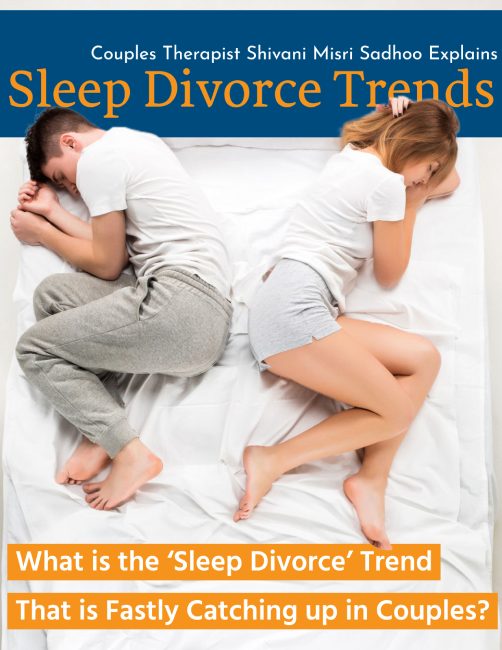
What is Sleep Divorce – Reveals Eminent Marriage Counsellor Shivani Sadhoo That is Fastly Catching up in Couples

When we think of divorce, we often imagine two individuals separating from each other and going their separate ways. But have you ever heard of a sleep divorce? It is a relatively new concept that has been making the rounds lately. To put it simply, sleep divorce is when couples choose to sleep in separate beds or bedrooms or even different homes to improve their sleep quality and overall well-being.

While some couples may initially feel hesitant about the idea of sleeping apart, studies have shown that sleep deprivation can have negative effects on both physical and mental health. Leading marriage counsellor Shivani Misri Sadhoo shares insights on what exactly is sleep divorce.

Why do couples ‘sleep divorce’?

Now, you may wonder, “Why on earth would anyone want to sleep alone when they have a loving partner to snuggle up with?” The reasons are many.

Snoring: For some couples, snoring is the culprit. One may sound like a bear in hibernation, while the other lies there with a pillow over their head, counting sheep, and trying to ignore the noise.

Different sleep schedules: Others may have different sleeping schedules due to work, hobbies, or other obligations. One may prefer to stay up late while the other is an early bird. Having different sleep schedules can lead to disturbance in each other’s sleep, leaving them feeling exhausted and grumpy the next day. A sleep divorce can help them maintain their sanity and get the rest they need.

Temperature difference: Some like it hot, some like it cold. She piles on the blankets while he tosses them off. It’s a never-ending battle that can make for some uncomfortable sleeping conditions. Eventually, they might decide that separate beds with their own individual thermostats are the only solution.

How can ‘sleep divorce’ benefit couples?

Sometimes love and intimacy are not enough to keep a couple in bed together at night. Sleeping separately from your partner may seem like a drastic step, but it can have a significant positive impact on your overall well-being.

Quality of sleep matters

When you’re not being jostled awake by a partner’s snoring, blanket stealing, or tossing and turning, your quality of sleep will automatically improve which is essential for good health.

Relationship resilience

Putting your sleep needs first will make both of you happier and healthier. Then, when you do get together for snuggles and cuddles, you’ll be more present and attentive to each other. It will further strengthen your relationship.

More independence: When couples sleep apart, each partner can pursue their own interests and activities without bothering the other. This allows couples to have more freedom and flexibility, creating a healthy balance between togetherness and personal autonomy.

Reduces conflict: When couples sleep separately, they can have their own sleep schedules and routines that don’t have to conflict with one another. This helps reduce stress in the relationship, which can lead to fewer arguments and less overall conflict.

Every couple is different. What works for one person may not work for another. Sleep divorce might be worth considering if your sleep habits cause tension in your relationship. After all, a well-rested couple is a happy couple!

arrange marriage insight shivani misri sadhoo

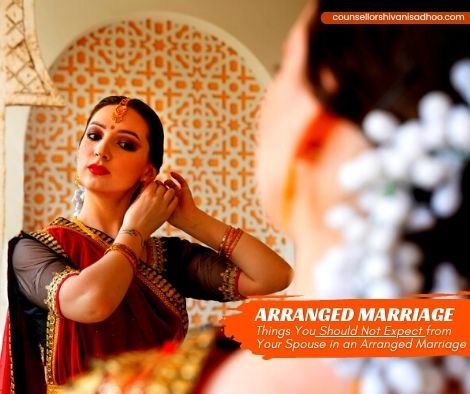
Things You Should Not Expect from Your Spouse in an Arranged Marriage

Shares Eminent Marriage Counselor and Relationship Expert Shivani Misri Sadhoo

Opting for an arranged marriage? Taking the decision to marry someone is never easy. And more so when you are opting for an arranged marriage, things are not quite predictable. When you marry a person, you are in love with, you at least know that person albeit to some extent, and even the family in certain cases.

But if you marry an individual ‘arranged’ by your parents or others, you require to give things a little time and requires to discover your partner while already being in a conjugal relationship. There may be surprises (both good, bad, and ugly) in store for you each day and therefore, having pre-set expectations from your spouse might not be a wise idea.

Here are a few things you should not expect from your partner right from the first day in an arranged marriage as explained by India’s leading marriage counselor Shivani Misri Sadhoo.

marriage counseling by shivani misri sadhoo

Expecting your partner to give you more importance compared to his or her parents

Your partner has lived with his or her family all throughout the life and expecting them to give you the same priority, love, and attention right from the very first day of marriage is a bit unfair. It will take months to develop the same relationship with your spouse as they have with their family and hence, hoping to be given additional importance than the family is not a right expectation.

Falling in love with in-laws

You will expect your partner to have respect and care for your parents but do must not expect them to fall in love with your family from the moment you get married. Again, you fall in love with people post spending a considerable amount of time with them and when they too reciprocate your love and care. Forming a relationship with in-laws demands efforts from both sides and the complete responsibility does not lie on your partner’s shoulders solely.

Understand you straightaway from day one

When you got to know someone just a few months before your marriage, how can you expect him or her to know fully about your likes, and dislikes and understand your fundamental nature? You can just understand your partner better when you begin living under the same roof and share your moments of happiness and overcome hurdles and struggles together.

So, if you get easily disappointed by your spouse’s behaviour or specific habits, simply remember—Rome wasn’t built in a day. Give the person ample time to understand you better contrary to setting wrong expectations.

The period of courtship

The courtship period is certainly helpful to understand your would-be partner better, particularly, if he or she was chosen by your parents or other family members. But it does not mean you are the person to stay in constant touch with you round the clock.

You ought to understand that he or she may be busy preparing for the marriage or slogging it out at the workplace. Hence, focus on spending quality time with your contrary of messaging or calling them after every few minutes.

arrange marriage insight good or bad

Friend circle

Your partner is not mandatorily to be as fond of your friends as you are. It is fine to have different perceptions about each other’s friends. What truly matters most is that you provide your partner with the space to spend time and enjoy with their friends and not judge them regarding their choices.

This write-up is not an effort to criticize arranged marriage concept. We have seen both arranged and love marriages have their unique pros and cons. Eventually, any relationship will only work if both partners are ready to understand each other and be there with them during good and bad times. Besides any good relationship requires love, honesty, compassion, and sacrifices to become successful.

marriage counseling in delhi by Shivani Misri Sadhoo

Should You Take a Break to Regain Your Relationship Health?

Just like human beings need a break from mundane routines, relationships need a break to re-energize and strengthen bonds. Relationships can become strained and lackluster when people take each other for granted or fail to nurture their bonds. Taking a break from relationships is similar to taking a vacation from work; it gives everyone a chance to relax, recharge, and return with a renewed focus and appreciation. Taking a break from your relationship doesn’t mean it’s over. It’s an opportunity to take a step back, re-evaluate, and understand what needs to be changed for the relationship to be successful.

However, relationship breaks should never be indefinite. They need to have a specific timeline and an agreed-upon goal. This will help both parties to focus on their own well-being and have a better understanding of what needs to be done to move forward. This will also ensure that the break is used constructively and not just as an excuse to avoid difficult conversations.

So, let’s find out the benefits of taking a break from your relationship from Shivani Misri Sadhoo, India’s top marriage counselor and psychologist in India.

1. It helps to Reanalyse: 

Taking a break gives each partner time to reflect on their feelings and assess the relationship objectively. It can allow each partner to determine if the relationship is worth saving, or if it is time to move on. It also helps you to gain perspective and see the relationship from a different angle.

2. Distance lends enchantment: 

Distance lends enchantment to the view and allows couples to reflect on the relationship differently. It allows couples to process emotions, re-evaluate their issues, and return with a fresh outlook. For instance, couples who have taken a break from each other often report feeling a renewed sense of appreciation when they come back into contact.

3. It’s Okay to Miss: 

Absence truly makes the heart grow fonder. Missing someone or something can be a sign of appreciation. Acknowledging this distance can deepen relationships, allowing for more meaningful moments when we are together. It can also be a reminder to be grateful for the things we have in our lives.

4. Introspect: 

Relationship breaks give you the opportunity to introspect. Without the distractions of a relationship, you have more time to focus on yourself. You can think deeply about what went wrong in the relationship and what you can do differently in the future. You can also take time to focus on your personal goals and figure out what you truly want from life. It will help you figure out who you want to be in the relationship.

5. Improves Communication: 

Taking time away from your partner can help you relax and clear your mind, enabling you to articulate your thoughts and feelings better when you reconnect.

problems in live-in relationship

Problems in a Live-In Relationship in India

Explains Top Couples Therapist Shivani Misri Sadhoo

It is often said that marriages are made in heaven. But not all of them last forever. Many marriages do not stand the test of time and end in divorce or separation. Nowadays, Live-in relationships are becoming more common, as they offer people an alternative to marriage. This allows couples to experiment and find out if they are compatible before taking the step of marriage. However, these relationships can be just as fragile and many end up in breakups.

Despite being legally accepted, live-in relationships in India are still frowned upon by many because they go against traditional values and beliefs. Though the freedom such relationships offer is often attractive, they come with their own set of challenges and complications. Let’s find out more about the challenges of live-in relationships in India from Shivani Misri Sadhoo, the top marriage counsellor and relationship expert.

Problems in a Live-In Relationship in India shares shivani misri sadhoo

Social Taboo 

Live-in relationships in India are still considered social taboos. This is because traditional Indian culture emphasizes the importance of marriage as a sacred institution. So, staying together before marriage is seen as a kind of disobedience to the established norms. Social stigma has led to many couples living in secret. People treat you like outcasts.

Lack of commitment 

Lack of commitment is a big problem in live-in relationships. People in live-in relationships tend to take each other for granted and do not work towards making it a long-term commitment. This can lead to a lack of trust, communication, and overall stability in the relationship.

Freedom seems to be a double-edged sword in these types of relationships, as it can lead to more misunderstandings and a lack of security. This can result in the dissolution of the relationship, leaving both parties feeling frustrated and hurt.

Finding shelter is a big challenge 

Finding a house for unmarried couples in India is a big challenge. Either it is difficult to locate a landlord who is willing to rent a house to unmarried couples or even if they find one, the couple may face discrimination and judgment from their neighbours. This creates a huge obstacle for unmarried couples looking for a place to call home.

Money trouble 

It is common for people in live-in relationships to struggle with their finances. It can be difficult to combine two different incomes and expenses in a way that is mutually beneficial. This can lead to financial stress, which can in turn put a strain on the relationship.

Conflict pertaining to career choices

 In live-in relationships, career challenges can be tricky. Since there is no legal commitment between the partners, they often have to make compromises when it comes to career decisions.

For example, when one partner receives a job offer in another city/country either through promotion or simply as a better career prospect, he or she must decide whether to accept the offer or not, while considering the impact it would have on their relationship. This can create feelings of resentment and frustration in the relationship.

Family Pressure

Family plays a crucial role in shaping relationships in India. In live-in relationships, family opinion is often considered more important than that of the couple. This often leads to pressure on the couple to conform to the family’s expectations instead of making their own decisions. As a result, many couples opt to continue their relationships in secret or even break up.

Problems in a Live-In Relationship in India shares shivani misri sadhoo

Love and commitment should be at the heart of any relationship. Whether it is a marriage or a live-in relationship, both partners need to be willing to put in the effort to make it work.

relationship intimacy tips by Shivani Misri Sadhoo

Ways You Can Increase Intimacy to Make Your Relationship Better

Explains Delhi’s Top Marriage Counselor Shivani Sadhoo

Opting to be in a relationship is not the most difficult aspect of wanting to be with someone, it is continuing to stay with them irrespective of the ups and downs. It is to understand their weaknesses and turn them into your strengths. It is the work of being totally transparent with them about your fears and insecurities say, Shivani.

Delhi’s Top Marriage Counselor Shivani Sadhoo

Intimacy

It actually, is the close connection between two people where they share their feelings, emotions, trust, vulnerability, and closeness. However, if one imagines that intimacy requires just remaining in a romantic relationship, that would be false. This can exist between friends, family members, and even strangers in specific situations.

However, when one refers to being in a relationship, people associate intimacy with only getting physically intimate – which is only a physical aspect. While getting intimate physically, surely is an important part of a healthy relationship, it is not everything. There are various ways to increase intimacy and make your relationship healthy and without that, it is probably that the people in the relationship might drift apart opines couples therapist Shivani Sadhoo.

There are 5 kinds of intimacy that might overlap or intersect with each other from time to time. However, the relevance and essence of every single one of them are quite unique. Here is what they are as shared by India’s top marriage counsellor Shivani Misri Sadhoo in this blog.

Emotional intimacy

Emotional intimacy is actually sharing and communicating one’s innermost fears, vulnerabilities, thoughts, feelings, and experiences with another person. This is done when an individual sharing feels comfortable doing so and feels understood and supported in return. It actually, is the feeling of creating closeness with another person by being vulnerable and sharing your actual self with them.

However, forming emotional intimacy depends on both the listener and the one talking. A person can just confide in another person when they know there will be no judgment and that they are completely supported.

Physical intimacy

As the name goes, physical intimacy is fundamentally the physical closeness with another person. This could be in the form of sexual and non-sexual intimacy both, including hugging, holding hands, kissing, and cuddling. Physical intimacy is extremely vital as it means two people are comfortable sharing their physical space and bodies with each other without any judgment.

It is also quite important as physical touch in a relationship triggers oxytocin, which is the feel-good hormone. These hormones are also known as bonding hormones which assist in forming better attachments. When released, these hormones help create feelings of trust, intimacy, and closeness between partners. It is sometimes referred to as the “cuddle hormone” or “love hormone” as it can promote feelings of warmth and affection.

https://www.saarthicounsellingservices.com/marriage_counselling.html

Intellectual intimacy

Every person is an individual and the idea of sharing one’s own opinions, beliefs, and thoughts with another individual without having to about getting into a conflict is intellectual intimacy. Here one person has to believe that their opinions and ideologies related to life or any other aspect are valued instead of feeling that they are pressured to agree with the other person’s views.

This sort of listening can foster a deep and meaningful bond between two individuals, as it needs active listening, open-mindedness, and a willingness to learn from each other. This is a top way to get closer to a partner without having to be physically intimate. Not only that, it helps two people appreciate each other’s thoughts and ideas while connecting on a level beyond surface-level small talk.

Spiritual intimacy

Similar religious practices do not mandatorily have to do with spiritual intimacy. But it could be a shared connection or understanding of spirituality or religion between two individuals. This can include sharing beliefs, values, and practices that are essential to each person. This will also include supporting the spiritual formation and growth.

This could also include engaging in spiritual practices together like praying or going to a religious place or simply meditating. It could be a great thing in a romantic relationship as it will bring a sense of shared purpose and meaning beyond the everyday aspects of the relationship.

Experiential intimacy

Experiential intimacy is generally, the deep connection developed between two people by sharing the same experiences. This could include engaging in activities or working together, forming memories by going on trips or vacations, or simply bonding by doing challenges together or living successes.

This is not just a great way to be intimate in a romantic relationship but also for non-romantic relationships as it supports strengthening trust, communication, and emotional intimacy between individuals. This not just creates a sense of shared history and bond but also helps to form a deep and meaningful relationship.

Ways to Bolster Your Marriage and Avoid Divorce

Ways to Bolster Your Marriage and Avoid Divorce?

If marriages are truly made in heaven, then why are divorce rates increasing globally? Is it because of the pandemic or should we blame the 7-year itch? Whatever the reason, divorce is not a solution because problems do not disappear after a divorce. Nowadays, people have become accustomed to everything being disposable. We keep changing our gadgets, our jobs, and even our life partners. Many couples feel divorce is the only way of getting out of the routine. However, that is not true because even if you feel that your marriage is on the edge of collapsing, it is within the realm of repair.

What are the ways to bolster your marriage and avoid divorce?

So, if you’re wondering exactly what you should be doing to bolster your marriage and avoid divorce, scroll down to read a few ways suggested by Delhi’s top marriage counsellor, Shivani Misri Sadhoo.

Expectations must be realistic: We feel upset when our expectations remain unfulfilled. Usually, marriages fail when partners cannot fulfil one another’s needs, leading to disappointments and disagreements, and in most cases, divorce. Learn to burn your resentments. Instead, sit and discuss which of the expectations are realistic enough to be fulfilled and what kind of adjustments can make things better.

Communicate daily: Proper communication will foster emotional intimacy that will strengthen the relationship further.

No secrets: Transparency is the best policy when it comes to any relationship. Let your better half know all about you—your ambitions and aspirations, your deep concerns, and your deep fears without invading your privacy. Being transparent builds trust and fosters intimacy and a sense of security in a relationship.

Laugh with each other: Love can keep a couple together, but shared laughter strengthens the bond between the two. Laughing and giggling with your partner helps to overcome stress and conflicts in a relationship thereby making it stronger. Laughter is indeed the best medicine.

Money matters: While it is true that money isn’t everything, yet one of the main reasons for divorce today, is related to finance. Couples must share their financial expectations to strengthen their marriage. Whether it is sharing your debt and credit status or combining of finances, you must be aware of each other’s financial goals.

Show kindness and respect: Mutual respect is one of the cornerstones of all successful marriages. Be kind and considerate towards each other. Marriage is all about the little things. Small gestures of love and appreciation add a whole new dimension to your relationship. Consider picking up her favorite coffee table book or flowers from the store. Use the golden words—pleasesorry, and thank you frequently.

Bottom line

Marriage is all about sharing and caring. A marriage is built day by day and brick by brick, just as Rome was not built in a day. A lot of work goes into living “happily ever after”. So, keep investing in your relationship and make the right changes that will bring sunshine to your life.

daiting tips by shivani misri sadhoo

Red and Green Flags You Must Watch when Dating Someone?

Getting to know someone actually you really like is a wonderful experience. You feel as if you will conquer the whole world. You stay up the entire night getting to know that special person and daydreaming about when you may see them again. And there is a nice reason for this.

Human beings are designed to bond with other humans. When you date, oxytocin is released into your brain. This helps you to bond. Dopamine releases to make you feel happy and elated when in the presence of your special person.

Due to this, you are not necessarily seeing clearly. You seem to minimize or completely ignore the bad and maximize the good. When you opt for something that does not feel right or a characteristic you do not like, you perhaps justify it or explain it away. This is the reason it is hard to recognize red flags at the initial stages of your relationship. Your body form does not want you to.

Fortunately, there is certainly research on what makes certain couples the “masters” and others the “disasters” of relationships. Relationship counselor Shivani believes you can use it as early as the first date to begin paying attention to whether or not you wish to continue with the other person.

Read on this blog by eminent couples therapist in India Shivani Misri Sadhoo that shares clues that you need to watch out for while you are dating someone.

couples counselling shivani misri sadhoo

What are the Red flags in dating?

So what actually makes a couple a “disaster”? One of the top predictors of that is the utilization of something according to Dr. John Gottman who called “The Four Horsemen,” which is a play about the “Four Horsemen of the Apocalypse” coming to indicate the end of times.

The Four Horsemen basically are:

  • Criticism – Describing flaws in character within your partner
  • Defensiveness – Not taking responsibility for your part
  • Contempt – Belittling and taking a superior position
  • Stonewalling – Shutting out your partner or shutting down

You can begin to notice whether or not these are visible in your relationship even in the initial phases. What may look like?

Criticism

If a person that you are dating, often criticizes you or other people, you may notice them saying words such as “always” or “never.” For instance, “you are always very late” or “you never think about me at night!”

Defensiveness

Defensiveness seems like counter-criticizing, over-explaining, or justifying actions, or playing the victim. If you are dating and bring up an issue that you have and the other individual responds defensively, that could be something to watch out for. It might look like them saying, “I know I keep showing up late but I truly have a very busy job. Why do not you get that?”

Stonewalling

Stonewalling is mostly the outcome of physiological overwhelm. This means the individual that is stonewalling perhaps has a racing heart and a rush of stress hormones. If you are with someone who is stonewalling, it will appear as if the other individual is zoned out or could not care less about what you are saying. You may experience this during the starting conflict. Probably the other person goes disappeared or is offline and becomes unresponsive.

Contempt

This one is quite important to watch out for. Contemptuous is the most damaging of the horsemen. Contempt seems when someone holds on a position of superiority. It could sound like put-downs or mean-spirited sarcasm.

Other instances of contempt are laughing at you (not with you), putting down your own interests or profession, or taking on a position of being better than you in a certain capacity. If someone shows contempt in the initial stages of dating, this is one big red flag. So now that you have looked at what you need to avoid, let us look at what you need to look for.

What are the Green flags in dating

Fortunately, it did not just stop with studying the disasters of relationships. There was an attempt to know what it was the masters did differently. In the research, Dr. Gottman found the antidotes to the Four Horsemen, which are counteractive behaviors for each of the above.

When you are in the process to know someone, look for them. It is a good sign they can manage conflict and show you respect, even while you differ.

Gentle Start-up

Instead of becoming critical, the masters of relationships discuss their problems and complaints by initiating the conversation gently. They also look to follow a formula of “I noticed this, I feel that, I need this” when discussing what is troubling them, instead of being accusatory “You always do this, you need to do that, why don’t you…

Responsibility taking

Rather than being defensiveness, you want to take proper responsibility for your part. It means that you own even the tiniest piece of the problem when it is there. Individuals who take responsibility listen to their partner when they have a problem, validate the issues, and take pause prior to responding.

This could sound like one partner saying, “Hey, I have noticed that when we go out with your friends, I am left all alone in the corner. I feel truly awkward in those moments. I require you to stay by my side a bit more until I get to know them” (a gentle start-up). In turn, the other individual responds non-defensively by saying, “You are correct. I should not walk away from you like that. I can imagine it is uneasy when you don’t know everyone yet.”

Self-soothing 

Everyone gets upset. It is human to have overwhelming emotions momentarily. However, those that do well in relationships seem to take responsibility for soothing themselves and they have partners who are willing to let them take the time they want to self-soothe. It means that when someone needs a break, they take it and the other individual provides them space.

Contempt

To overcome contempt, the individual expressing it requires to lean into recognizing and expressing their own feelings. They perhaps also need to explore their earlier experiences that are leading them to feel anger or hostility toward their partner. Rather than showing contempt and saying “I cannot believe you are late. You disgust me,” a partner who can properly express themselves may say, “When you are late, I feel so upset.”

The conclusion

The initiation of the relationship is full of happy hormones that want you to bond (and mate) with your newfound significant other. Learning to identify the signs of a healthy partner can assist you to override some of those hormones and see a little more clearly.

Watch out for people who are critical, defensive, withdrawn, and contemptuous. The use of these conducts doesn’t imply that you should not be in a relationship with them, but it actually means you need to get curious regarding how they respond when you set boundaries around those sorts of behaviors.

Eventually, you want a partner who is gentle with you (even when you are upset), able to take responsibility for his or her actions (even when it’s difficult), works with you to soothe your emotional systems, and own your past pain and resentment so that he or she don’t inflict it upon you.

Shivani Misri Sadhoo is a Gottman Certified Therapist. Every day several couples and individuals seek her professional advice. Be it about their relationships or psychological or behavioral issues.

Indian marriage counselor blog ShivaniSadhoo

Intimacy in a Relationship, what it is All About?

According to The Oxford English Dictionary intimacy has been defined as the “inmost thoughts or feelings; proceeding from, concerning, or impacting one’s inmost self: closely personal.”

While couples therapist Shivani Sadhoo says, from a psychological or relationship’s view intimacy generally, denotes mutual vulnerability, openness, and sharing. It is mostly present in close, loving relationships like in marriages and friendships. The word is also at times used to refer to sexual interactions, but intimacy does not have to be restricted to be sexual only.

Though intimacy could undoubtedly exist beyond romantic relationships, it most usually pertains to dating and marriage. The word intimacy has been derived from Latin word “intimus,” which means ‘inner’ or ‘innermost. In the majority of romance languages, the word intimate refers to an individual’s innermost qualities.

Intimacy lets people bond with each other on multiple levels. Therefore, it is a mandatory component of healthy relationships.

couples counseling shivani misri sadhoo

Through this blog, India’s eminent marriage counselor Shivani Sadhoo covers the different forms of intimacy and how you can make more of it in your relationship.

What are the types of intimacy that exist in a relationship?

Upon hearing the word, most of you perhaps instantly jumped to thinking about physical intimacy, but other forms of intimacy are simply as important, particularly when it comes to romantic relationships. Let’s have a look at some different kinds of intimacy.

Physical intimacy

While holding a hand or hugging are both examples of physical intimacy, this form is most commonly used in reference to sex. And while sex is integral in relationships, you can also showcase physical intimacy through kissing, holding hands, cuddling, and skin-to-skin contact.

While these minor physical displays of affection might seem mundane, they can actually help you and your partner cultivate a feeling of bonding and closeness.

With reference to sex, a part of intimacy is also about feeling safe enough with your partner to share your likes and dislikes. Make certain that you are asking for the same piece of information from your partner. In this manner, you can facilitate a safe haven where both of you will feel comfortable sharing your deepest thoughts, needs, and desires.

Emotional

Emotional intimacy can also be one of the most vital aspects of a relationship. One specific journal defined emotional intimacy as involving “a perception of closeness to another that lets sharing of personal feelings, accompanied through expectations of understanding, affirmation, and demonstrations of caring.

To harvest emotional intimacy, take the proper time to listen to and share with your partner every day. Also, make notes of special moments or things that remind you of your special one so that you can let them know you are also thinking about them.

Studies have suggested that self-disclosure helps build feelings of intimacy inside marriages, which will make your bond even stronger. A big part of it is sharing your thoughts and feelings with transparency, honesty, and listening to your loved ones when they do the same.

marriage counseling blog by shivani sadhoo

Experiential

While couples do not have to be joined at the hip, shared experiences are essential in healthy relationships. They are also mostly the way that relationships start, so experiences could even add an aspect of nostalgia for long-term partners.

If you are looking to deepen your experiential intimacy, this is an excellent moment to book a trip or try out a fun new date spot or activity in your city. Try to learn something new with regard to your partner.

Intellectual

See, you do not have to watch a specific TV show together every single night, but it could be fun to have intellectual conversations with your significant other, mainly if you work in different fields. Find new topics to discuss; simple website searches pull up tons of conversation starters.

If you put good effort into having conversations beyond the everyday monotony, it will keep things fresh within your relationship.

Spiritual

While this could be referring to religious ideas and beliefs, it also means something way more profound, such as sharing actual beliefs and values. Your values and beliefs could align with religion or even general health and wellness. Regardless, it is necessary to share these vital aspects of your life with your partner.

This could also be an opportunity for you and your partner to talk about what role you exactly want spirituality to play in your lives if you have a family.

Methods to form intimacy

Not an issue of how long you two have been together, it is always important to develop your intimacy levels. Here are certain simple, practical methods to enhance and expand your levels of intimacy in your relationship:

  • If you are not in the mood or are extremely exhausted from having sex or even talking, cuddle on the couch.
  • Plan for a trip to a place neither of you has earlier been to. It is fun to experience new things for the first time.
  • Keep aside the gadgets even if it is only during a meal or while you and your partner watch a show together. Rather, make certain to do this if your partner is talking to you about their day or a specific experience.
  • While listening to your partner, make yourself completely emotionally present to them. If you at all cannot manage to do this when they are talking to you, calmly explain your case why and then set aside a specific time in the future to listen to what they have to say.
  • Send each other articles so that both of you can have fun and something new to discuss. This also assists in building intellectual intimacy, and it could provide you a much-required mental break if you have kids, or a caregiver to another loved one in the extended family.

Related Blog Post on Intimacy and Relationship

https://www.saarthicounsellingservices.com/blog/reasons-a-tender-touch-cultivates-best-marriage-counselor-india

different kind of infidelity - marriage counseling

5 Different Kinds of Infidelity – Shares Couples Therapist Shivani Sadhoo

If you have ever been the victim of infidelity, the first thing you probably asked was, “why?” The outcomes of infidelity are numerous, and it is just natural to seek to know why your partner opts to cheat, even if knowing why does not bring you any relief. There might be any number of reasons, and there are several kinds of infidelity and cheating that could shed some light on those reasons, opines Shivani.

Infidelity, or cheating, is an act of being unfaithful to your partner. It usually, means engaging in sexual or romantic relations with another person other than his or her significant other, damaging a commitment or promise in the act.

Each instance of infidelity is different and fulfills a distinct need. Even though knowing why a partner cheated probably would not lessen any pain or anger you feel, being capable to rationalize the behavior and define it will allay some confusion. It could also help you feel more confident in terms of how to move forward from the situation, whether that means working on healing your relationship or moving on or should you decide to split up.

What are the five different kinds of infidelity?

Learn more through this blog by India’s eminent marriage counselor Shivani Misri Sadhoo where she explains five forms of cheating and things to do if you find yourself the victim of infidelity. Here are the types:

Opportunistic Infidelity

Opportunistic infidelity happens when one person is in love and attached to their partner, but succumbs to their sexual urge and desire for someone else. Generally, this sort of cheating is driven through situational circumstances or opportunity, risk-taking conduct. Shivani says not every act of infidelity is premeditated and forced by dissatisfaction with a current relationship. Perhaps, two individuals were drinking or in some other manner thrown into an opportunity they never anticipated.

Post the fact, the more in love a person is with their significant other, the more guilt they will feel as a result of their physical encounter. However, feelings of guilt seem to fade as the fear of being caught abates.

Obligatory infidelity

This sort of infidelity is formed on the fear that resisting someone’s sexual advances will have an outcome in rejection. People might have feelings of sexual longing, love, and attachment for a partner, but still, end up cheating since they have a strong requirement for approval. Also, their need for approval could cause them to act in a manner that is at odds compared to their other feelings. In simple words, some people cheat, not due to the fact they want to cheat, but because they require the approval that comes besides having the attention of others.

Commemorative Infidelity

This kind of infidelity happens when a person is in a committed relationship but has no feelings for their other half. There is no sexual desire, love, or attachment, just a sense of obligation to keep the couple together. Lacking love and lacking commitment to a present romantic partner are both linked to general feelings of relationship dissatisfaction.

These kinds of people justify cheating by telling themselves they have every right to look for what they are not availing of in their present relationship. Unfulfilled sexual needs could easily come into play here. Perhaps, in their established relationship, individuals are not engaging in the frequency of sex, the pattern of sex, or certain sexual behaviors that they aspire to. This could contribute to their logic to cheat.

Romantic Infidelity

At times (but not always) a deficit in a present relationship leads people to have extradyadic affairs. This sort of infidelity happens when the cheater has a small emotional attachment to their partner. They might be committed to their marriage and making it work, but they desire an intimate, loving connection with someone else.

More than possibly, their commitment to the marriage will stop them from ever leaving their spouse. Romantic infidelity means agony for the other man or woman and the cheating partner, rarely does it go into a long-term, committed relationship. Marital issues have to be quite severe prior to a spouse will leave the marriage for another individual.

Conflicted Romantic Infidelity

This happens when people experience true love and sexual desire for more than one individual at a time. Despite the idealistic notion of having just one true love, it is possible to feel intense romantic love for several people at the same time. While such scenarios are emotionally possible, they are quite complicated and seem to create plenty of anxiety and stress. In this scenario, cheating partners, in their effort not to cause anyone harm, mostly end up hurting everyone.

What to do after being cheated on?

Now that whatever confusion you have hopefully been assuaged, it is up to you to decide what kind of steps to take next. Several marriages and relationships can survive infidelity, but whether or not yours will survive depends on what sort of infidelity took place and how much work you are both willing to put in. It is simply common sense to know that an opportunistic or a habitual cheater will cheat irrespective of how many times their cheating has been discovered and forgiven. Having said that any other reasons why your partner cheated do not mean they would not cheat again, so bear that in mind while deciding what steps to take next.