Tag Archive : relationship counseling in Delhi

best marriage counselor in india_shivani sadhoo

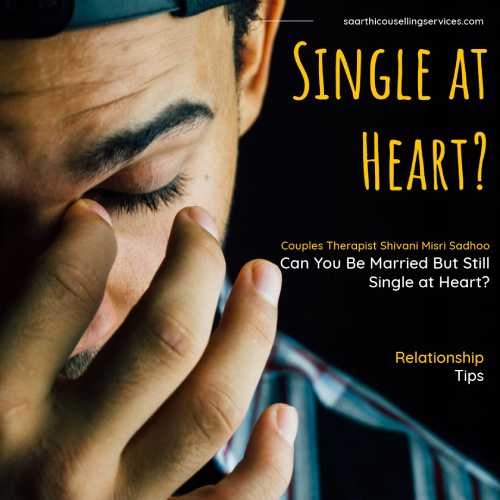
Can You Be Married but Still Be Single at Heart?

Marriage is a commitment between two individuals to share their lives, support each other through thick and thin, and build a future together. Have you ever heard of someone saying they feel single at heart despite being married? It sounds like an oxymoron, doesn’t it? However, it’s actually quite common for someone to feel single at heart even while being married. You might be wondering why! Leading marriage counselor in Delhi, Shivani Misri Sadhoo sheds light on the intricacies of the human psyche that contribute to this seemingly contradictory experience.

India's leading marriage counselor Shivani Sadhoo

Can one still be single at heart despite being married?

Relationship expert and couples therapist Shivan Sadhoo shares insights on the same. Here they are?

1. Sense of Individuality remains untouched

 Marriage represents a legal and social agreement that unites two individuals, yet their inner sense of self remains distinct. Being single at heart within a marriage doesn’t signify dissatisfaction or a lack of commitment; instead, it’s about honoring one’s uniqueness within the marital bond. The journey of marriage brings together two individuals, each with their own personality, dreams, and aspirations. Despite the unity in marriage, one’s individual essence remains intact. People may feel “single at heart” when they desire moments of personal space and self-discovery.

2. The Feeling of Autonomy

Some people feel happiest when they have their own space and freedom, even if they’re married. They value doing things on their own and growing as individuals. It’s not that they don’t love their partners or avoid commitment in their relationship; it’s just part of who they are. They find joy in being alone sometimes and pursuing their own interests. Feeling “single at heart” means they can maintain their independence and take care of themselves emotionally, even while being married.

3. Living Apart Together

Living apart together is a trend where married couples choose to have their own homes instead of living together. It’s not because they have to, but because they want to. Some couples even live in the same house but have separate spaces. Research shows that even when couples live together, they may spend less time doing things together compared to the past. This doesn’t mean people want to be alone all the time.

What they’re really looking for is finding the right balance between being alone and being together. This search for balance is something that goes beyond marriage, age, or any other differences. It’s like having the freedom to be yourself without feeling like you always have to be with your partner. This independence can actually strengthen your relationship because it gives each person space to grow and pursue their interests.

4. When Reality Bites

When we think about marriage, we often have certain ideas about what it should be like. But sometimes, what we expect doesn’t match up with what actually happens. This difference between expectations and reality can make us feel disconnected like we’re missing out on the freedom we associate with being single. Society often tells us that when we get married, we’re supposed to become one with our partner, like we’re no longer individuals.

But that’s not always how it works. Each person still has their own dreams, desires, and way of looking at things. Feeling like you’re more single at heart when you’re married isn’t necessarily a bad thing. It means you value your independence and want to stay true to who you are, even in a relationship. It’s important for society to understand that marriage can mean different things to different people. We need to change the way we think about marriage so that everyone’s unique way of loving and finding fulfillment is respected and celebrated.

5. Communication Gap

When communication falters in marriage, partners may feel emotionally distant. This gives a feeling of being ‘single at heart’. This sensation suggests a need for nurturing the marital bond. By openly discussing personal desires and goals, couples can bridge this gap, promoting deeper understanding and connection.

Thus, we know that feeling “single at heart” within a marriage doesn’t imply dissatisfaction; it’s about preserving individuality, embracing autonomy, seeking balance, confronting reality, and addressing communication gaps.

marriage counselor shivani sadhoo talks about a boy friend or girl friend not going to marry you

Signs A Boy Friend or Girl Friend Is Never Going to Marry You

You have been savouring those romantic coffee dates, indulging in long drives, and even sneaking in casual leaves from work just to create special moments with your beloved boyfriend or girlfriend, especially on their birthday. However, when the topic of marriage crosses your mind, there’s a distinct sense that your significant other isn’t quite ready for such a significant commitment or may not be inclined to take that step with you.

Are you curious to find out these tell-tale signs that indicate your significant other might not be ready for the monumental commitment of marriage?

Eminent relationship expert and marriage counselor in Delhi, Shivani Misri Sadhoo shares a few signs in this article.

couples counselor shivani sadhoo talks about signs a boy friend or girl friend not going to marry you

Avoiding Future Plans

If your partner constantly sidesteps discussions about the future, especially on topics like settling down or long-term plans, it could indicate a lack of commitment. A genuine desire for a lifelong connection involves open conversations. If your enthusiasm for living together or dream wedding plans is met with lukewarm responses and swift subject changes, it may signal a deeper reluctance to envision a shared future.

Haven’t Met their Family

Is your partner keeping their family a mystery? A red flag in serious relationships is avoiding family introductions. A future spouse willingly integrates into each other’s families. If your significant other hesitates or delays this step, it signals uncertainty about a lifelong commitment. Avoiding family meetings suggests a lack of pride in your connection. Even if an introduction happens, reluctance may hint at future commitment issues.

Lack of Emotional Connection

In a thriving relationship, trust, loyalty, understanding, love, care, and shared emotions are crucial. If your partner refrains from opening up emotionally, it signals a reluctance to include you in their inner world, hinting at a lack of commitment. True connection involves vulnerability and closeness. When a significant other detached emotionally, it suggests a hesitancy to envision a lasting future together. Building emotional walls may signify a reluctance to see you as a lifelong partner.

Always Making Lame Excuses

Your significant other consistently postpones the idea of marriage, citing various reasons like recent conflicts with their mother or work-related stress. Each time, they claim it’s not the “right time.” Whether it’s financial stability or career achievements, the excuses keep piling up.

If someone truly desires marriage, obstacles wouldn’t hinder their commitment. Continuous justifications reveal a reluctance to take that step. Pay attention to actions, as words alone may not paint an accurate picture of their intentions.

Your Partner Isn’t Serious About the Relationship

In a relationship, actions speak louder than words. Take, for instance, when your partner hesitates to hold hands in public or introduces you with only your name, avoiding any mention of your connection. These subtle gestures may signify a reluctance to commit.

If, after months together, your significant other downplays the seriousness of your relationship, it could be a clear indication that marriage isn’t on their horizon. Such reluctance to embrace the connection publicly may reveal their hesitations about a long-term commitment.

 The Discussion does not go Beyond the Proposal

After a joyous proposal, your partner might evade wedding discussions, showing reluctance to set dates or arrange venues, hinting at a hesitancy to commit. A devoted partner eagerly plans a wedding, involving loved ones, but if your significant other hesitates to confirm a date, reconsiderations about the marriage may be surfacing. Pay attention to the unspoken signals, as actions often speak louder than words in matters of the heart.

Now that you know the subtle signs of a partner’s reluctance to commit, it’s crucial to recognize the importance of open communication, emotional connection, and shared future plans in a lasting relationship. Paying attention to actions over words is key, as these indicators can help you navigate potential commitment issues and make informed decisions about your future together.

signs of triving relationship couples therapy tips

Love That Stands the Test of Time: Traits of Thriving Relationships

In the tapestry of human existence, few threads are as enduring and cherished as the bonds we form in love. Relationships that withstand the trials of time possess certain timeless traits that contribute to their longevity and resilience. Let us know about the key elements that characterize thriving relationships, making them stand the test of time as shared by Delhi’s eminent marriage counselor and relationship expert Shivani Misri Sadhoo in this article.

Love That Stands the Test of Time: Traits of Thriving Relationships

What are the signs of a thriving relationship?

  • Communication is Key: Effective communication is the cornerstone of any enduring relationship. Couples who openly express their thoughts, feelings, and concerns create a foundation of understanding and trust. Sharing both joys and challenges fosters a deeper connection and allows partners to grow together. In thriving relationships, communication is not just about talking but also about active listening, empathy, and a willingness to understand each other’s perspectives.
  • Mutual Respect: Respect is the bedrock upon which enduring love is built. Thriving relationships are characterized by a deep and abiding respect for each other’s individuality, values, and aspirations. Partners who value and honor each other’s autonomy are more likely to weather the storms of life together. Respect forms the basis for compromise, collaboration, and the ability to navigate differences with grace and understanding.
  • Trust and Transparency: Trust is the lifeblood of lasting relationships. Partners who trust each other implicitly create an environment of emotional safety. Thriving relationships are marked by transparency and honesty, as secrets and deception erode the foundation of trust. Building trust takes time, but the dividends it pays in the form of a solid, enduring connection are immeasurable.
  • Shared Values and Goals: Couples who share common values and long-term goals tend to have relationships that stand the test of time. While individual interests and pursuits are important, a shared vision for the future provides a sense of unity and purpose. Whether it’s building a family, pursuing career aspirations together, or sharing common hobbies, having shared goals creates a sense of partnership that strengthens the bond over the years.
  • Adaptability and Flexibility: Life is a dynamic journey, filled with unexpected twists and turns. Thriving relationships exhibit adaptability and flexibility in the face of change. Partners who can navigate challenges together, adjusting their course as needed, are better equipped to sustain their connection over time. The ability to grow individually and as a couple, while embracing change with resilience, is a hallmark of relationships that endure.
  • Emotional Support and Vulnerability: In thriving relationships, partners are each other’s pillars of strength. Emotional support and vulnerability are interwoven threads that create a tapestry of intimacy. Being able to lean on each other during difficult times and share vulnerabilities fosters a deep emotional connection. It is through these shared experiences that bonds are strengthened, creating a love that can withstand the trials of life.

    Relationships that stand the test of time are characterized by a combination of effective communication, mutual respect, trust, shared values, adaptability, and emotional support. Cultivating these traits requires effort, commitment, and a genuine investment in the well-being of the relationship. As the journey of love unfolds, couples who embody these enduring qualities are better equipped to build a legacy of lasting, thriving love.

    Marrying the Wrong Person Early is Worse than Getting Married Late

    Marrying the Wrong Person Early is Worse than Getting Married Late

    Marriage, a sacred union between two individuals, is a profound life decision that significantly influences the course of one’s existence. The timing of such a commitment plays a crucial role in its success. While societal norms often emphasize the importance of marrying early, there exists a compelling argument that marrying the wrong person prematurely can be far more detrimental than waiting until later in life.

    Marrying the Wrong Person Early is Worse than Getting Married Late

    Why is getting married late better than marrying the wrong person early?

    Leading couples therapist and marriage counsellor Shivani Misri Sadhoo shares her views on this question in this blog.

    The Rush to Commitment:

    Society’s expectations and cultural norms often pressure individuals to tie the knot at a relatively young age. The fear of being labelled “too old” or the societal perception that marriage is a milestone that must be achieved by a certain age can lead many to make hasty decisions in choosing a life partner. However, the consequences of rushing into a commitment of such magnitude without proper self-discovery and understanding of one’s needs can be profound.

    The Importance of Self-Discovery:

    Marrying the wrong person early in life often stems from a lack of self-awareness and understanding. In the rush to meet societal expectations, individuals may neglect their personal growth and development. The early twenties, a period often associated with self-discovery and career building, may not be the optimal time for everyone to make a lifelong commitment. People evolve and change over time, and marrying too early may limit the opportunities for personal growth and self-discovery.

    Changing Priorities and Values:

    In the early stages of adulthood, individuals are still in the process of shaping their identities, career paths, and personal values. Rushing into marriage without fully understanding these aspects can lead to a misalignment of priorities between partners. As individuals mature, their values and life goals may evolve, potentially causing strain on the relationship if the couple has not grown together or if they have grown in different directions.

    The Toll on Mental and Emotional Well-being:

    Marrying the wrong person can take a significant toll on one’s mental and emotional well-being. Early divorces, which often result from hastily made decisions, can be emotionally devastating. The process of untangling lives, shared assets, and emotional bonds can be far more complex and emotionally draining than waiting until later in life when individuals have a clearer sense of self and a more stable foundation.

    Marrying the Wrong Person Early is Worse than Getting Married Late

    The Benefits of Waiting:

    On the other hand, waiting to get married allows individuals the time and space to explore their own identities fully. It provides the opportunity to establish a stable career, build a solid support network, and gain a deeper understanding of personal values and priorities. Waiting until later in life to commit to marriage often results in more mature, well-rounded individuals who are better equipped to navigate the complexities of a lifelong partnership.

    Whereas, societal expectations may emphasize the importance of marrying early, the potential consequences of marrying the wrong person prematurely cannot be ignored. Taking the time to embark on a journey of self-discovery, career development, and personal growth can significantly enhance the chances of entering into a successful and fulfilling marriage later in life. Individuals must prioritize their well-being and growth before succumbing to societal pressures, recognizing that marrying late, with the right person, is a far wiser choice than rushing into a commitment that may not withstand the test of time.

    cooking good for relatinship tips shivani misri sadhoo

    Do You Know How Cooking Together Can Help Spice Up Your Relationship?

    In the hustle and bustle of everyday life, relationships often find themselves caught in the mundane monotony. The initial spark that once ignited passion and excitement may dwindle over time, leaving couples feeling disconnected. However, fear not, for there’s a delightful remedy that not only rekindles the flame but also adds an extra dash of excitement – cooking together as a couple.

    Let us find out more from leading couples therapist and marriage counsellor Shivani Misri Sadhoo.

    leading couples therapist Shivani Misri Sadhoo advantage of cooking in relationship

    How Couple Cooking Can Transform the Ordinary into the Extraordinary, Infusing Relationship with Renewed Vitality?

    Shivani Sadhoo says, given below factors arise while a couple cooks together:

    1. Enhanced Communication

    Cooking together is more than just following a recipe; it’s the subtle nods, shared glances, and synchronized movements that deepen connections beyond words. In the kitchen, communication becomes an art, vital for a successful dinner service at home, much like in a restaurant.

    From chopping instructions to timing, cooking requires seamless collaboration, and developing non-verbal understanding. Solving culinary challenges together, whether it’s a salty soup or an overly sweet dessert, hones communication and problem-solving skills, creating a recipe for navigating life hand in hand.

    2. Making Memories

    Cooking together forms cherished memories, weaving special moments into the fabric of life. From Mother’s Day brunch to a Diwali feast, life’s milestones are often intertwined with food. Research indicates that the aroma of dishes holds a unique power to evoke potent memories.

    In the kitchen, creating flavours and smells with loved ones becomes a recipe for lasting positive associations, igniting special recollections with every shared culinary adventure.

    3. All About Teamwork

    Cooking together is more than just chopping vegetables and stirring pots. It’s a chance to ace teamwork. Keeping the kitchen clean or doing dishes together is teamwork too. Whether you’re chopping veggies or cleaning up, divide tasks fairly. Even if cooking isn’t your thing, being in the same space matters. As adults, cooking builds curiosity, creativity, and teamwork—essential for healthy relationships.

    4.  A Great Stressbuster

    Cooking together is like a therapy session for couples. From chopping vegetables to boiling an egg – it’s a shared meditation that lets you escape life’s chaos. Spending that time with your love not only reduces stress but also triggers those feel-good hormones.

    Life’s challenges can pile up, affecting relationships, but couple cooking brings warmth and connection. So, unwind, bond, and create something delicious amid the craziness. It’s not just a meal; it’s a recipe for a happier relationship.

    5. Develop Intimate Bonding

    In a world dominated by screens and constant connectivity, couple cooking offers a rare opportunity to unplug and focus on each other. The kitchen transforms into a haven, drowning out distractions for an intimate rendezvous. It’s a deliberate break from tech, a reminder to savor each other’s company. Sharing the effort of a homemade meal brings a unique satisfaction.

    Complimenting each other’s culinary skills? That’s the secret sauce for feel-good vibes! Make at-home cooking dates a regular ritual; it’s a delicious way to spice up your bond.

    When couples venture into the kitchen together, they set sail on a journey that transcends the ordinary. Beyond the sizzle of pans and the aroma of shared meals, cooking becomes a catalyst for enhanced communication, cherished memories, seamless teamwork, stress relief, and intimate bonding.

    In the midst of chopping, stirring, and tasting, relationships find a recipe for renewal, transforming mundane moments into extraordinary connections that endure the test of time.

    dating ideas for married indian couples

    Romantic Date Night Ideas for Married Couples

    Did you think that only unmarried couples embark on romantic dates? Think again. As relationships mature, passion may dwindle. Whether you’ve been wed for years or just tied the knot, it is essential for married couples to continue nurturing their romantic connection. From unconventional outings to cozy home evenings, you can make these moments special for each other.

    What could be some of the romantic night ideas?

    Marriage counsellor, Shivani Misri Sadhoo shares innovative date night ideas to rejuvenate passion and keep the flame alive in long-term relationships.

    1. Take a Simple Walk

    Sometimes, amidst life’s complexities, a simple walk becomes a serene voyage for married couples. Engaging in unhurried strolls, hand in hand, under the moonlit sky fosters an intimate atmosphere. The unhurried pace allows for genuine conversations, rekindling the flame of connection and developing a renewed sense of shared companionship.

    2. Plan A Romantic Movie Night

    Sometimes, the simplest joys rekindle the flames of romance. Sharing a movie night at home, carefully curating a watchlist, and preparing snacks together not only offer comfort but also a chance to reminisce. Under the stars or in a cozy home cinema, this shared experience becomes a nostalgic journey, evoking emotions from the early days, building connections, and igniting the spark of love anew.

    3. Art can create magic in your relationship

    Engaging in artistic activities as a couple fosters a unique bond, rekindling romance through shared creativity. Whether attending a painting class or trying DIY projects at home, the collaborative process creates special memories.

    Embracing imperfections, like sketching a partner in a funny costume, becomes a testament to the love invested. Art serves as a medium for connection, rekindling the spark and weaving a tapestry of shared experiences in marriage.

    4. Add Melody to your relationship

    Ever wondered how a simple Karaoke night could reignite the spark in your marriage? Singing together isn’t just about hitting the right notes; it’s a shared journey of laughter, vulnerability, and rediscovery. Embrace the imperfect melodies, and you’ll find that these harmonious moments foster a deeper connection, rekindling the romance that initially brought you two together.

    5. Playing games

    Did you know that playing games can spice up your marriage? Embracing your inner child through board games not only adds fun but also sparks joy and connection. It’s like a playful escape from reality, creating moments that rekindle the romance. So, why not ditch the mundane, pick a favorite game, and let the laughter and competition weave a new chapter of togetherness in your love story?

    6. Let’s Cook Together

    Whisking up a homemade feast together, from sizzling steaks to decadent desserts, turns your kitchen into a love-filled haven. As you chop, stir, and savor, the aroma of shared efforts creates a bond that goes beyond the dining table. Cooking as a couple not only ignites the stove but also sparks the flames of romance, reminding you both of the sweet symphony that first drew you close.

    7. Read together

    Sharing the joy of reading can reignite the spark in a marriage by creating intimate moments. As you both immerse yourselves in love sonnets or captivating stories, the shared experience builds a unique connection.

    The act of reading together promotes intimacy, evoking emotions that revive the romantic essence. It’s a simple, yet profound, way to rediscover the enchantment that initially brought you together, making it a cherished date night activity.

    From simple walks encouraging genuine conversations to artistic activities, movie nights, music, games, cooking, and reading together—each suggestion provides a unique avenue for couples to rekindle the flame, strengthening the bond of love.

    staying in marriage for kids article

    Why Staying in An Unhappy Marriage “For the Kids” Is Wrong?

    Marriages are often celebrated as the union of two souls destined for eternal happiness. However, the reality is that not all marriages are made in heaven. The question of whether to endure an unhappy marriage “for the kids” is a complex dilemma.

    When faced with the prospect of divorce, the decision becomes particularly challenging when children are involved. Should one persist in a toxic and joyless marriage for the sake of the children, or should they contemplate ending it?

    Why continuing with an unhappy marriage is harmful for your children?

    Leading marriage counsellor Shivani Misri Sadhoo explains the following factors in the article further. These are:

    1. Psychological Stress

    An unhappy marriage is often fraught with tension, resentment, and conflict. Children are highly perceptive and can sense this negative atmosphere. Constant exposure to such stress can lead to emotional and psychological distress in children, affecting their overall well-being and development.

    Kids are sensitive to their parents’ feelings, and when parents are unhappy, children may feel it’s their fault or experience anxiety, depression, or low self-esteem. These emotional scars can last a long time.

    2. Builds Negative Perception

    Children learn about relationships primarily through observing their parents’ interactions. In the context of an unhappy marriage, prolonged exposure can normalize dysfunctional dynamics for them. Consequently, their understanding of a healthy partnership becomes skewed, potentially leading to troubled future relationships.

    An environment marked by emotional distance and hostility between parents hampers the development of vital emotional skills and communication patterns in children. Such situations breed unresolved conflicts and negatively impact a child’s perception of acceptable relationship norms, perpetuating cycles of unhappiness in their own future partnerships.

    3. Delayed Divorce Does More Harm than Good

    Remaining in an unhappy marriage until your children become independent may seem like a way to shield them from the upheaval of divorce or separation. However, this approach doesn’t always reduce their stress.

    If your children have never experienced extended periods away from you, leaving home, particularly when they move to a new city for further education, can be highly distressing. The added burden of a divorce, coupled with new responsibilities, could potentially disrupt their studies and transition into adulthood.

    4. Self-Sacrifice Can Be Dissatisfying

    Sacrificing your own happiness for the sake of your kids may seem noble, but it can have negative consequences. Unhappy parents may struggle to provide a stable and nurturing environment. True parental sacrifice means making choices that benefit both parents and children.

    You don’t have to be a martyr; divorce can be a self-improvement decision if you still attend to your children’s needs. Happier people are better at everything, including being better parents, which is a great gift for your kids and yourself.

    5. Causes Relationship Breakdowns

    Prolonged unhappiness within a marriage can gradually foster resentment and bitterness, which may ultimately seep into various aspects of one’s life, affecting relationships with friends and family. Children raised in such an environment may lack positive examples of loving relationships.

    Stress and tension can inadvertently strain the parent-child relationship, causing resentment and strained connections, leaving children questioning the authenticity of their upbringing.

    6. Disrupts Communication

    An unsatisfactory marriage can lead to a communication breakdown between parents, complicating the establishment of fair child arrangements. Resolving issues as they arise is crucial for facilitating decisions in the children’s best interests. Redirecting efforts from a troubled marriage toward fostering a positive co-parenting relationship is essential.

    In unhappy marriages, couples often struggle with effective communication, which can negatively influence their children’s ability to express feelings and thoughts, potentially impacting their future relationships and friendships. Teaching kids healthy communication and conflict resolution within a family setting is vital for enhancing their future relationships.

    What did we learn?

    Staying in an unhappy marriage can harm children by subjecting them to psychological stress, distorting their perception of healthy relationships, and potentially causing long-term emotional scars. Delaying divorce may not always protect them, and self-sacrifice may lead to an unsatisfactory family environment. Effective communication and prioritizing well-being can be key to mitigating these negative effects on children.

    relationship advice blog Shivani Misri Sadhoo

    Signs When a Woman Just Pretends to Love Someone

     “Love is often romanticized as a beautiful feeling, the heartwarming cornerstone of countless stories, songs, and dreams. Yet, as we step into the complex terrain of the real world, we quickly realize that love isn’t always a fairy tale set to a catchy tune.

    Sometimes, it becomes a painful and bewildering journey, particularly when you begin to suspect that the woman you hold dear is merely pretending to love you. In this article, Shivani Sadhoo delves into the intricacies of such situations, shedding light on the tell-tale signs that can serve as ominous markers, indicating that her professed love for you may not be as genuine as you had hoped.

    Signs When a Woman Just Pretends to Love Someone

    When a woman only pretends to love someone?

    Some of the signs according to the marriage and relationship counsellor Shivani Misri Sadhoo that indicate a woman is merely pretending to love you are:

    • Lack of Respect

    When a woman consistently demonstrates a lack of respect towards you, it can be a clear indication that her professed love may be insincere. Respect is a fundamental element of a healthy relationship. If she disregards your feelings, boundaries, or opinions, it’s crucial to consider whether her love is genuine or merely a facade.

    • She Doesn’t Care About Your Feelings

    A clear indicator of her lack of genuine love is her disregard for your emotions and well-being. She prioritizes her convenience, showing no concern for your feelings, needs, or aspirations. Her apparent affection is merely a façade to gain something from the relationship. When you’re down or upset, she feigns care when it’s effortless, but avoids offering real support when it requires her genuine attention and empathy.

    • When She Deceives You

    A person who truly loves you wouldn’t betray your trust with someone else. When someone is deeply in love, suspicion of infidelity and the need for evidence shouldn’t exist. Cheating and genuine love are incompatible.

    Even if you forgive her and she claims to love you more, if she avoids difficult conversations and doesn’t want to face her betrayal, she’s prioritizing her comfort over your emotions. This isn’t the behaviour of someone who genuinely loves you.

    • She Treats You Differently in Public

    When you’re alone, she embodies everything you’ve ever desired in a partner. However, a stark contrast emerges when you’re in the company of others. In such situations, she becomes openly critical, disparaging, and dismissive of you. Her demeanour is far from pleasant, and despite attempts to rationalize it, the hurt remains.

    • Avoids Commitment

    Avoiding commitment can be a major red flag. If she’s reluctant to commit to a serious relationship, avoids discussing the future, or dodges talks of moving in together or getting married, she may not be as invested in the relationship as you are.

    • You Are Not Important to Her

    One common sign that a woman might be pretending to love you is if she doesn’t prioritize spending time with you. When you’re not a significant focus in her life, it suggests a lack of genuine care. If she doesn’t actively seek out quality time with you and readily chooses other activities over being with you, it may indicate a problem in her attraction or love for you. True love often involves a strong desire to spend quality time together, so her lack of effort could be a red flag for the authenticity of her feelings.

    • Lack Of Intimacy

    Physical touch plays a vital role in expressing emotions, intimacy, and affection within a relationship. When a person consistently avoids physical contact and emotional intimacy, it may be indicative of insincerity and a lack of love. A deep, loving connection typically involves both emotional and physical closeness, making these signs of avoidance concerning the authenticity of the relationship.

    In love, actions often speak louder than words. When a woman consistently displays disrespect, indifference to her feelings, deception, and varying behaviour in public, it raises questions about the authenticity of her love.

    Avoidance of commitment, lack of prioritization, and absence of intimacy further compound doubts. In genuine love, respect, care, trust, and consistency are the cornerstones. When these elements are absent, it’s essential to re-evaluate the sincerity of the relationship. 

    relationship blog signs of sensitive woman

    Signs You’re with A Sensitive Woman – Relationship Tip

    Eminent Couples Counselor Shivani Misri Sadhoo shares Signs that Your Partner is a Sensitive Woman

    Emotional sensitivity is a trait that could greatly enhance the depth and richness of relationships. Sensitive women tend to be compassionate, empathetic, and attuned to the emotions of those around them. If you’re in a relationship with a sensitive woman, you’re likely experiencing a unique and rewarding connection. In this article, eminent marriage counsellor Shivani Misri Sadhoo shares ten signs that indicate you’re with a sensitive woman.

    Signs that Your Partner is a Sensitive Woman

    What are signs that your Partner is a sensitive Woman?

    According to Shivani, there are many major or subtle signs, but here she is talking exclusively about the 10 signs that you need to check for. They are:

    She is Empathetic

    A sensitive woman has a strong capacity for empathy. She can deeply understand and share the feelings of others, making her an excellent listener and a supportive partner. She genuinely cares about your emotional well-being and will be there for you in times of need.

    She Notices the Little Things

    Sensitive women have a knack for noticing subtle details and nuances that others might overlook. Whether it’s a change in your tone of voice or a small gesture, she is attentive to your needs and emotions.

    She Values Open Communication

    Communication is vital in any relationship, and a sensitive woman understands this well. She encourages open and honest conversations, making it easier for both of you to express your thoughts, feelings, and concerns without judgment.

    She is Considerate of Your Feelings

    Sensitive women are considerate and thoughtful partners. They take your feelings into account when making decisions and are careful not to hurt or offend you. They strive to create a safe and nurturing environment for the relationship to flourish.

    She Expresses Her Emotions Freely

    While some may view emotional expression as a weakness, sensitive women embrace their feelings and express them openly. They are in touch with their emotions and encourage you to do the same, creating a space where vulnerability is celebrated.

    She Values Connection

    Sensitive women often prioritize emotional connection in their relationships. They seek to build deep and meaningful bonds with their partners, making them loyal and devoted companions.

    She is Supportive

    Whether you’re pursuing your dreams or facing challenges, a sensitive woman will stand by your side. She provides unwavering support and encouragement, helping you achieve your goals and navigate life’s ups and downs.

    She is Creative and Artistic

    Many sensitive women have a creative and artistic side. They may enjoy pursuits like writing, painting, music, or other forms of self-expression. This creativity often enriches the relationship with depth and passion.

    She is Attuned to Nonverbal Cues

    Sensitive women are skilled at reading nonverbal cues, such as body language and facial expressions. This ability allows them to understand your emotions even when you may not be verbally expressing them.

    She Values Harmony and Peace

    Sensitive women often seek harmony and peace in their relationships. They are willing to compromise and work through conflicts in a constructive and empathetic manner, making the relationship more resilient and fulfilling.

    Being in a relationship with a sensitive woman can be a rewarding experience. Her empathy, emotional depth, and attentiveness can enhance the connection you share and bring a sense of harmony and support to your partnership.

    By recognizing these signs, you can better appreciate and nurture the unique qualities that a sensitive woman brings to your life, ultimately leading to a stronger and more fulfilling relationship.

    best marriage counseling in delhi Shivani misri sadhoo

    How to Make Someone Feel Better? Amazing Ways to Make Someone Smile

    Learn with India’s Top Marriage Counselor Shivani Misri Sadhoo

    Life is not always about a singular pursuit or outcome, it’s the culmination of various experiences, emotions, and journeys that make it truly meaningful. In the hustle and bustle of today’s fast-paced world, where stress and challenges seem to be the order of the day, a simple smile can work wonders. A genuine smile has the power to transcend barriers, brighten up a gloomy day, and create connections that uplift both the giver and the recipient.

    So, let’s find out the tips and tricks to add smiles and cheer to people’s lives from India’s eminent couples therapist Shivani Misri Sadhoo.

    What are the ways to bring a smile to someone’s face?

    Shivani Sadhoo says, being able to bring a smile or someone’s face is often the way to make someone feel better who is probably feeling down due to certain issues. Some of the ways to make a person smile are, you need to give them:

    Compliments: 

    Genuine compliments hold the power to uplift and touch hearts. Instead of a plain old “good job,” make it special. Notice the sweat they put into a project, the cool ideas in their art, or the delicious twist in their cooking. Your attention and appreciation mean a lot!

    Show Affection: 

    A simple hug conveys warmth and care, releasing “feel-good” chemicals in the brain. It makes us feel loved and understood. When someone hugs us, it’s like a cozy gesture that brings joy. The connection and comfort from a hug can easily bring a smile to our faces.

    Share Humour: 

    Laughter truly is the best medicine, and sharing a good laugh can instantly lighten the mood. Share a funny meme, a light-hearted joke, or a witty anecdote. In a world bombarded with stressors, a dose of humor can be a welcomed respite.

    Listen to others: 

    Sometimes, all someone needs is a listening ear. Truly engage in conversations, show empathy, and be present in the moment. By letting others express themselves without judgment, you create a space where they can freely share their thoughts and concerns, often leading to a genuine smile of relief.

    The Power of Nature: 

    A simple walk in nature can make someone smile. It can reduce stress and anxiety, and increase feelings of happiness and well-being. Studies have shown that spending time in nature can lead to improved mental health and physical health.

    how to make someone smile

    A Gift of Love: 

    Handmade gifts or personalized tokens of appreciation carry a unique charm. Create a scrapbook, a custom playlist, or a piece of art that reflects your connection and shared memories. These thoughtful gifts demonstrate your effort and consideration, bringing genuine smiles to those who receive them.

    Be Kind: 

    In a world that sometimes feels impersonal, a random act of kindness can be a breath of fresh air. Whether it’s paying for someone’s coffee in line behind you or leaving an uplifting note for a coworker, these gestures create a ripple effect of positivity. Remember, kindness doesn’t need a reason; it’s a gift in itself.

    A Helping Hand: 

    Helping the needy brings joy by making a positive impact. Knowing you’ve made a difference, even small, can create a sense of fulfillment. Seeing others happier due to your kindness can lead to smiles, as it shows the power of compassion and generosity.

    Personal Touch: 

    Calling your parents instead of texting adds a personal touch. Hearing their voices and having a real conversation shows care and interest. It creates a warmer connection, reminding them of the old ways and making them smile by feeling valued and cherished.

    Celebrate Together: 

    Celebrating wins, big or small, spreads happiness by acknowledging achievements. Whether it’s a minor accomplishment or a major milestone, recognition shows you care and share in their joy. This simple act of support boosts their spirits, leading to smiles and a stronger sense of togetherness.

    Smiling is a powerful way to spread positivity and make others feel happy and appreciated. It can be contagious and help to lift the spirits of those around us. Making others smile helps to create a sense of connection, belonging, and joy, which are essential for our mental and emotional well-being.