

Tag Archive : couples therapist in delhi

Friendfluence Top Dating Trends 2026 relationship counselling

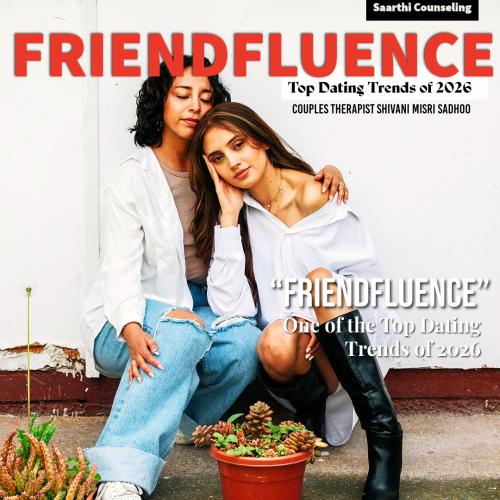
What Is “Friendfluence,” One of the Top Dating Trends of 2026?

Friendfluence Top Dating Trends 2026 relationship counselling

As the world of relationships continues to evolve, a new social-driven trend has emerged at the forefront of modern dating culture: “friendfluence.” This term — a blend of friend and influence — describes the growing impact that friends have on an individual’s romantic choices, behaviours, and dating decisions. In 2026, friendfluence is being recognised as one of the most powerful forces shaping how people connect, date, and build relationships, explains the leading couples therapist and relationship counsellor Shivani Misri Sadhoo.

At its heart, friendfluence reflects how deeply social circles affect dating life. Friends are no longer just companions or advisors — they increasingly help define what people find attractive, who they choose to date, and how they navigate relationships. This trend highlights a shift away from purely individual decision-making toward more socially informed relational choices.

Friendfluence Top Dating Trends 2026 relationship counselling

How Friendfluence Works in Modern Dating?

Friendfluence isn’t simply about listening to a friend’s approval or disapproval of a potential partner. Rather, it’s a nuanced dynamic that can take many forms, says Shivani Misri Sadhoo, an experienced marriage and relationship counsellor in Delhi.

  • Validation and Feedback: Before agreeing to a date or sharing a photo on a dating app, many people now seek input from close friends. A thumbs-up from the group can boost confidence, while a collective “no” can halt contact altogether.
  • Shared Social Norms: Friend groups often help establish what is seen as desirable or acceptable in potential partners — values, lifestyle choices, and even interests. This creates a subtle cultural script that shapes personal preferences.
  • Collective Experiences: Friends increasingly play active roles in social setups that lead to dating opportunities — group outings, double dates, social events, festivals, and meetups where introductions happen naturally.
  • Peer-Driven Boundaries: Conversations with friends about red flags, emotional well-being, and healthy boundaries inform how people approach commitment, communication, and expectations in relationships.

In essence, friendfluence transforms friends from passive observers to active contributors in the modern dating environment.

Friendfluence 2026 Dating Trends couples therapist Shivani Misri Sadhoo

Why is Friendship Emerging Now?

Several cultural and social shifts have accelerated the rise of friendfluence:

  • Greater Reliance on Social Networks: With digital communication and social apps shaping everyday interaction, peer influence is stronger — and more immediate — than ever before.
  • Shared Perspectives on Relationships: Younger generations tend to discuss dating openly within their social circles, normalising group input into decisions that were once private.
  • The Complexity of Modern Dating: With a vast number of choices available through dating platforms, people often turn to friends for clarity, reassurance, or grounding — especially when signals are ambiguous or overwhelming.
  • Rise of Group-Centred Activities: Social events, group adventures, and friend-mediated introductions increasingly replace traditional one-on-one blind dating or bar encounters.

Friendfluence Top Dating Trends 2026 relationship counselling

Positive and Challenging Sides of Friendfluence

Like any social phenomenon, friendfluence has both potential benefits and downsides.

Benefits:

  • Increased Support: Friends can help identify unhealthy patterns or red flags that individuals might overlook.
  • Shared Wisdom: Collective experiences provide a broader perspective and emotional guidance.
  • Enhanced Confidence: Supportive feedback can make dating less stressful and more secure.

Challenges:

  • Overdependence: Relying too heavily on friends for dating decisions may limit personal autonomy.
  • Group Bias: Friends may project their own preferences or fears into your decisions, sometimes unfairly.
  • Conflict: Disagreements about choices can lead to tension within the social group.
Friendfluence 2026 Dating Trends couples therapist Shivani Misri Sadhoo

How to Navigate Friendfluence Effectively?

To make the most of friend influence — without surrendering personal agency — consider the following:

  • Listen but Reflect: Take advice seriously, but make decisions based on your own values.
  • Set Boundaries: Clarify with friends how much input you want in your dating life.
  • Seek Diverse Perspectives: A variety of viewpoints can offer clarity without creating pressure.
  • Balance Social and Personal Insight: Combine your own feelings with thoughtful feedback.

In 2026, friendfluence is reshaping the way many people think about love, connection, and dating choices. Rather than isolating the individual decision-maker, the trend embraces the idea that relationships are part of a larger social ecosystem — and that friends, as trusted collaborators, play an influential role in how romantic journeys unfold.

Being in a Relationship counselling advice Shivani Misri Sadhoo

What is the True Meaning of Being in a Relationship?

We live in an era where boys and girls fall in love quickly—and drift apart just as easily. Whether you are in a situationship, where you are still in the friendship zone, and not yet a couple, or a texlationship, which is based primarily on texting with little to no real-life interaction, modern relationships are undeniably volatile.

With the advent of social media, true emotions are hard to decipher. We often wonder if in this age of interconnectedness, we have actually become more disconnected. Amid the noise of notifications and filtered personas, have we lost the warmth of genuine human connection? Shivani Misri Sadhoo, a relationship expert and certified relationship counsellor, tells her readers what being in a relationship truly means.

In simple words, the term ‘relationship’ refers to the connection or bond between two or more people. When a couple is in a relationship, they are emotionally attached to each other. Leading marriage counsellor in India, Shivani Misri Sadhoo, explains the real meaning of relationship in this blog.

What is the True Meaning of Being in a Relationship?

What is The Real Meaning of Being in A Relationship?

To have Faith

Yes, perhaps the ubiquitous truth—faith or trust is the basic foundation of any healthy relationship. If you are in a relationship with someone, the ability to believe in them, the way they behave and their intentions is vital. Faith means giving someone the benefit of the doubt, even when circumstances test your patience.

It’s knowing that your partner has your best interests at heart, even when times are tough. Without faith, insecurity creeps in, and love slowly erodes. It’s not only about trusting that your partner would choose fidelity over betrayal, but also trusting that they will show up for you emotionally, be honest with their feelings, and stand by your side through life’s unpredictability.

To Understand Each Other

Love is not the only glue that holds a relationship together. Mutual understanding is very important. Partners need to understand each other. Sometimes silence speaks louder than words. A couple should be able to understand each other’s feelings and emotions without always having to explain them.

To understand someone is to be aware of their feelings, to have empathy, and to genuinely care about their inner world. Studies reveal that most of the relationships crumble not because couples fall out of love, but because there is a lack of proper understanding and communication.

To Not Judge Each Other

Another very important aspect in a relationship is not to judge each other. Many a time, even if the partners know each other well, it’s easy to fall into the trap of making assumptions or passing judgments, especially during moments of stress or disagreement. When one partner feels judged, it can lead to defensiveness, withdrawal, or even resentment.

Instead, couples should sit together and sort out their misunderstandings with patience, empathy and open communication. The moment you start judging each other over trivial issues, the trust that has been built over time can begin to erode.

To Stand by Each Other

In a true relationship, partners should always stand by each other, irrespective of the situation. One cannot always predict the challenges life will throw their way, but unconditional support, empathy, and commitment help couples endure and grow stronger.

It doesn’t really matter what the issue is; the most important thing is to be with your significant other when they need you the most. It is not only about celebrating the joys – it’s also about weathering the storms together.

Meaning of Being in a Relationship - Couples goals

To be friends first

If you want a fulfilling relationship, a true relationship, then be a friend to your partner. Friendship is perhaps the most important ingredient of a successful relationship. Friends understand each other, accept each other the way they are and do not judge. It’s easy to be swept away by passion or attraction, but those flames alone can flicker and fade.

That is ephemeral. What truly lasts forever is the kind of connection rooted in friendship. When you are a friend to your partner, you forgive each other easily without holding grudges. Communication is candid. There are no ifs and buts.

To Accept Their Imperfections

A relationship becomes meaningful when you accept your partner just the way they are. Nobody is perfect. You may be good at something your partner struggles with, and vice versa. That’s the true meaning of being in a relationship, when you accept each other’s flaws and strengths equally, supporting one another through growth and vulnerability.

When you love someone, you do not try to change them or mold them into someone they are not. Instead, you embrace their imperfections and create a safe space where both of you can be your authentic selves. A meaningful relationship is built on mutual respect, trust, and understanding. It’s not about fixing each other, but about growing together. It’s about being each other’s anchor during the storms and celebrating the sunshine side by side.

Ultimately, being in a relationship means having faith, understanding each other deeply, and accepting one another without judgment. It’s about being true friends, offering unconditional support, and embracing imperfections. A real relationship is built on trust, empathy, and love that grows stronger through every challenge shared together.

marriage counselling in noida_shivani sadhoo

Rebuilding a Relationship After Betrayal: Is Forgiveness Possible?

We all know that the wounds of betrayal cut deep. The act itself is painful, but it’s the breaking of trust that leaves lasting scars. When someone you love and trust betrays you, it feels like your world is crumbling.

Your sense of security vanishes, and you’re left questioning everything—your partner, your relationship, and even yourself. In these moments of profound hurt, one question often looms large: Can you truly forgive the person who hurt you?

Eminent marriage counselor and relationship counselor, in Delhi and Gurgaon, Shivani Misri Sadhoo shares her thoughts on the topic.

Forgiveness is more than just saying “I forgive you.” It’s a personal decision to let go of anger and the desire to punish someone who has betrayed your trust. Forgiving someone doesn’t mean you approve of their actions or let them off the hook for what they did. It also doesn’t mean you should forget what happened or stop holding them accountable.

Instead, forgiveness is about choosing not to hold onto grudges or resentment. This process can be important for your own well-being and can help rebuild trust in the relationship. While you may still worry about the possibility of being hurt again, forgiveness can pave the way for better communication, understanding, and stability in the relationship.

What are the Ways to Try Forgiving Your Partner?

Relationship expert Shivani Misri Sadhoo, says some of the ways to forgive your partner are:

marriage counseling in delhi ncr_shivani misri sadhoo

Face the Fact

Perhaps the first and foremost step in forgiving your partner is to face the truth head-on. Acknowledge that betrayal has occurred. There is no point in denying the fact. Embrace the reality of the situation without falling into denial.

Accepting the betrayal allows you to start processing the emotions and understanding what went wrong. This step is essential for moving forward; it paves the way for healing by helping you confront the pain and begin to work through it. Only by accepting the truth can you truly begin the journey of forgiveness.

Be Honest to Your Feelings

Be true to yourself and acknowledge all your emotions—anger, disappointment, or pain. It’s normal to feel these things after a betrayal. Allow yourself to fully grieve the loss of trust and the relationship. Don’t bottle up your feelings; express them openly. Reflect on how the betrayal has affected you and communicate these feelings to your partner. Both partners should share their emotions to foster understanding and healing.

Analyse The Root Cause

Before you reach a conclusion, it is essential to understand and analyze the root cause. Try to find out the reason for the betrayal. Reflect on what led to this moment and whether unresolved issues or unspoken feelings contributed. Both partners need to be honest and open, avoiding blame or insults. Remember, the goal is to work together towards healing, not to attack each other.

Candid Conversation

Always remember that words can heal as well as hurt. If you choose to forgive your partner, open communication is essential. This means not just talking but truly listening to each other. Both partners must be ready to share their feelings, fears, and concerns honestly.

Discuss what led to the betrayal and what changes are needed to prevent it in the future. It’s important to focus on learning from past mistakes rather than dwelling on them. Set new expectations and boundaries together, and be transparent about everything. Keeping promises and meeting expectations are vital for rebuilding trust and moving forward.

Patience

Time can be a powerful healer, though it often demands patience. Rebuilding trust after betrayal is not an overnight process; it requires steady, consistent efforts from both partners. The one who betrayed must show through their actions, not just words, that they are truly committed to change.

This means going the extra mile to demonstrate reliability and honesty but remember, meaningful change takes time. The hurt partner must stay positive and believe in their partner’s genuine efforts, understanding that rebuilding trust involves ongoing commitment. Both partners need to work together with patience, believing that, over time, their relationship can be mended and strengthened.

Sometimes, rebuilding a relationship after betrayal involves facing the truth, acknowledging your feelings, and understanding the root cause. Open, honest communication and patience are key. Forgiveness is about letting go of grudges and working together to rebuild trust. Though challenging, it can lead to deeper understanding and a stronger bond.

best marriage counselor in delhi_shivani sadhoo

How to Keep Your Personal Life Private at Work?

In today’s interconnected world, It’s natural to feel the urge to share aspects of your personal life with those you work closely with, as they often become an extended part of your daily life.

However, maintaining a boundary between your personal and professional life is crucial for several reasons, including safeguarding your reputation, avoiding unnecessary drama, and ensuring your focus remains on your job.

Here’s how you can keep your personal life private at work, with insights from a top couples therapist in Delhi NCR Shivani Misri Sadhoo.

How would you keep your personal life private at work?

Couples counselor Shivani says to keep your personal life private at work you need to keep the following things in your mind:

Know Your Boundaries

This is perhaps the most important step. Identify your boundaries. Understand how much you’re comfortable sharing about your family and hobbies, and communicate these limits to others.

Be cautious on social media, avoid office gossip, and ensure set working hours. Respect your need for personal time, such as taking lunch breaks to reduce stress and maintain a healthy work-life balance.

Maintain those Boundaries

Once you have set boundaries, the next important step is to maintain them. Start by clearly outlining your limits politely and professionally to prevent misunderstandings.

For instance, if you find yourself in an uncomfortable conversation, say, “I appreciate your input, but I prefer to keep our discussions focused on work-related topics.”

Consistency is key to reinforcing your boundaries. Avoid office gossip, as it can damage trust and create a negative environment.

best marriage counseling in delhi_shivani sadhoo

Make the Right Choice

Choosing your confidants wisely at work is crucial for maintaining your privacy and safeguarding your personal life. Ideally, confide in someone you trust deeply and who has consistently demonstrated discretion.

Even so, be selective about what you share to avoid compromising your reputation if the information becomes known to others.

Striking a balance between being friendly and maintaining professionalism is essential. Trust is important, but even the most trustworthy colleagues might inadvertently share information.

Therefore, consider their history of handling sensitive information and keep personal matters as private as possible to prevent potential complications and preserve a positive work environment.

Be Discreet

In the fast-paced work environment, there are times when personal matters demand immediate attention. To maintain professionalism while addressing these issues, it’s essential to handle them discreetly.

For instance, if a personal phone call is necessary, step away from your workstation and find a private space to ensure your conversation remains confidential.

Alternatively, consider using your lunch or tea break for such discussions, unless it’s an urgent matter. In that case, briefly excuse yourself from work but make sure your office tasks remain uninterrupted.

For example, if you receive an urgent call about a family emergency, address it promptly but notify your team so they’re aware of your brief absence.

Balancing personal and professional responsibilities with discretion ensures both your work and personal matters are managed effectively.

Keep Social Media Accounts Separate

Blending work and personal life can be challenging, especially if you’re using the same email account for both. Each time you check for a confirmation order, you’re likely to see a flood of work emails that can be hard to ignore on your days off.

This issue can be exacerbated by a Bring Your Own Device (BYOD) policy, where your personal devices double as work tools.

To create a clear boundary between work and personal life, consider setting up separate user accounts on your devices—such as having distinct profiles for your laptop, tablet, and phone.

Similarly, keep your social media interactions separate by using different platforms for professional and personal connections.

For instance, you might use one platform exclusively for professional networking while reserving another for personal connections.

Just make sure to clearly communicate your social media preferences to your contacts to ensure a smooth separation between your work and personal interactions.

A Self-Care Routine

Stress is inevitable when balancing work and personal life, but it’s crucial to navigate this challenge with grace. Although everyone encounters difficulties, discussing them at work isn’t always appropriate or productive.

Conversations about personal issues can not only detract from your colleagues’ focus and productivity but may also impact their perception of you.

Instead, incorporate self-care practices into your daily routine to manage stress effectively.

For instance, taking short breaks for deep breathing or a brief walk can clear your mind and improve focus. Engaging in hobbies, such as reading or exercising, can also provide a healthy outlet for stress.

By prioritizing self-care, you’ll be less inclined to bring personal troubles into the workplace, maintaining a professional environment conducive to everyone’s success.

The crux of maintaining privacy at work lies in setting and upholding boundaries, choosing confidants wisely, and handling personal matters discreetly.

By separating personal and professional interactions, and prioritizing self-care, you can cultivate a focused, respectful work environment while preserving your personal life.

relationship counselor in delhi_shivani sadhoo

Dating Tips for Someone Who Has Never Been in a Relationship

Hearing someone say, “I’ve never been in a relationship,” can be surprising in a world where dating is so common. While it might seem unusual, there are many reasons why someone might not have dated before. They might have been focused on their career, studies, or personal interests, or simply never felt the need for a relationship says relationship counselor Shivani Sadhoo.

If you’re interested in someone who has never been in a relationship, it can be both challenging and rewarding. They might be unfamiliar with relationship dynamics, including compromises, adjustments, and handling potential heartbreak.

What are some of the dating tips if he/she has never been in a relationship?

Here are some tips to help you date someone who is new to a relationship as explained by top couples therapist and relationship counselor in Delhi Shivani Misri Sadhoo in this blog.

couples therapist in delhi ncr-shivani misri sadhoo

Prioritizing Clear Communication 

Effective communication is essential. Someone who has never been in a relationship might not fully grasp its importance. Guide them on how to express their thoughts and feelings openly.

Maintain clear and honest communication to avoid misunderstandings. Help them understand the crucial role that communication plays in building a successful relationship.

Be Direct and Transparent 

Your partner might not be adept at picking up on subtle hints or reading between the lines.

Be straightforward about your feelings, needs, and expectations. Avoid assuming they “should know” certain things. Explain the meanings behind gestures and actions clearly, but do so gently and without aggression.

Appreciate Their Efforts 

Recognize and value their attempts to show affection, whether big or small. They might overdo or underperform in their efforts.

Help them understand that small gestures often hold more significance than grand displays. Positive reinforcement will encourage them to keep expressing their love in meaningful ways.

Establish and Respect Boundaries 

Boundaries are crucial in any relationship, but someone new to dating might not fully understand this.

Explain the importance of respecting each other’s space and limits. Help them establish and respect boundaries to create a healthy and balanced relationship.

Ignore External Intrusions 

Friends and peers might be overly curious or intrusive about their new relationship status.

This can be irritating, but try to ignore it. If it becomes overwhelming, discuss it with your partner and suggest they address it with their friends.

Combat Self-Doubt 

It’s natural for someone new to relationships to experience self-doubt. They might wonder why they haven’t been in a relationship before or why you are interested in them.

Reassure them and focus on the present rather than their past. Encourage self-confidence and affirm their worth.

Maintain Humility and Balance 

Avoid letting your relationship experience create an imbalance. Never think or say that you are an expert while they are inexperienced.

This attitude can undermine your relationship. Approach the relationship with humility and a willingness to learn together.

Handle Conflicts Maturely 

Disagreements are normal, but your partner might not know how to handle conflicts in a relationship.

Help them understand that arguments are a part of any relationship and that resolving them healthily is important. Practice patience and model mature conflict resolution.

Approach Future Talks Gradually 

Your partner might eagerly discuss future plans early on, not realizing that relationships typically progress gradually.

Gently explain that it’s important to let things develop naturally over time. Teach them to enjoy the journey without rushing into future commitments.

Discuss Public Displays of Affection (PDA)

Discuss your comfort levels with a PDA. They might be overly enthusiastic or hesitant about displaying affection in public.

Communicate openly about what works for both of you and find a middle ground that respects each other’s boundaries.

Dating someone who has never been in a relationship can be challenging, but with patience and understanding, it can also be a rewarding experience.

By focusing on clear communication, setting boundaries, and appreciating their efforts, you can help them navigate the complexities of a relationship. Remember, it takes time for someone new to relationships to learn and adapt, so be supportive and enjoy the journey together.

top couple's counselor in delhi_Shivani Misri Sadhoo

How to Deal When Your Partner is Angry? 5 Relationship Tips

Dealing with an angry partner can be challenging, but it is essential for maintaining a healthy relationship. Anger, if not handled properly, can lead to misunderstandings, hurt feelings, and a communication breakdown. However, by approaching the situation with care and understanding, you can not only diffuse the immediate tension but also foster a deeper connection and trust between you and your partner.

What are some of the ways to deal with when your partner is angry?

Here are five relationship tips to help you navigate this difficult situation and strengthen your bond, ensuring that your relationship remains resilient and supportive even in times of conflict as explained by one of the leading couples therapists in Delhi, Shivani Misri Sadhoo.

1. Listen Actively and Empathetically

When your partner is angry, the first step is to listen actively. Show that you are genuinely interested in understanding their perspective. This involves:

  • Maintaining eye contact: This shows you are present and paying attention.
  • Nodding or using verbal acknowledgments: Small affirmations like “I see” or “I understand” can help.
  • Reflecting back: Paraphrase what they are saying to ensure you understand and to show that you are listening. For example, “It sounds like you are upset because…”

2. Stay Calm and Composed

It is crucial to remain calm when your partner is angry. Reacting with anger will only escalate the situation. Here’s how you can keep your cool:

  • Take deep breaths: This can help you stay calm and focused.
  • Use a calm tone of voice: Speaking softly and slowly can help de-escalate the situation.
  • Pause before responding: Give yourself a moment to process what they have said and to think about your response.

3. Validate Their Feelings

Validation is about acknowledging your partner’s emotions without necessarily agreeing with their point of view. This can help them feel heard and understood:

  • Express empathy: Say things like, “I can see why you feel that way” or “I understand that this situation is frustrating for you.”
  • Avoid dismissing their feelings: Don’t say things like “You’re overreacting” or “It’s not a big deal.”
delhi's leading couples therapist_shivani misri sadhoo

4. Seek to Understand the Root Cause

Often, the surface issue is not the real problem. Try to dig deeper to understand what is truly bothering your partner:

  • Ask open-ended questions: Questions like “What’s really bothering you about this?” can help uncover the root cause.
  • Look for patterns: Is this a recurring issue? Understanding patterns can help address underlying problems.

5. Offer Solutions and Compromise

Once you understand the issue, work together to find a solution. This shows that you are committed to resolving the conflict and improving the relationship:

  • Brainstorm together: Ask your partner what they think might help resolve the issue.
  • Be willing to compromise: Find a middle ground that works for both of you.
  • Follow through: Make sure to act on any promises or agreements made during the discussion.
Additional Tips
  • Give Space if Needed: Sometimes, your partner might need time alone to cool down. Respect their need for space and revisit the conversation later.
  • Reflect on Your Own Behavior: Consider if your actions may have contributed to your partner’s anger and how you can change them in the future.
  • Seek Professional Help: If anger and conflicts are frequent, consider seeking help from a relationship counselor or therapist.

By listening actively, staying calm, validating feelings, understanding the root cause, and offering solutions, you can effectively deal with your partner’s anger and build a stronger, healthier relationship. Remember, every couple faces conflicts, but how you handle them can make all the difference.

couples therapist in delhi_shivani misri sadhoo

5 Simple Steps to Stop the Blame Game in Your Relationship

Human nature often compels us to point fingers at others when things go wrong. We are wired to blame external circumstances or people rather than introspect and hold ourselves accountable. This knee-jerk reaction is only heightened under stress or frustration, leading to conflicts that can strain relationships. 

While differences in perspective can enrich a relationship, a disagreement that escalates into harsh words and unbridgeable divides leaves no winners.

How do couples stop blaming each other and maintain a healthy relationship?

Let’s find out from leading couples therapist and relationship counsellor Shivani Misri Sadhoo, the 5 simple ways of doing so.

marriage counselor in delhi_shivani misri sadhoo

Being Self-Reflective

Blaming others in a relationship often masks our own flaws through projection, making us feel innocent of any wrongdoing. By becoming self-reflective, we can recognize when our anger or hurt is actually rooted in traits we dislike in ourselves.

This awareness helps us avoid the mental error of assuming our partner is at fault. Instead of reacting, we can discuss our feelings and understand each other’s perspectives. This approach allows us to collaboratively solve issues, like tidying the kitchen before guests arrive, and fosters mutual understanding. A heartfelt apology after such discussions strengthens the relationship.

Change your Mindset

When it comes to resolving conflicts in a relationship, adopting an “us vs. the problem” mindset is key. This approach shifts focus away from blaming each other and instead emphasizes collaboration. By acknowledging that the issue itself is valid without dredging up past grievances, both partners can work together more effectively.

Rather than seeing disagreements as competitions, viewing them as shared challenges encourages teamwork. Taking responsibility for individual contributions to the conflict and prioritizing resolution fosters patience and strengthens the bond between partners.

This mindset promotes positive problem-solving and prevents the need to prove oneself right using past hurts, ultimately nurturing a healthier and more supportive relationship.

Find out The Root Cause

Many a time, arguments in relationships stem from deeper issues rather than the surface topics they appear to be about. These underlying issues often revolve around power dynamics, trust issues, respect concerns, and differing needs for personal space.

Identifying these fundamental differences is crucial because it allows couples to address the root cause of their conflicts, rather than merely treating the symptoms. This understanding can prevent recurring arguments and foster more meaningful resolutions.

However, due to the intense emotions and vulnerability involved, this process is often best facilitated with the guidance of a trusted third party, such as a counselor or mediator. By delving beneath the surface and addressing these core issues, couples can break free from the cycle of blame and build a stronger, more harmonious relationship based on mutual understanding and respect.

Building Lasting Bonds

Nurturing your relationship daily is crucial not just for handling conflicts but for preventing them from escalating. Spending quality time together and engaging in activities that strengthen your bond can prevent the blame game.

Showing regular appreciation and affection, and communicating openly about needs and desires, promotes understanding and reduces misunderstandings.

Positive relationships enhance well-being by sharing positive memories, offering support, and emotionally engaging with each other. This daily effort creates a supportive environment where conflicts are managed constructively, rather than becoming a battleground of blame.

The Debating Game

The debating game offers a proactive approach to resolving conflicts in relationships by fostering empathy and understanding. Instead of reacting to arguments defensively, both partners choose a calm moment to discuss their differences.

Sitting together in a quiet space, they take turns role-playing each other’s perspectives for an extended period, ensuring all angles are thoroughly explored. This exercise not only deepens empathy but also facilitates a clearer understanding of each other’s viewpoints.

By the end of the debate, both partners share what they’ve learned, offering constructive strategies to handle future disagreements more effectively. This method transforms blame into mutual understanding, paving the way for healthier, more empathetic relationships.

Think of your relationship as a journey of mutual growth and understanding. By cultivating self-reflection, adopting a collaborative mindset, addressing root causes, nurturing daily bonds, and engaging in constructive debates, couples can transcend the blame game. Embrace empathy, communicate openly, and build a foundation of trust for a harmonious and fulfilling relationship.

leading couples therapist in delhi_shivani misri sadhoo

What’s the Essence of Self-Care for You and Your Relationship?

Self-care is often viewed as a luxury, but it is, in fact, a necessity for maintaining both personal well-being and healthy relationships. In today’s fast-paced world, taking time to care for oneself is essential to manage stress, enhance emotional health, and maintain physical fitness.

Moreover, self-care significantly impacts how we interact with our partners and can be a cornerstone for a thriving relationship, says one of India’s leading marital and family therapists Shivani Misri Sadhoo in this blog.

marriage counselor in delhi_shivani misri sadhoo

What is Self-Care?

Self-care involves any activity that we deliberately engage in to take care of our mental, emotional, and physical health. Simple activities like exercising, reading a book, meditating, or even taking a break from social media can be forms of self-care.

By prioritizing these activities, we replenish our energy and reset our minds, which is crucial for managing day-to-day stressors effectively.

What is the Impact of Neglecting Self-Care?

When we neglect self-care, it often leads to burnout, irritability, and emotional exhaustion. These states can adversely affect our relationships, leading to misunderstandings, conflicts, and a lack of intimacy.

For instance, when an individual is constantly stressed and exhausted, they may become short-tempered and less patient, making it difficult to communicate effectively with their partner.

Conversely, when we are well-rested and emotionally balanced, we are more likely to approach our relationships with patience, understanding, and empathy.

What about the Self-Care and Boundary Setting?

Self-care is not only about personal health but also about setting boundaries and learning to say no. This is particularly important in relationships where individuals may feel pressured to constantly meet their partner’s needs, often at the expense of their own well-being.

By practicing self-care, individuals learn to balance their own needs with those of their partner, leading to a healthier and more reciprocal relationship dynamic.

What are the Possible Benefits of Self-Care for Relationships?

For relationships, self-care has a dual benefit. Firstly, it ensures that each partner is functioning at their best, contributing positively to the relationship.

Secondly, it sets a precedent for mutual respect and understanding. When one partner sees the other taking time for self-care, it can inspire them to do the same, fostering an environment where both individuals feel valued and supported.

What are the Outcomes of Shared Self-Care Activities?

Engaging in self-care together as a couple can also strengthen the bond. Activities like taking a walk together, cooking a healthy meal, or practicing mindfulness can be ways for couples to connect and support each other’s well-being.

This shared commitment to self-care can enhance intimacy and create a deeper sense of partnership.

Self-care is vital for both individual health and the health of relationships. It allows individuals to maintain their mental, emotional, and physical well-being, which in turn makes them better partners.

By prioritizing self-care, we can manage stress more effectively, communicate more clearly, and nurture our relationships more lovingly. Therefore, integrating self-care into our daily routine is not just a personal investment, but a commitment to fostering healthier and more fulfilling relationships.

best marriage counselor in delhi_shivani misri sadhoo

How Couples Can Rebuild Trust in a Relationship? Expert Advice

In our rapidly evolving era, where love can feel fleeting and relationships are often tested by societal shifts and technological influences, trust remains the cornerstone of every bond. Despite the pain of betrayal, some couples endeavour to mend their fractured trust and move forward together.

Rebuilding trust after infidelity or other breaches requires commitment from both partners, as distrust can erode the foundation of intimacy and connection.

What are the ways for couples to rebuild trust in a relationship?

Top couples therapist and marriage counsellor Shivani Misri Sadhoo shares a few tips and tricks to rebuild that lost trust in a relationship.

top couples therapist in delhi_shivani misri sadhoo

Find out the Real Reason

Perhaps the primary step towards addressing a breach of trust in a relationship is introspection to understand the underlying motivations. It’s imperative to honestly assess why the breach occurred, whether it was due to unmet needs, a desire to end the relationship, or simply a mistake.

Avoiding manipulation, gaslighting, or blaming one’s partner is crucial; instead, taking ownership of one’s actions and explaining intentions sincerely is vital before attempting to rebuild trust.

A Sincere Apology

A sincere apology lays the foundation for rebuilding trust. It involves acknowledging betrayal with honesty and remorse, promising to end the affair and prevent its recurrence. Daily reassurances and expressions of love reassure the wounded partner.

Empathizing with their pain demonstrates understanding. Transparency and authenticity underscore the commitment to repair. A genuine apology signifies a willingness to go the extra mile to mend what was broken, offering hope for a stronger bond.

Honest Communication

Open communication is essential for rebuilding trust in a relationship. It cultivates honesty, transparency, and understanding between partners. By openly discussing feelings, past mistakes, and expectations, couples can learn from the past and set new boundaries.

Sharing thoughts, fears, and goals helps to rebuild connection and intimacy. Honesty and transparency are crucial; hiding, lying, or withholding information only undermines trust further. Regular, positive communication promotes mutual respect and appreciation, paving the way for healing and rebuilding a stronger bond.

Forget and Forgive

Indeed it is not easy to forget and forgive your partner’s mistake, yet when you let go of grudges, you free yourself from emotional toxicity and pave the way for healing. Focus on self-renewal rather than resurrecting the past.

Recognize that every relationship, even after betrayal, offers new lessons and opportunities for growth. If trust has been breached, practising forgiveness is pivotal, acknowledging that it’s a challenging but empowering choice.

Grant your partner the benefit of the doubt, assuming their commitment to mend what was broken. Forgiveness becomes a gift to yourself, fostering the possibility of rebuilding trust in the present moment.

Patience

Patience and understanding are key to rebuilding trust in a relationship. Both partners must acknowledge that restoring trust takes time, with setbacks along the way. It’s crucial to respect each other’s pace in processing the betrayal, avoiding pressure for immediate discussions.

The unfaithful partner’s efforts to impress and make amends must be consistent but not rushed, as genuine change requires time. Seeking guidance from a counselor can provide unbiased support during this process.

Ultimately, both partners must stay positive and believe in long-term change, fostering a sense of mutual commitment and reassurance in the journey towards rebuilding trust.

Revival of Lost Spark

Restoring intimacy in a relationship post-breach of trust is a chance for a fresh start. By understanding each other’s needs and actively fulfilling them, we rebuild the foundation of love, safety, and support. We honor their pace and comfort, allowing them to initiate intimacy.

Starting with a gentle touch, you gradually progress to sensual and physical intimacy. Attentive to their cues, you focus on mutual pleasure, nurturing trust through genuine connection.

Life is a journey of growth and resilience. Rebuilding trust in a relationship demands introspection, sincere apologies, honest communication, forgiveness, patience, and a revival of lost intimacy. Through mutual commitment and understanding, couples can emerge stronger, cultivating a deeper connection built on honesty, empathy, and love.

empathy in relationship advice blog

The Biggest Challenges Empaths Face in Romantic Relationships

Has your partner ever said, “I understand why you feel that way, and I’m here to listen and work through this together”? This simple yet profound statement can be a positive and comforting experience in a relationship, especially during challenging times.

Empaths possess an innate capacity to put themselves in another person’s shoes and understand the feelings of those around them. Empathy can be both a blessing and a challenge. It’s a powerful tool that allows individuals to connect on a deep emotional level, but it also comes with its own set of challenges.

Biggest Challenges Empaths Face in Romantic Relationships

What are the biggest challenges the empaths face in romantic relationships?

Let us find out how empaths deal with their difficulties in relationships from Delhi’s top marriage counsellor and relationship expert Shivani Misri Sadhoo.

1. Self-neglect

Empaths intensely feel their partner’s emotions and often become people-pleasers. They prioritize their partner’s feelings and avoid confronting issues. Self-care takes a back seat as they prioritize their partner’s needs, opinions, and decisions. Escaping this cycle can be tough for empaths, entangled in putting their partner’s needs above their own. Balancing empathy and self-preservation is important for a healthy relationship.

2. Communication is a real challenge

Communication can pose another hurdle for empaths. The intense connection they feel can sometimes make it difficult for them to express their own feelings openly. They may fear burdening their partner with their emotions or struggle to articulate their needs and desires effectively.

Learning to communicate openly and honestly, without letting the fear of overwhelming their partner hold them back, is crucial for a healthy relationship.

3. Lack Of Emotional Boundaries

Empaths have a heightened sensitivity to the emotions of those around them. While this is a beautiful gift, it can also become overwhelming, especially when it comes to romance. The ability to absorb and feel the emotions of their partners can lead to a constant state of emotional flux. They may fail to distinguish between their partner’s feelings and their own, making it hard to maintain emotional boundaries.

4. Fear of Intimacy

Empaths struggle in relationships due to overwhelming closeness. Their heightened awareness absorbs others’ energies, leading to exhaustion. Relationships, already emotional for non-empaths, are even more draining for empaths. Some empaths fear dating or commitment to avoid this emotional overload. They seek ample space—energetic, emotional, and physical—for recovery. Empaths can enjoy relationships by balancing closeness with their need for space, improving their overall experience.

5. Often Too Intrusive

Empaths naturally sense others’ emotions without control. Imagine the constant awareness of your partner’s mood. It’s both a valuable trait and a challenge. Empaths can’t switch off this sensitivity. While partners appreciate the support, it can feel intrusive. Occasionally, they want space to handle a bad day privately. Balancing an empath’s caring nature with respecting personal boundaries can be complex.

6. Attract Narcissists

Empaths often attract strong personalities like narcissists or toxic individuals, but this can harm their well-being. Both empaths and narcissists seek attention, but they express it differently. Empaths focus on caring for others, while narcissists want attention for themselves. This mismatch leads to problems in the relationship. Empaths try hard to please narcissists, who may mistreat them. It’s a cycle with no winners and is tough to escape.

7. Misinterpretations and Conflicts

Empaths are excellent at reading between the lines and picking up on subtle cues. However, their heightened sensitivity can sometimes lead to misinterpretations. They may detect emotions that their partner isn’t explicitly expressing, which can lead to misunderstandings and unnecessary conflicts.

8. Feeling of Loneliness

Empaths may experience loneliness in relationships due to their intense emotional sensitivity. Partners often struggle to comprehend the depth of their feelings, causing isolation. Even caring partners may not fully grasp their emotional needs. For example, needing alone time after a taxing day is a necessity, not a preference. Without solitude, empaths feel drained and unhappy.

Empaths face profound challenges in relationships, juggling intense empathy with self-preservation, communication struggles, emotional boundary issues, and fear of overwhelming closeness. They must overcome these hurdles while seeking a delicate balance between compassion and their own well-being for a truly fulfilling and harmonious connection.