
Category Archive : Relationship Expert Insights

Future Faking in Relationships counselling in Delhi Shivani Misri Sadhoo

Future Faking in Relationships: 5 Signs to Spot This Toxic Dating Trend

Modern dating has become faster, more intense, and emotionally charged. While deep conversations and big promises may feel exciting early on, not all future-focused talk comes from genuine intentions. One increasingly common toxic dating pattern is future faking—a behaviour that creates emotional attachment through promises that are never meant to be kept. Understanding this pattern is essential to protect your emotional well-being and make healthier relationship choices, explains Shivani Misri Sadhoo, who is a top couples and relationship therapist in India.

Future Faking in Relationships counselling shivani misri sadhoo

What Is the Future Faking in a Relationship?

Future faking in a relationship refers to when someone talks extensively about a shared future—marriage, moving in together, children, travel plans, or long-term commitment—without having any real intention of following through. These promises are often used to gain trust, speed up emotional intimacy, or keep a partner invested, especially when the relationship lacks consistent actions.

Future faking is not the same as hopeful planning or normal relationship discussions. The key difference lies in behaviour. In healthy relationships, future plans are supported by consistent effort, accountability, and emotional availability. In future faking, words are big, but actions are minimal or absent.

Why Future Faking Is Toxic?

Future faking can be emotionally damaging because it creates false hope. The person on the receiving end may invest time, energy, and emotional vulnerability based on promises that never materialise. Over time, this leads to confusion, self-doubt, anxiety, and emotional dependency. It is often seen in narcissistic or emotionally unavailable partners, though not exclusively.

Future Faking in Relationships counselling advice by Shivani Misri Sadhoo

5 Signs to Spot Future Faking in Dating

1. Big Promises Very Early

One of the clearest signs of future faking is intense future talk at an early stage of dating. Statements like “You’re the one,” “I want to marry you,” or “I see my whole life with you” within weeks can feel flattering, but they often lack a realistic foundation. Genuine connection takes time to build; rushed promises are a red flag.

2. Words Don’t Match Actions

A future faker may talk about commitment but avoid taking real steps—meeting family, defining the relationship, or making consistent plans. They might promise trips, moving in together, or engagement, yet constantly delay or change the topic when action is required. This gap between words and behaviour is a core indicator.

Future Faking in Relationships counselling blog

3. Promises Appear During Conflict

Future faking often intensifies when the relationship is at risk. If every argument is followed by grand promises—“We’ll be happy soon,” “I’ll change,” “Our future will be amazing”—but nothing actually improves, it’s likely being used as a control tactic to prevent you from leaving.

4. Vague or Shifting Timelines

Another sign of future faking in relationships is unclear timelines. Plans are always “someday,” “soon,” or “when things settle down.” When you ask for clarity, the answers remain evasive. Healthy partners can discuss realistic timelines, even if they are flexible.

5. You Feel Confused, Not Secure

Perhaps the most important sign is how the relationship makes you feel. Future faking creates emotional highs followed by disappointment. Instead of feeling secure and grounded, you feel anxious, uncertain, and constantly waiting for the future to begin. A healthy relationship provides stability, not emotional whiplash.

Future Faking in Relationships counselling blog

How to Protect Yourself?

To avoid falling into a future faking pattern, focus less on promises and more on consistent behavior. Observe whether actions align with words over time. Set boundaries, ask clear questions, and trust patterns—not potential. If someone truly wants a future with you, their effort will be visible without needing constant reassurance.

Future faking in relationships can be subtle, charming, and deeply misleading. While talking about the future is natural, it should always be supported by present-day commitment. Recognizing the signs early can save you from emotional exhaustion and help you choose partners who offer real connection, not just beautiful words.

Pedbbling New Dating Trend explain relationship counsellor Shivani Misri Sadhoo

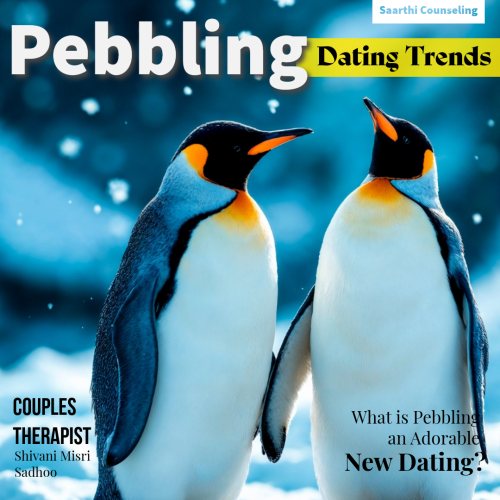
What is Pebbling an Adorable New Dating?

Pedbbling New Dating Trend by Marriage Counsellor Shivani Misri Sadhoo

If you have just gotten used to some of the strangest dating terms like ChemRIZZtry, Curveball-crushing, Love-loreing, and Truecasting, then gear up for another one. This new term draws inspiration from the world of penguins and is winning hearts everywhere.

It’s called Pebbling. Yes, the name sounds cute—and the concept is even cuter. If you’re wondering how pebbling got its name and why it is becoming one of the most popular dating trends today, shares Shivani Misri Sadhoo, who is one of the most experienced couples therapists and relationship counsellors in Delhi and India.

What is Pebbling?

Did you know that penguins woo their potential partners with pebbles? Sounds strange! Well, it is a cute way of expressing love, I would say. The male penguins quite meticulously select the perfect pebble to impress their significant other. We humans, couldn’t help but borrow this charming idea of expressing affection through small, thoughtful gestures-because sometimes it is the simplest tokens that carry the most meaning.

Ways We Do It

Humans have found novel ways of dating their partners. Pebbling can be used in digital as well as physical modes. Let’s see how:

Pedbbling New Dating Trend by Marriage Counsellor Shivani Misri Sadhoo

Physical pebbling

Gifting meaningful keepsakes

Offering someone a small item picked up during a trip—something that immediately reminded you of them—is a deeply intentional act. It’s not about cost or grandeur, but recognition. The object becomes a stand-in for the moment you paused, thought of them, and chose to bring a piece of that experience back. It tells them they occupy space in your mind even when they’re not physically present.

Handwritten notes filled with emotion

A handwritten note carries a kind of intimacy that can’t be replicated. Each word reflects time, care, and vulnerability. The imperfections—the slant of the handwriting, the pauses between lines—make it human. These notes endure, becoming something the recipient can return to whenever they need comfort, reassurance, or a reminder of being loved.

Bringing baked goods

Baking for someone is a quiet labour of affection. It involves effort, patience, and the desire to give something made by hand. More than food, it’s an offering of warmth and nurture. Sharing something homemade says, I wanted to create comfort for you.

Gifting a thoughtfully chosen book

Choosing a book for someone requires attention. Whether it’s a novel you believe they’ll get lost in or a subject aligned with their interests, it shows that you understand how their mind works. A book becomes a companion, and gifting one says, I see what inspires you, and I want to share that with you.

Sending fresh flowers

Flowers chosen with intention—because they reflect a favourite scent, colour, or mood—become sensory expressions of care. They brighten spaces, linger in memory, and offer a quiet reminder that someone was thinking of them. Even after they fade, the sentiment remains.

Planning a surprise coffee date

A surprise coffee date may seem simple, but it’s deeply personal. It’s about carving out time, creating closeness, and turning the ordinary into something meaningful. These moments, though unassuming, often become the most cherished.

Pedbbling New Dating Trend by Marriage Counsellor Shivani Misri Sadhoo

Digital pebbling

Sharing music with intention

Sending someone a song is a deeply intimate act. Each track is chosen for how it feels, what it recalls, or what it quietly communicates. Music becomes emotional shorthand—a way to express affection, longing, or understanding when words fall short.

Using emojis to express emotion

Emojis may be small, but they can carry immense emotional weight. A single symbol can soften a message, convey warmth, or express feelings too tender to spell out. In their simplicity, they often speak more honestly than words.

Sending articles, news, or recommendations

Sharing content tied to a shared interest or something the recipient is passionate about shows attentiveness. It’s a way of saying, I pay attention to what matters to you, even in passing moments.

Tagging and interacting online

Tagging someone in a post that reflects an inside joke or shared sentiment is a modern form of connection. It’s playful, public yet personal, and rooted in shared understanding. These small interactions reinforce bonds in subtle but meaningful ways.

Pedbbling New Dating Trend by Marriage Counsellor Shivani Misri Sadhoo

Pros of Pebbling

1. Strengthens Introverted Relationships

Pebbling helps introverted relationships grow because it offers connection without pressure. For introverts, long conversations or constant interaction can feel draining, even with people they care about. Pebbling—sharing small messages, links, photos, or thoughts—creates a gentle way to stay close.

It gives just enough interaction to feel seen and understood, without becoming overwhelming. Since there’s no need to reply right away, both people can engage when they feel ready and emotionally available. This slow, flexible exchange builds warmth and trust over time, letting relationships bloom naturally and comfortably.

2. Security Matters

When partners practise pebbling—those small, thoughtful gestures that say “I’m thinking of you”—it quietly builds a deep sense of security in the relationship. Over time, these little acts add up, reassuring each person that they matter and that the bond is steady, not fragile. When you know your partner is reliably attentive and emotionally present, doubts lose their sharp edge and uncertainty doesn’t get much room to grow.

This feeling of safety makes it easier to lower one’s guard, to speak honestly about fears, needs, and imperfections without worrying about judgment or withdrawal. In such an atmosphere, conversations become kinder and conflicts less threatening, because both partners are anchored in the belief that they are on the same side. Pebbling, in its gentle way, turns everyday care into a strong foundation for trust, openness, and healthier ways of working through disagreements together.

3. Keeps The Romance Alive

When you first meet someone and sparks fly, everything feels electric—those butterflies, that slightly unreal happiness—but as time passes, that intensity naturally softens. The so-called honeymoon phase fades, not because love disappears, but because life settles in. This is where pebbling quietly works its magic. Pebbling is about those small, thoughtful gestures that say I see you—a note slipped onto the fridge, a song shared for no reason, a favourite snack brought home unexpectedly.

These acts may seem simple, almost insignificant, yet they carry a gentle power. They keep surprise alive, nurture warmth, and remind both partners that affection doesn’t need grand declarations to feel profound. Especially in moments of loneliness or when doubts creep in and fears of drifting apart arise, pebbling rekindles emotional closeness. It reassures, without drama, that love is still present—steady, attentive, and deeply felt—woven into the everyday fabric of the relationship.

4. Stressbuster

Life can get relentlessly hectic, and when pressures pile up, they have a way of seeping into our closest relationships. This is where pebbling comes in, quietly and kindly. Pebbling—those small, thoughtful gestures or gentle words—acts like a pause button on stress. A warm message, a shared joke, a cup of tea placed without being asked: these modest acts ease tension and remind two people that they are seen and cared for.

Over time, such moments build an emotional cushion, making love feel steadier and more secure. Couples who practice pebbling often find that disagreements lose their sharp edges; patience comes more easily, empathy flows more freely, and conflicts are approached not as battles to be won but as conversations to be resolved. In its unassuming way, pebbling restores calm, reinforces connection, and helps love endure the daily wear and tear of life.

Cons of Pebbling

  • Pebbling can replace real communication by keeping things light while avoiding deeper conversations.
  • It can create mismatched expectations when one person reads more meaning into it than the other.
  • It can start to feel like pressure when replying becomes an unspoken obligation.
  • It can mask low effort by substituting memes for actual follow-through.
  • It can trigger attachment issues if one person overthinks while the other feels overwhelmed.
  • It can stall progress by keeping the connection indirect and undefined.

In a nutshell, pebbling is about showing love through small, thoughtful gestures that build closeness, security, and warmth. When done mindfully, it keeps romance alive and reduces stress. But balance matters—pebbling should support, not replace, honest communication and genuine effort in relationships.

Marriage vs. Mother-in-Law: Navigating the Mama’s Boy Dynami

We all love our parents. It is of very good quality. In fact, if we are incapable of loving our parents, then we are not supposed to be called human.

Loving one’s mother is a divine characteristic. But treating others in a bad manner is an inhuman quality. If your husband loves his mother, then you do not need to find any fault with it. But during this process, if he insults you or makes things uncomfortable for you to live with him, then it is up to you how you resolve it.

If you remain silent, a lifetime of suffering could afflict you. If you deal with it hurriedly, chances are you could be misunderstood by your husband. So, find a better way of resolving the issue.

In this article, Delhi’s top marriage Counsellor and Relationship expert Shivani Misri Sadhoo tells about signs your husband is a mama’s boy.

He cannot make any Decision Without Mom’s Help

As an independent woman, you have a mind and think of your own. So, you have decision-making abilities but you are surprised to see your husband consulting his mom for every minor or major decision. That bothers you a bit. This is one of the initial signs that your husband is a mama’s boy.

He Never Supports You When His Mother Shouts At You

He thinks his mother is always correct. So, when his mom shouts at you for any reason, he prefers to remain a silent spectator.

He Asks You To Be Like His Mother

This appears funny to you. But he asks you to dress up, cook and behave like his mom, and worship his mom. His mom is a role model to him and he expects an ideal woman has to be like her.

Your Husband Spends More Time Talking To His Mom

When your husband’s mom is out of town for a few days, he spends most of his time talking to her over the phone. And also, sometimes complains to her over the phone that you do not cook like her.

He Seeks Her Permission Even To plan A Family 

That looks absurd but it is true that he seeks his mom’s approval before planning to expand his family.

He Shares All Your Secrets To His Mom

You trust your husband completely and tell him everything about your life and past. And, he discloses them to his mom. She begins to suspect you and starts ill-treating you.

When You Are On A Holiday

When you are on a holiday, you tend to spend some time with your husband in a lonely spot and slowly try to kindle his passion. He suddenly takes out his phone, calls his mom and says “Mama, I miss you! You could have come with us” and weeps for a moment.

P.S. Well, there is nothing wrong if your husband loves his mom. Let him love his mom. But if his love bothers you, then you can voice out your opinion and try to get a solution.