Tag Archive : marriage counselor in Noida

Desire Person Who Treated You Badly - Relationship Counseling in Delhi

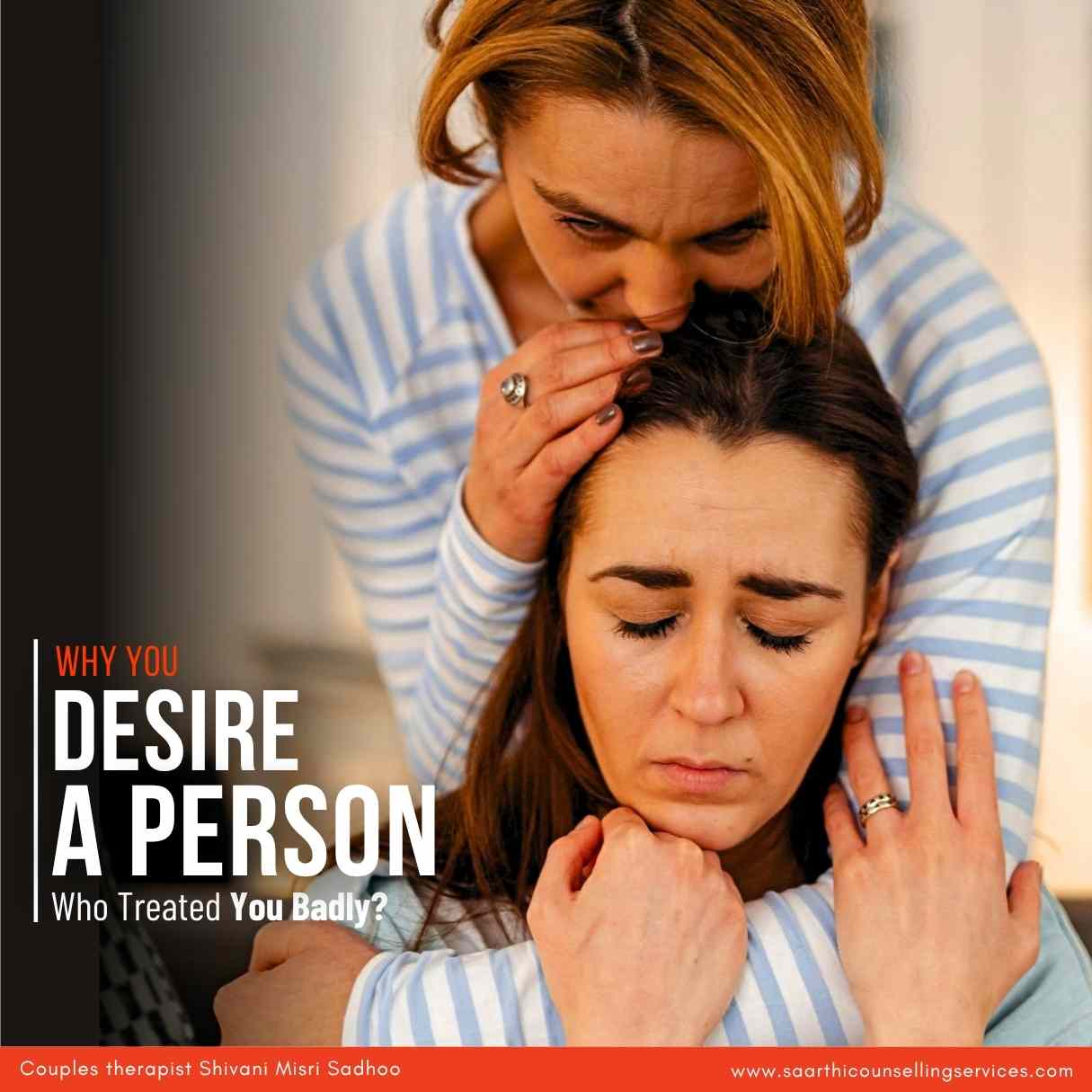
Why You Desire a Person Who Treated You Badly

Relationship Expert’s Direct Answer Summary
  • Missing someone does not mean they were good for you.
  • You may be craving connection, validation, or closure.
  • Judge the relationship by patterns, not only memories.

Desire Person Who Treated You Badly - Relationship Counseling in Delhi

It can be confusing to miss someone who hurt you. You may know that the relationship was unhealthy, remember the moments when you felt disrespected, and still find yourself thinking about that person or wanting them back. This does not necessarily mean you made the wrong decision by leaving.

Emotional attachment does not disappear simply because someone treated you badly. Feelings, memories, hopes, and unresolved emotions can remain long after a relationship has ended. Understanding why this happens can help you separate genuine compatibility from emotional attachment, shares Shivani Misri Sadhoo who is an eminent marriage counsellor in Delhi.

Why Do You Still Desire Someone Who Hurt You?

One reason is that the mind does not process a relationship only through its negative experiences. You may remember the affection, attention, chemistry, laughter, or moments when the person made you feel special alongside the painful experiences.

Desire Person Who Treated You Badly - Relationship Counselling in Delhi

When positive and negative experiences exist together, it can become difficult to make sense of the relationship. You may intellectually understand that the person was not good for you while emotionally continuing to crave the connection.

“You can deeply desire someone and still recognise that being with them is not good for you.” Says, couples and relationship counselor Shivani Misri Sadhoo.

Can Intermittent Attention Make Attachment Stronger?

Yes. When affection and rejection alternate unpredictably, the emotional experience can become particularly difficult to let go of. Periods of warmth, attention, apologies, or affection may create hope that the relationship will return to its better moments. When that attention disappears again, you may find yourself wanting it even more. This cycle can make emotional attachment feel stronger than it would in a consistently healthy relationship.

Are You Missing the Person or the Feeling They Gave You?

Sometimes, what you miss is not necessarily the individual but how you felt when things were good. You may miss feeling wanted, attractive, understood, important, or emotionally connected. You may also miss the future you imagined with that person.

Recognising this difference can be important. Missing a feeling does not automatically mean that reconnecting with the person is the right decision.

Why Do You Remember the Good Moments More?

After a relationship ends, the mind can selectively focus on emotionally powerful memories. A few happy moments may suddenly seem more significant than the repeated experiences that caused pain.

Nostalgia can also soften difficult memories. You might remember a romantic conversation, a special trip, or a loving gesture while temporarily overlooking the disrespect, inconsistency, or emotional distress that accompanied the relationship. This can create an idealised version of the person in your mind.

Desire Person Who Treated You Badly - Relationship Counseling in Delhi

Does Unfinished Emotional Business Keep You Attached?

Unresolved questions can keep emotional attachment alive. You may wonder why they changed, whether they ever truly loved you, whether you could have done something differently, or whether the relationship could have worked under different circumstances.

The desire for an explanation can sometimes keep you emotionally connected to someone even when the relationship itself was damaging. Closure, however, does not always come from the other person. Sometimes it comes from accepting what the relationship showed you and deciding what you will no longer accept.

Desire Person Who Treated You Badly - Relationship Counseling in Delhi

Can Low Self-Worth Influence This Desire?

When someone has repeatedly experienced criticism, rejection, or inconsistent affection, they may begin questioning their own worth. They may unconsciously believe that winning the person’s love or approval would prove that they were good enough. This can turn the desire for reconciliation into a desire for validation. A healthy relationship should not require you to earn basic respect or repeatedly prove your worth.

Why Does Letting Go Feel Like Losing?

Ending an unhealthy relationship can involve grieving more than the person. You may also be grieving the future you imagined, the relationship you hoped it would become, and the version of the person you believed they could be. That grief can make separation feel like a mistake, even when leaving was necessary. Allowing yourself to grieve does not mean you should return. It means acknowledging that something emotionally significant has ended.

How Can You Understand What You Really Want?

Instead of asking only, “Do I still love this person?”, consider asking yourself what you actually want from the relationship. Would you want the relationship exactly as it was, including the behaviour that hurt you? Or do you want the version of the relationship you hoped it could become? Looking honestly at patterns rather than isolated memories can help you make a clearer decision.

When Should You Avoid Reconnecting?

Strong feelings are not necessarily evidence that a relationship is healthy. If the person repeatedly disrespects your boundaries, manipulates you, emotionally harms you, or shows no meaningful willingness to change, desire alone should not determine whether you reconnect.

Healthy relationships require respect, emotional safety, accountability, consistency, and mutual effort.

If a relationship involves abuse or you feel unsafe, prioritise your safety and seek support from someone you trust or a qualified professional. Desiring someone who treated you badly does not make you weak or irrational. Emotional attachment can survive disappointment, rejection, and even painful relationship experiences.

The important question is not simply whether you still want the person. It is whether the relationship, as it actually existed, was capable of giving you the respect, safety, consistency, and care you deserve. Sometimes moving forward begins when you stop confusing intense feelings with a healthy connection.

marriage counseling in gurgaon_shivani misri sadhoo

Do you Know How to Handle a Manipulator Effectively?

Have you ever felt unheard, had your emotions suppressed, or found yourself constantly questioning your actions in a relationship? If so, you might be a victim of manipulation. Manipulation involves harmful influence over others, targeting their mental and emotional sides to achieve personal gain.

Manipulators create an imbalance of power, taking advantage of their victims to gain control, benefits, or privileges at their expense. They lie, make excuses, blame others, or strategically share selective truths to feel superior and powerful.

What are the ways to handle a manipulator impactfully?

There are tactics you can use to deal with a manipulator. Top couples therapist and relationship counselor in Delhi, and Gurgaon, Shivani Misri Sadhoo shares a few in this article. 

marriage counseling in delhi_shivani misri sadhoo

Do you feel you are being love bombing, and what to do?

When manipulators use love bombing, they shower you with excessive praise, attention, and gifts to create dependence and control. This differs from genuine affection, which seeks nothing in return.

Recognize love bombing by its overwhelming nature, especially early in relationships. Protect yourself by maintaining high self-esteem and healthy boundaries. Be wary of excessive flattery, redirect conversations to objective matters, and focus on facts over emotions. This helps you resist manipulation and maintain control.

Do you think a third person is being involved in how to Avoid Triangulation?

Another form of manipulation in relationships is triangulation, where one person involves a third party to avoid direct communication and manipulate situations to their advantage. To protect oneself, it’s crucial to recognize signs of triangulation early on. Address the issue openly with all parties involved in a group setting to promote clear communication and prevent further manipulation.

Establishing norms for transparent communication and addressing insecurities openly can create a safe emotional environment where both partners feel heard and respected.

Are you thinking you need to draw the limit?

Sometimes, saying, “That’s enough” does the trick. It is important to realize that setting clear boundaries is crucial in dealing with manipulators. By defining what behaviours you will and won’t tolerate, you can offer help without being taken advantage of. Keeping a journal of boundaries helps clarify your thoughts and strengthens your resolve.

Manipulators often exploit weak boundaries, so establishing firm limits protects your emotional well-being. Knowing where you end and others begin prevents manipulation, whether through overly rigid or overly involved boundaries.

Body Language Matters to protect yourself against manipulators

Did you know that your body language can reveal a lot about how you feel, which manipulators might use against you?

When dealing with manipulative people, be mindful of signs like crossed arms, avoiding eye contact, slouching, fidgeting, or speaking softly, as these can signal insecurity or submission. Manipulators often use intimidating tactics like standing too close, intense eye contact, or authoritative gestures to assert dominance.

To stay in control, maintain a relaxed posture, direct eye contact, and use assertive gestures. These signals show you won’t be easily manipulated and can help manage such situations effectively.

Are you being pushed into a guilt trip? Don’t feel guilty if you are a victim of manipulation

Say NO to Guilt-Tripping guilt-tripping is when someone uses your emotional connection to manipulate you into doing something, even if you haven’t done anything wrong.

It can strain relationships by making you feel stressed or resentful for not meeting their demands.

To handle a manipulator who guilt-trips you, assert your boundaries firmly and express your feelings clearly. Request that they ask for what they want directly, without emotional manipulation. Make it clear that you have the right to say no and that any agreement will be genuine, not coerced. This approach helps maintain balance in the relationship and reduces the stress and anxiety caused by guilt trips.

Be Calm when you are facing manipulation

Being aggressive doesn’t help when dealing with a manipulator. Instead, staying calm is key. Manipulators aim to provoke emotional reactions to control you, using tactics like belittling or intimidation.

By staying emotionally detached and practising self-regulation, you can frustrate their attempts. Plan your responses calmly to avoid getting caught up in their game of control.

This approach helps you maintain clarity and control over the situation, reducing their influence and preserving your peace of mind. While it is not easy to handle manipulators, understanding their tactics and employing proactive strategies can empower you.

By setting clear boundaries, maintaining emotional composure, and fostering transparent communication, you can safeguard your well-being and assert your autonomy in relationships, thwarting manipulation effectively.

Ways to Deal With a Workaholic Spouse – Relationship Tips

Life is really fast these days. And, it is difficult to tell if it’s a compliment or not to be called a workaholic. There was a time when working hard was considered the key to a successful and happy life, and the sole way to achieve the pot of gold. But with time few things have changed. With the advent of smartphones and the internet, lives have changed considerably.

Now, people are hooked to their work even when they are supposed to spend time with their spouse or loved ones. Such is the scenario that for many people day starts at 7:00 AM till 7:00 PM in the evening, and even after that, people keep their smartphones or laptops near the bedside to frequently check them even when their partner is sleeping or lying next to them. Being a workaholic is not bad. But when it starts to impact your relationship and family then it is a matter of grave concern. So, it is essential to develop balanced cooperation between your work and life.

In this article, Delhi’s renowned marriage counsellor Shivani Misri Sadhoo tells about ways to deal with a workaholic spouse.

Is it a system or a one-off?

Is there an imminent deadline? A financial shortage? A forthcoming presentation?  Sometimes you all have to sacrifice the common thing for exceptional situations, even when those around us pay a bigger price. Squarely analyzing the frequency of all the patterns can stop harsh words and worse explosions. If it happens consistently and regularly, then address it. If not, try and let it go. Do not make an incident a system if you do not need to.

Analyse Work Pattern

Does your partner attend to more meetings than usual she or he is supposed to? Do they have to read every paperwork and make every decision? Sometimes what you are handling is not a workaholic, it is a total freak. If this is the scenario, pitch your partner on how you wish to help them free up more time for high-level, strategic, meaningful work instead of the operational specifics they get sucked into.

Create A Fixed Routine

If it’s your beloved spouse who seems missing in action, then you might gain from a newly negotiated contract for time spent. Maybe the bedroom becomes that gadget-free zone you want, or one of you gets up 20-25 minutes earlier for a cup of morning tea before the great hassle.

Agree that 2 nights a week are sacred and can be called off only in times of an emergency. You can do a similar thing with a business partner. Agree, for instance, that every Monday from 9:30 AM to 10:30 AM is for both of you to strategise out the week out, or Friday from 4:00 PM to 5:00 PM, to review, recap, and forecast the days ahead.

Have A Plan, Then Reassess The Same

Decide as partners what is negotiable, non-negotiable and not as important. Link it to certain events and routines date night? Division of household works? Vacation or meeting planning? You would rather make all the decisions anyway. And then talk about it six months in. What is working and what is not? Is anyone feeling bitter or taken advantage of?

Focus On Yourself

Does not matter how much you accommodate the other, how often and peacefully you state your wishes, or how much you try to adapt, you cannot always change someone. If their conduct is really self-destructive, you just have to expect that they see it, too.

Think about what you require for yourself and expand that sense of self-reliance and competency by broadening a skill set, making decisions independently, and pursuing what you are interested in – while always interacting with them, without acrimony, about what you are up to.

Concentrate On The Partnership

As long as you access it from that point of view – without grudge – your workaholic partner will be much more open to a logical and business-like conversation, whether they share your office or your bed.