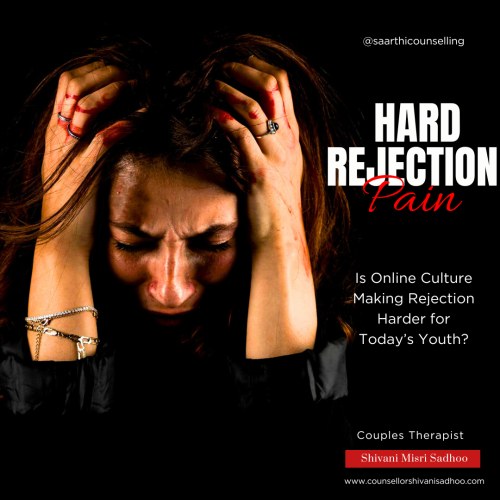
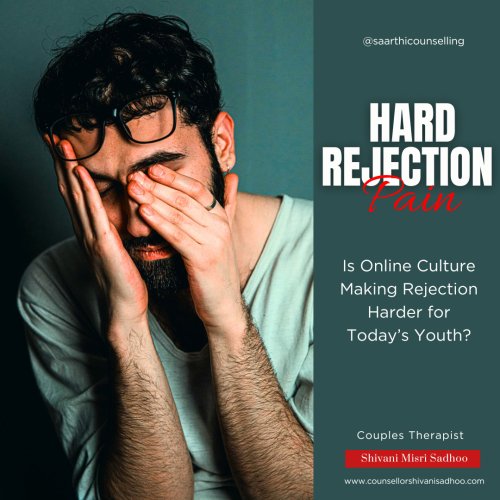
Is Online Culture Making Rejection Harder for Today’s Youth?
Rejection has always been a part of growing up, but for today’s youth, it often feels heavier, louder, and more public than ever before. In a world shaped by social media, instant feedback, and constant comparison, rejection is no longer just a private disappointment.
It can feel like a public verdict. From being left on “read” to not getting enough likes or being excluded online, digital culture has transformed how young people experience and process rejection. This raises an important question about whether the online world is making emotional resilience harder to build, says Shivani Misri Sadhoo, who is one of the top couples therapists and relationship counsellors in Delhi.
Rejection in the Age of Visibility
In earlier generations, rejection usually happened in limited social circles. A declined invitation, a failed exam, or a romantic disappointment was often experienced privately or shared with a few trusted people. Today, online platforms make social interactions visible and measurable.
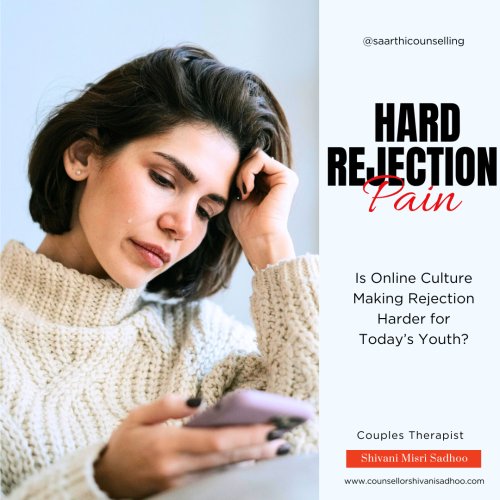
When a post receives little engagement or a message goes unanswered, rejection feels quantified and exposed. For many young people, these small digital signals are interpreted as judgments on their worth, making rejection feel constant rather than occasional.
The Pressure of Constant Comparison
Social media encourages users to compare their lives with carefully curated versions of others’ success and happiness. When young people see peers achieving milestones, gaining attention, or appearing confident and admired, rejection can feel like personal failure rather than a normal life experience.
This comparison culture amplifies self-doubt and can make setbacks feel more significant than they truly are. Instead of seeing rejection as a temporary obstacle, many begin to internalise it as a defining trait.
Fear of Public Failure
Online culture has blurred the line between private mistakes and public embarrassment. A rejection can quickly become visible through screenshots, unfollows, or subtle online signals. This creates a fear of trying at all.
Many young people hesitate to apply for opportunities, express feelings, or share creative work because the possibility of rejection feels too public and permanent. The internet rarely forgets, and this perceived permanence adds emotional weight to every risk.
Reduced Opportunities to Build Resilience
Resilience is often built through repeated exposure to disappointment and recovery. However, digital interactions can limit this process. Online rejection tends to be abrupt, silent, or ambiguous, offering little explanation or closure.
Being ignored or excluded online does not provide the feedback needed to learn and grow. Over time, this can make rejection feel confusing and deeply personal, rather than a normal part of human interaction.
Emotional Validation and External Approval
Online culture places strong emphasis on validation through likes, comments, and followers. When approval becomes external and numerical, rejection feels like the absence of value. Youth who grow up equating attention with self-worth may struggle more when validation is withdrawn. This dependency can make rejection emotionally overwhelming, as it challenges both confidence and identity.
Learning to Reframe Rejection
Despite these challenges, online culture does not make rejection impossible to handle; it simply changes how it must be understood. Teaching young people to separate online feedback from self-worth is essential.
Rejection, whether online or offline, is not a reflection of personal value but a natural outcome of diverse opinions, preferences, and circumstances. Developing digital literacy, emotional awareness, and self-compassion can help youth navigate rejection more healthily.
Online culture has undeniably reshaped how today’s youth experience rejection, making it more visible, frequent, and emotionally intense. While this environment presents new challenges, it also offers an opportunity to redefine resilience for the digital age. By encouraging meaningful offline connections, fostering self-worth beyond online approval, and normalising rejection as part of growth, young people can learn not only to cope with rejection but to grow stronger through it.

Shivani Misri Sadhoo specializes in infidelity recovery, pre-marital counseling, marriage counseling, couples therapy, CBT (Cognitive Behavioral Therapy), DBT (Dialectical Behavior Therapy), EFT (Emotionally Focused Therapy), relationship issues, separation and divorce, child and adolescent concerns, depression, anxiety, grief and loss. She is also one of the leading online couples therapists in India and for couples who are living in the US, the UK, Australia, Europe and Dubai.
A Certified Neuro-Linguistic Practitioner and a Level 3 Trained Gottman Method Couples Therapist , Marriage Counselor Shivani Sadhoo integrates modern therapeutic techniques with a warm, client-centered approach to create lasting transformation in her clients’ lives.
Counsellor Shivani is currently working with India 's top hospital groups like Fortis Hospital (former), IBS (Indian Brain & Spine) Hospital

Call Counselor: +91-8860875040
Email:saarthiforlife@gmail.com
Gottman Certification: Level 3 Trained Gottman Method Couples Therapist
- Hunter Style Lovers: A New Chinese Dating Style That’s Going Viral - March 16, 2026
- How Pregnancy Can Rejuvenate Couples Relationship? - March 6, 2026
- Are You an Echoist? How It Differs from People-Pleasing - February 27, 2026