Summary:
- Emotional abandonment occurs when partners remain physically present but emotionally disconnected, leading to loneliness, silence, and loss of intimacy within the marriage.
- Cultural conditioning, suppressed emotional expression, shifting expectations, social pressures, and poor communication commonly contribute to emotional distance in many Indian marriages.
- Healing begins with acknowledging the disconnect, communicating openly, investing meaningful time together, practising patience, and seeking professional counselling when needed.
Marriage often begins with emotional resonance. Two individuals feel seen, heard, and understood in ways that make connection feel effortless. Conversations flow, silences feel comfortable, and presence itself becomes reassuring. Emotional safety, not grand gestures, forms the foundation of intimacy. Over time, however, many couples discover that sharing a home does not always mean sharing a life. The bond that once felt warm and responsive can grow distant without any dramatic conflict or visible rupture.
Emotional abandonment is one of the most painful yet least discussed realities in long-term relationships. It rarely announces itself loudly. Instead, it quietly settles into daily routines—short conversations, distracted responses, mechanical interactions, and a subtle sense of being alone even when together. Understanding this experience is the first step toward preventing long-term emotional damage and restoring relational closeness, reveals Shivani Misri Sadhoo, a marriage counsellor in Delhi.
What Is Emotional Abandonment in Marriage?
Emotional abandonment is not physical absence. A partner may be present in the same room, participating in family events and daily responsibilities, yet feel emotionally unreachable. The deeper connection—empathy, attentiveness, shared emotional space—gradually weakens.
Couples who once instinctively understood each other begin to feel like strangers. Conversations become transactional. Emotional needs remain unspoken or dismissed. One or both partners may stop expressing vulnerability because it no longer feels safe or meaningful. Over time, the relationship shifts from companionship to coexistence.
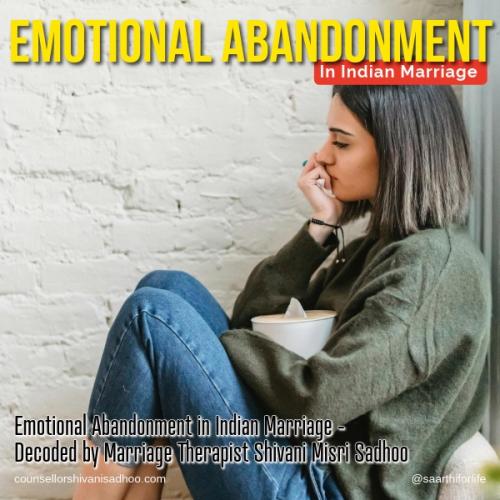
This form of disconnection can be deeply isolating. A person may feel unheard, unseen, and emotionally unsupported within the very relationship that once offered comfort. Loneliness intensifies because the partner is physically near but emotionally distant. The home remains intact, yet emotional belonging fades.
Shivani Sadhoo says that “Emotional abandonment in marriage is not the absence of a partner’s presence, but the absence of their emotional participation. Two people may share a home, a routine, and responsibilities, yet feel worlds apart when conversations lose warmth, listening turns mechanical, and feelings remain unacknowledged. The deepest loneliness often comes not from being alone, but from being unseen and unheard by the one person who once felt like home.”
“Reconnection begins the moment silence is replaced with honesty and distance is met with intention. When couples choose to acknowledge emotional gaps, communicate with empathy, spend meaningful time together, and seek guidance when needed, relationships regain their human depth. Marriage is sustained not by endurance, but by emotional presence, mutual understanding, and the daily effort to stay connected.”
Why Is Emotional Abandonment Common in Indian Marriages?
Cultural expectations play a significant role in shaping relationship dynamics. Many individuals grow up learning that endurance is more valuable than expression. Adjusting silently is often praised, especially for women, who may feel responsible for maintaining family harmony even at personal emotional cost. This discourages open dialogue about dissatisfaction or emotional neglect.
Men, on the other hand, are frequently conditioned to suppress emotional expression. Emotional openness may be perceived as vulnerability or weakness, making it difficult for them to articulate feelings or respond empathetically. As a result, emotional communication within the marriage weakens.
Modern marriages also carry evolving expectations. Many partners today seek emotional companionship, mutual respect, and shared decision-making alongside stability. When traditional roles remain rigid but emotional expectations expand, disconnect emerges.
Social pressures further complicate matters. Couples may continue living together for children, family reputation, or financial security. Outwardly, the marriage appears stable; internally, emotional distance grows. Without conscious effort to nurture connection, routine replaces intimacy.
Silence is another powerful contributor. Small misunderstandings, when left unaddressed, accumulate over time. Gradually, partners stop discussing their inner world. Emotional withdrawal becomes habitual, and the relationship feels functional but lifeless.
How Can Couples Rebuild Emotional Connection?
The first step is acknowledgement. Emotional distance cannot be addressed if it is denied. Recognising feelings of disconnection without self-blame allows space for healing. Awareness transforms vague dissatisfaction into a solvable concern.
Open communication follows acknowledgement. Honest conversations—spoken with calmness and respect—allow both partners to express emotional needs. Equally important is listening without defensiveness. Feeling heard restores emotional safety and encourages reconnection.
Patience is essential. Emotional repair is gradual. Trust and closeness rebuild through consistent, small efforts rather than dramatic gestures. Allowing time reduces pressure and prevents further emotional strain.
Shared experiences also help revive connection. Meaningful time together—simple walks, shared meals without distractions, or small activities done jointly—recreates emotional familiarity. Presence matters more than extravagance.
Professional guidance can be transformative when communication feels stuck. Marriage counselling provides a neutral, supportive environment where both partners can explore concerns safely and learn healthier ways to reconnect.
Moving Forward with Awareness and Intention
Emotional abandonment develops quietly but affects deeply. It is shaped by silence, social conditioning, emotional suppression, and unaddressed expectations. Yet, it is not irreversible. With honesty, communication, patience, shared presence, and guided support, couples can rediscover emotional closeness.
Emotional Connection vs Emotional Abandonment in Marriage — A Comparative Overview
| Aspect | Emotionally Connected Marriage | Emotionally Abandoned Marriage |
|---|---|---|
| Emotional Presence | Partners feel heard, valued, and understood | Partners feel unseen, ignored, or emotionally distant |
| Communication Style | Open, warm, and meaningful conversations | Short, mechanical, or avoidant interactions |
| Emotional Safety | Comfortable sharing feelings and vulnerabilities | Hesitation or fear in expressing emotions |
| Daily Interaction | Shared moments feel engaging and supportive | Routine interactions feel formal and lifeless |
| Sense of Togetherness | Feeling like a team and life partners | Feeling alone despite living together |
| Conflict Handling | Issues discussed and resolved respectfully | Problems avoided, leading to silent resentment |
| Relationship Experience | Emotional warmth and mutual reassurance | Emotional isolation and inner loneliness |
| Long-Term Impact | Stronger trust and deeper bond over time | Growing distance and weakening attachment |
Marriage thrives not merely on shared responsibilities but on shared emotional life. Rebuilding that inner connection restores warmth, understanding, and the sense of togetherness that sustains long-term partnership.